

Namaqualand farm stay: Slow living at Nigramoep in the Northern Cape
Botanists flock to Nigramoep Slowliving Guest Farm, near Springbok, for its unique plants

- Adeleen Cloete
AT A GLANCE HOW THIS STAY REDUCES ITS IMPACT
Energy usage Fully off-grid and on solar.
Water usage Borehole and rainwater only; reverse osmosis-filtered drinking water.
Waste management Metal and glass separated; food scraps feed farmyard animals; the rest is burned on-site.
Culture + community Staff are from Bulletrap and mostly seasonal; industry-related salaries; fundraisers held to support Bulletrap institutions
Biodiversity + ecosystems 1 000-plus hectares run as an informal private reserve; the land was rested from grazing for 16 years for rehabilitation.
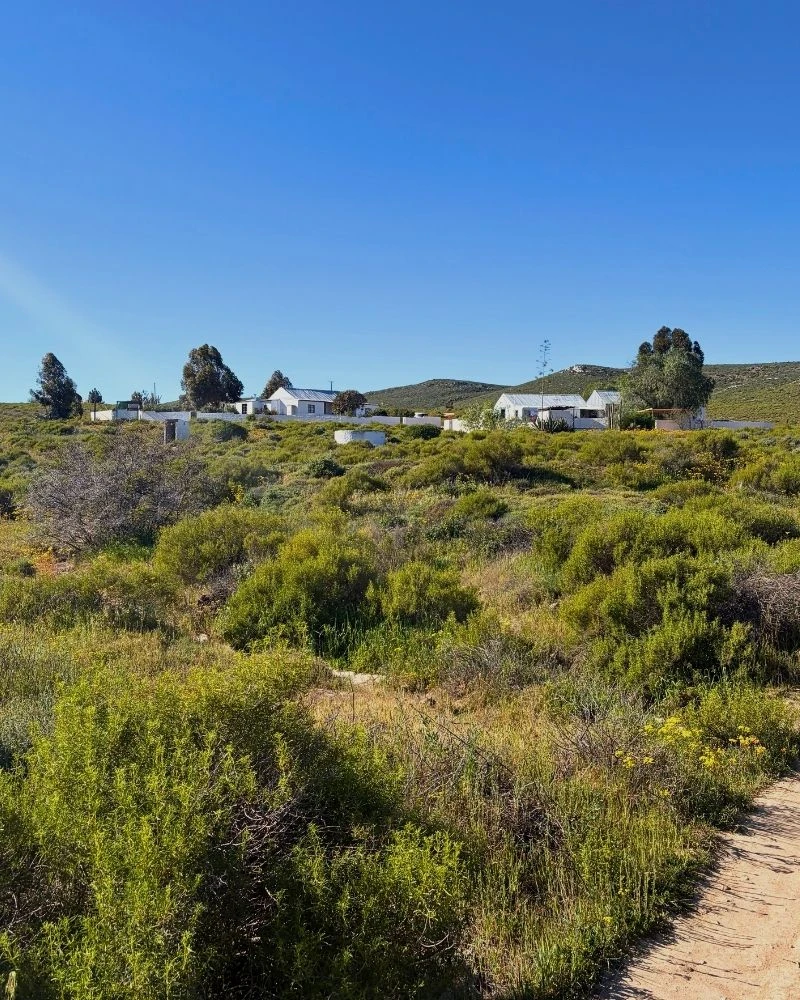
Nigramoep Slowliving Guest Farm appears as a collection of farm houses contained by a low, whitewashed cement wall IMAGE Adeleen Cloete
Getting to Nigramoep, the Namaqualand farm stay close to Springbok
The journey to Nigramoep farm begins with a turn off the N7 towards the tiny settlement of Bulletrap (population around 400). From there, the tar gives way to gravel, and the drive through Namaqualand’s expansive klipkoppies sets the tone for our experience.
About 30 kilometres later, Nigramoep Slowliving Guest Farm comes into view; it’s about 65 kilometres from Springbok. Whitewashed buildings with blue shutters have the plain, fresh look of a traditional family farmhouse.
Inside, the reception is calm, the receptionist unhurried. Antique furniture and an old coal stove hint at another era. A swimming pool, honesty bar and shaded outdoor seating areas are quiet spaces where one can unwind after a day of exploring.
There is even a small curio shop where my friend, unable to resist her love of all things vintage, left with two new additions to her wardrobe.
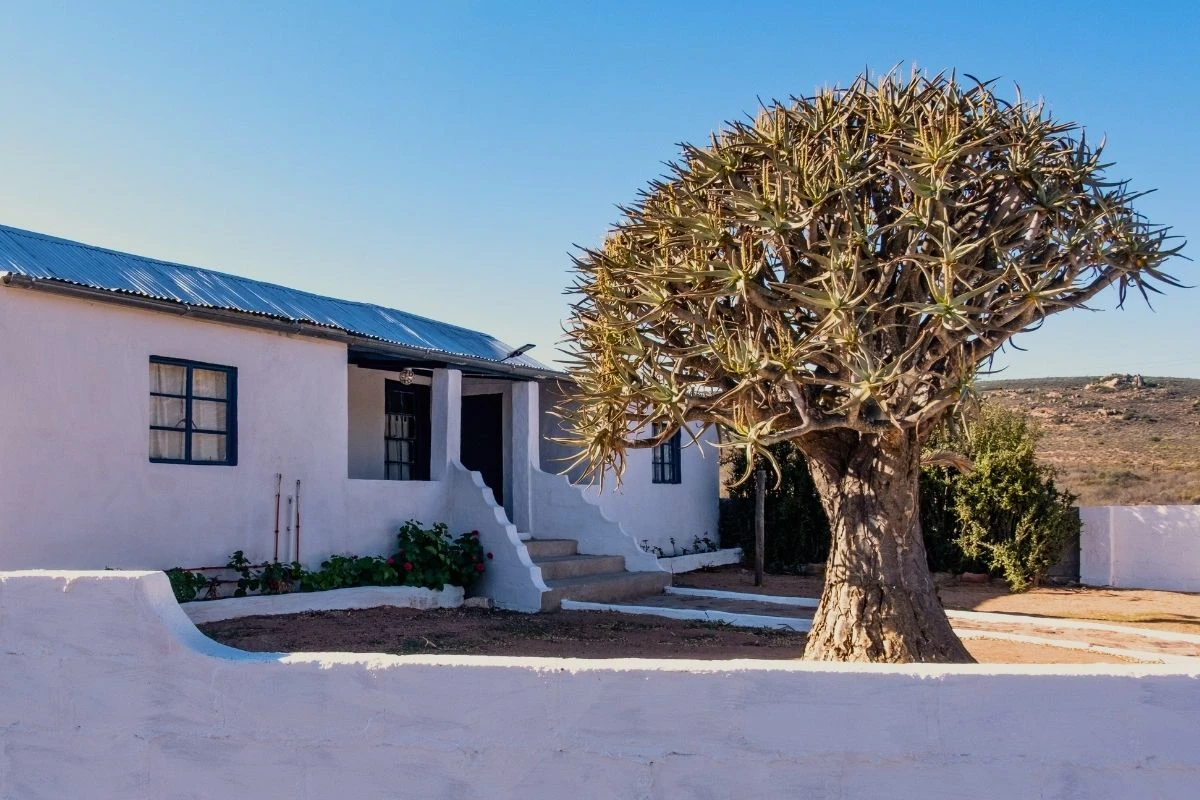
Namaqualand’s distinctive quiver tree, or kokerboom in Afrikaans, in the garden of one of Nigramoep’s farm cottages; this sculptural tree is on SANBI’s red list of threatened plants IMAGE Courtesy Nigramoep Slowliving Guest Farm
What 'slow living' means at Nigramoep farm
The words ‘slow living’ are painted on the entrance gate to Nigramoep. It’s a practice rather than a slogan, and manifests in the small gestures that shape your stay.
“We’ll deliver your bakbrood to the cottage later,” Susan Skog told us. “And Marius (the owner) will fetch you at six for the sunset drive to the lookout point.”
“You can walk anywhere,” she added. “It’s open veld.”
So we took a walk in the early afternoon. While there are short, marked trails, it was wonderfully liberating to know that the landscape itself was our to explore on- or off-trail.
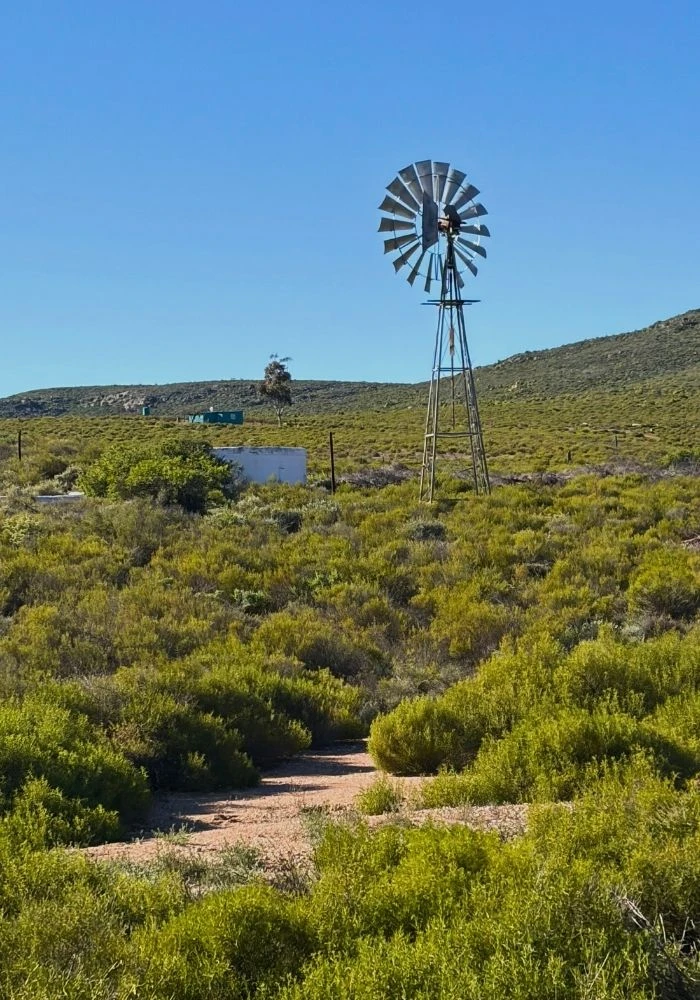
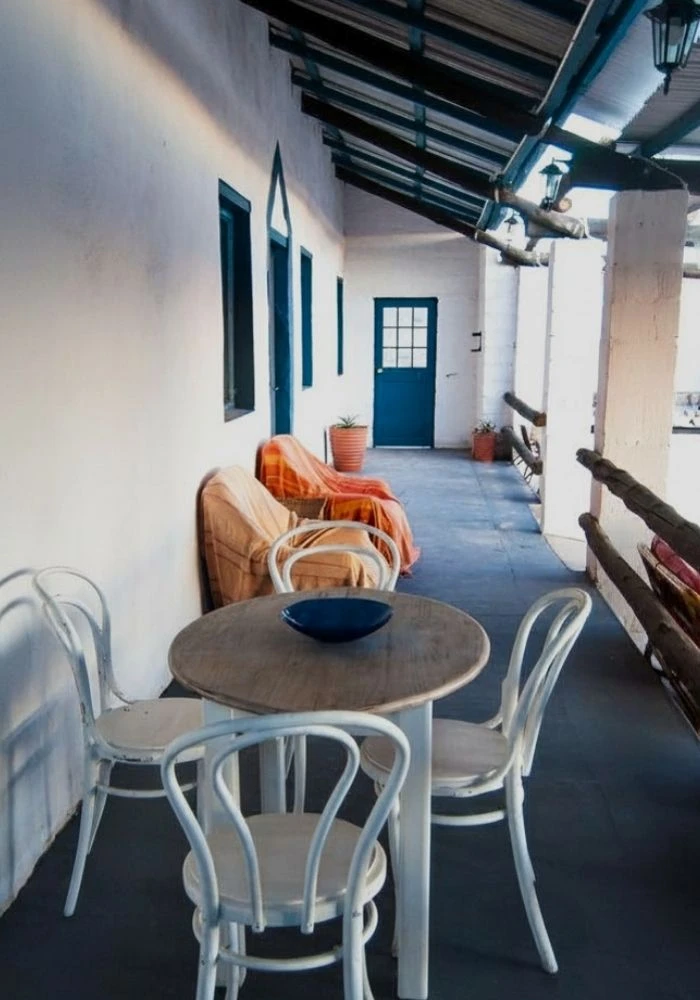
FROM LEFT Another distinctive feature of the Namaqualand’s landscape, the windmill that draws water from a borehole; Nigramoep original buildings have features like the traditional stoep and the feel is rustic and farm-practical IMAGES Adeleen Cloete, Nigramoep Slowliving Guest Farm
Nigramoep's cottages: What to expect from a stay
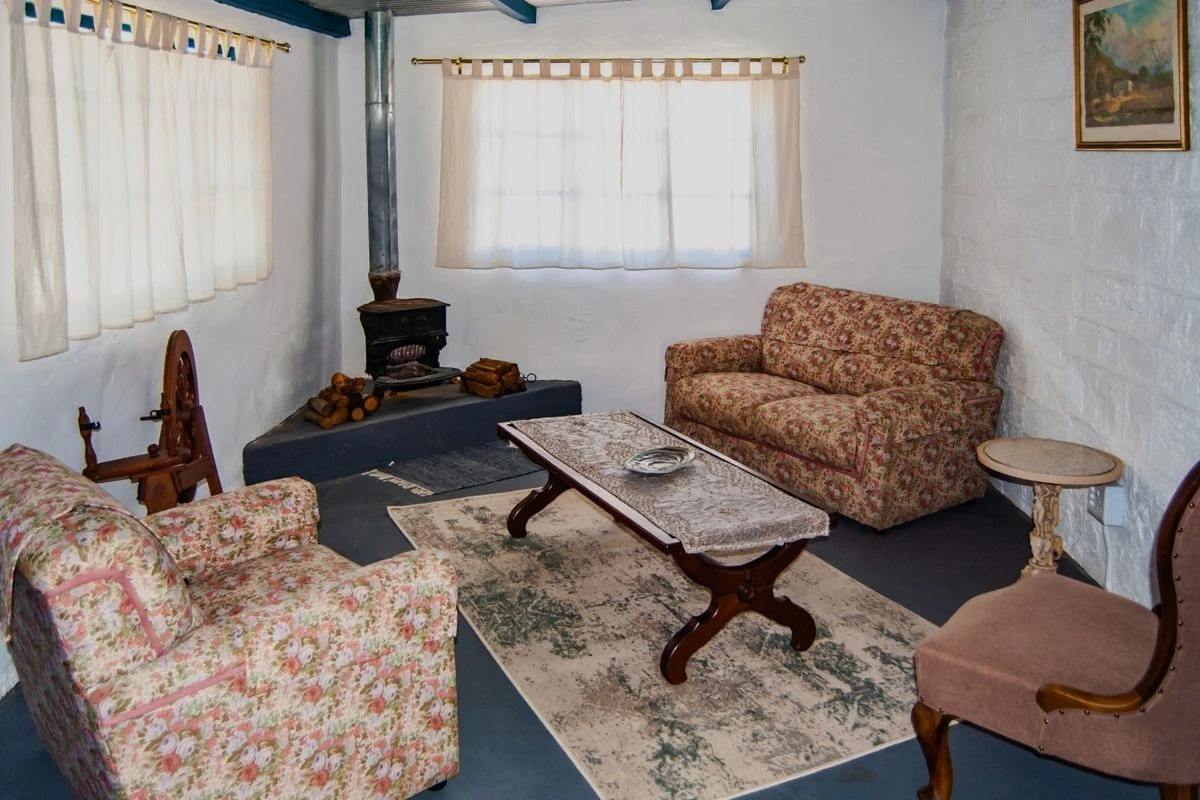
Our cottage, Snappy’s, was rustic and simple—white-washed walls, blue doors and an open fireplace in the lounge—and well-maintained. It had everything we needed: beddings, towels and basic kitchen utensils.
When Marius van Schalkwyk came to Nigramoep 37 years ago, these buildings were bouvalle (ruins, no windows, no doors) and the goats could walk straight through them, he told us. It took a lot of work to restore them.
The cottage has a braai area, and as we prepared our food, finches filled the air with their song. Then came the knock on the door. Our freshly baked bakbrood arrived still so warm that steam rose from the loaf as we sliced it.
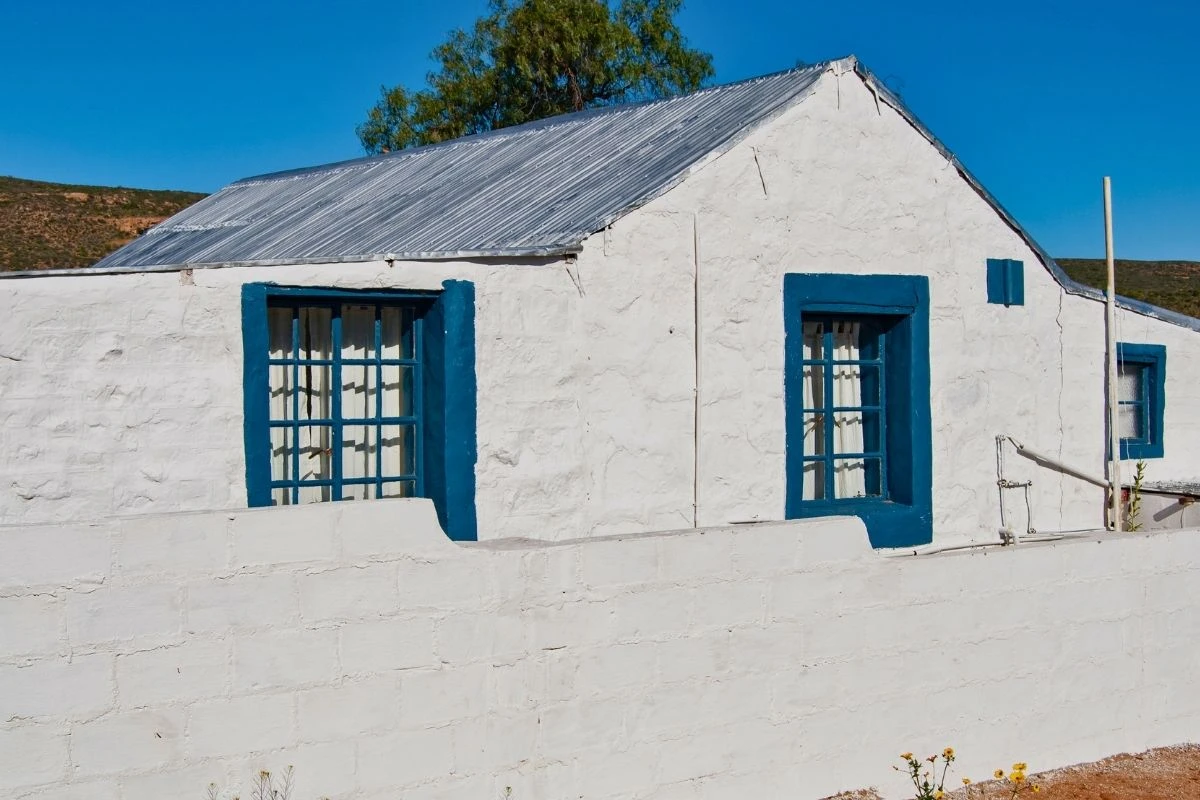
ABOVE Snappy’s Cottage sleeps four and has a braai area near a tree busy with birds BELOW The lounge is farm-style simple, with white-washed walls and a homely feel IMAGES Courtesy Nigramoep Slowliving Guest Farm
Namaqualand plants' Afrikaans names tell you everything you need to know
Long before we saw Marius, we heard the unmistakable rumble of his V8-powered pypkar (an old, converted bakkie) making its way towards the cottages.
He likes taking smaller groups on drives, he told us. With bigger groups, “…I can’t interact the same way with people” (although he’ll always make a plan).
We understand why within a few minutes. Every few hundred metres, Marius stops the vehicle to point out plants most visitors would drive past without a second glance.
He points to Jantjie-Bêrend, also known as the kankerbos, famous for its traditional medicinal properties. Then he stops at the peperbos and tells us to chew its leaf so that we can experience its peppery burn. In the same breath, he tells us not to keep it in our mouths for too long — he once experienced one side of his mouth going numb because of its anaesthetic properties. Traditionally, it was used to treat ailments such as toothache.
“Al waaraan ek belangstel is die Namakwalandse name, want hulle is raak,” he laughs. He’s developed a passion for learning the plant names, particularly those given by locals, like herders and the Nama people.
Like the weeskindertjies (orphans), because it usually grows in isolation. Then there is kruidjie-roer-my-nie (little herb don’t move me), so named because when the plant is disturbed it releases a foul smell. On our way back to Snappy’s, he points out veldkool (field cabbage) they sometimes use to make stew.
Every plant seems to come with a story, a joke or a memory, which turned our sunset drive into an introduction to the living heritage of Namaqualand.
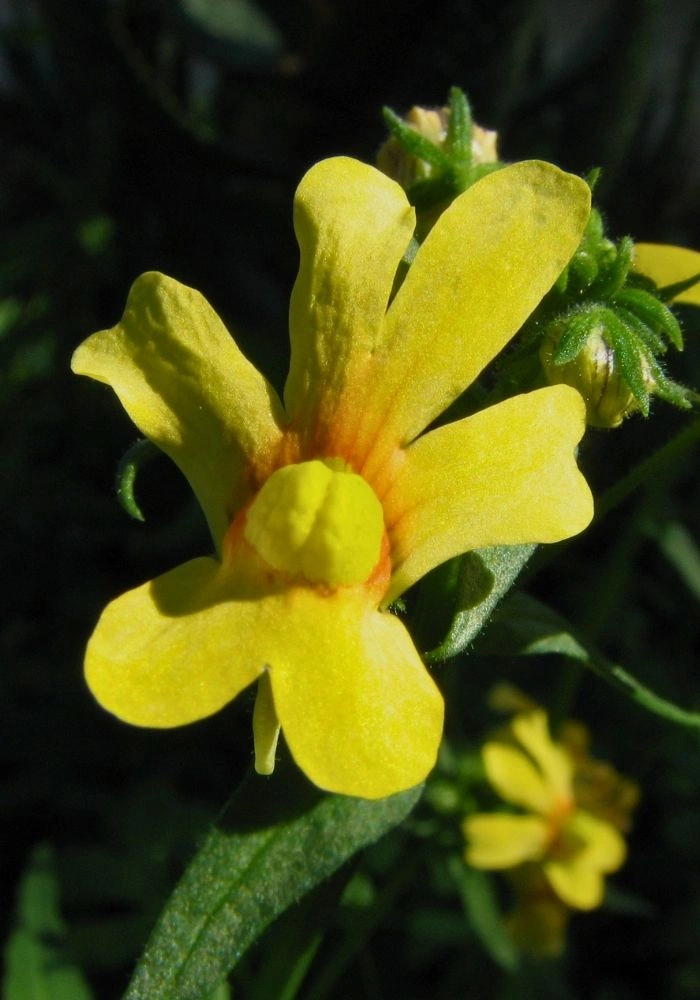
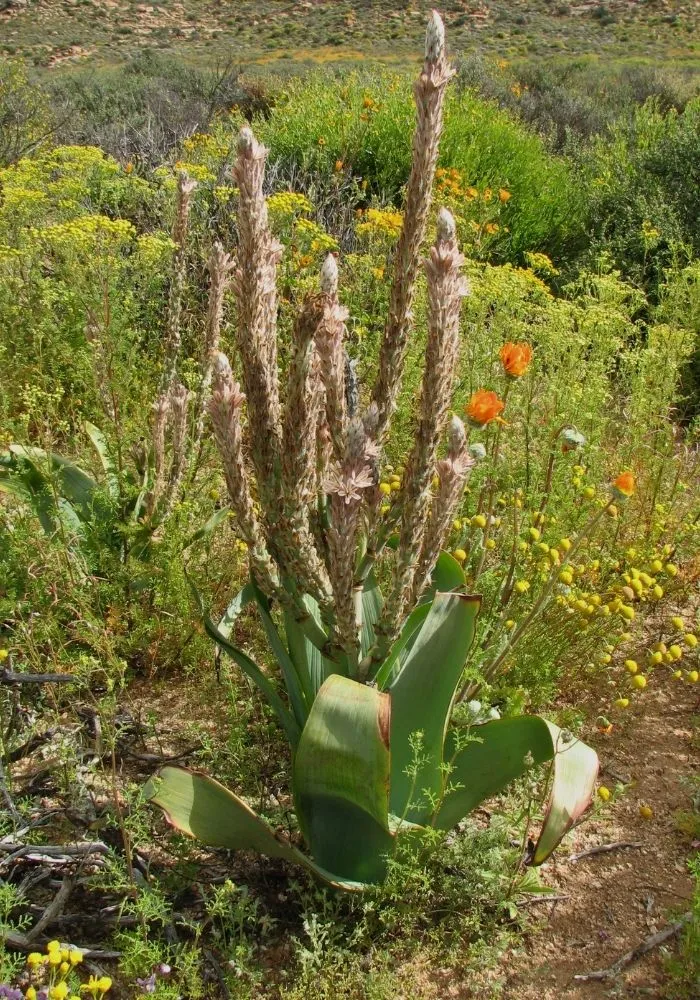
A weeskindertjie, or orphan in English, in flower; veldkool, is literally translated to field cabbage although it is wild asparagus IMAGES Conrad Geldenhuys
Namaqualand's prime flower season is right now
The drive to the lookout point—from where you can see the ocean at Kleinzee—takes only about half an hour, although Marius says it lasts much longer during Namaqualand’s prime flower season. August is usually Nigramoep’s busiest month, because there is simply so much more to stop and admire.
“Every flower season is different,” Marius says. “Ons het vroeg reën gekry, toe blom die veld, en toe stop die reën.“
Along the way he speaks not only about plants, but about life. He shares that his wife, Johanna, who loved this landscape as deeply as he does, passed away only months ago.
“I have a peace that passes all understanding,” he says simply—a sentence that seems to fit with the stillness of the landscape around us.
Moments later, he is pointing out another plant, another story hidden in the landscape.
“Ek is so erg oor die veld en blomme.”
Slowing down at Nigramoep, home to the slackpacking hike in the Skaaprivier Canyon
When we arrived, I knew Nigramoep as the place that offered the five-night slackpacking hike in the Schaaprivier Canyon. By the time we left, it was something different—a place that epitomises slow living, where warm bread appears on your doorstep before dinner and the rumble of a pypkar announces an evening of stories. Where local plant names carry indigenous healing knowledge and have a laugh at themselves.
Slowing down here allows you to see that Namaqualand is far more than a landscape that briefly bursts into flower each spring. It’s a place where the silence is almost deafening until you settle into its rhythm.
And it’s where the host offers true farm hospitality and will go the extra mile for guests. If we’d stayed longer, Marius told us, “…I would have taken you to see the Schaapriver Canyon. It takes about three hours for a round trip. Because you could have stayed over at a fancier place—we have to make it special for you.”
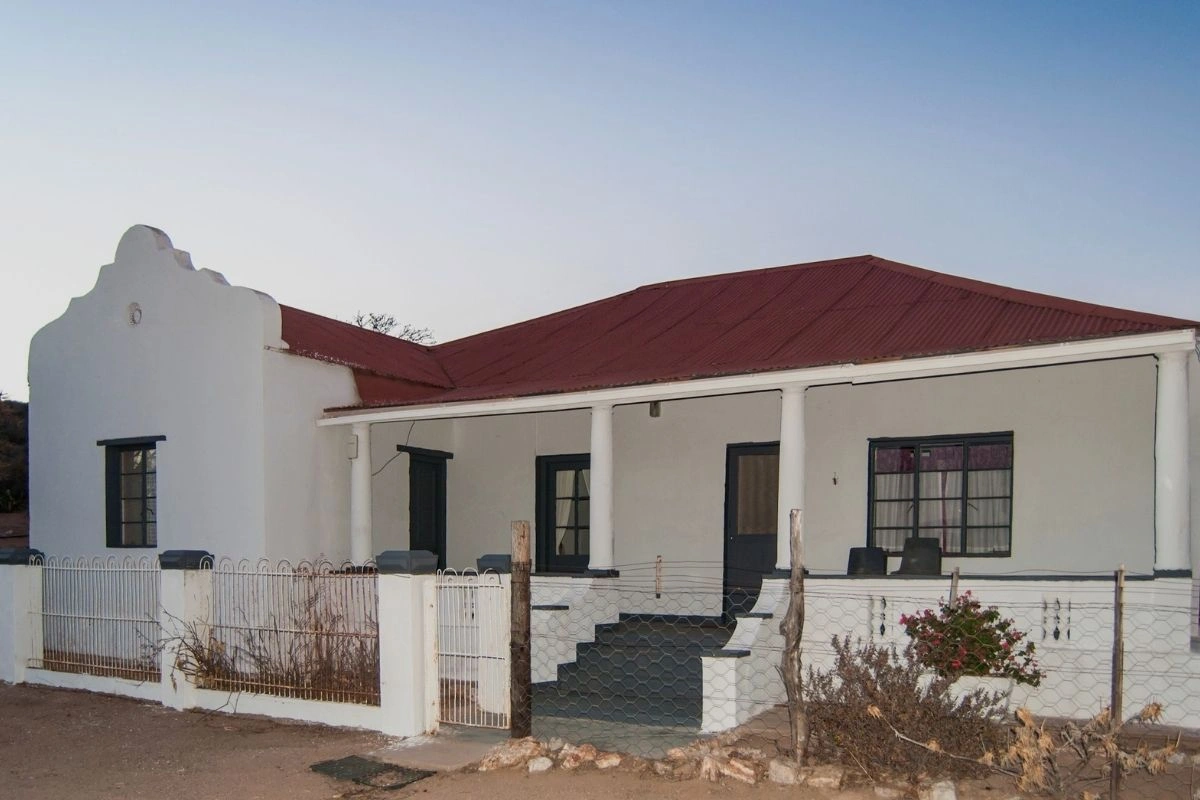
Oom Bings se Huis is one of the bigger cottages on the farm, sleeping nine IMAGES Courtesy Nigramoep Slowliving Guest Farm
Sustainability at Nigramoep Slowliving Guest Farm
Nigramoep farm has not always looked like this. Marius says it was once a small settlement of around 14 families, and the pressure on the veld had left it degraded. They stopped livestock farming for 16 years specifically to allow the land to recover, and today only keep livestock on a small scale.
The recovery of the land has attracted botanists. SANBI and other researchers come to collect seed and DNA samples and to record what grows here, and they keep finding things worth the drive, precisely because stretches of this veld have gone ungrazed for so long.
The French botanist Florent Grenier, who has spent years mapping Namaqualand’s pelargoniums, rates the high sandstone plateau the Nama called T’Kau as one of the richest places for the genus anywhere in the region.
This is one of Nigramoep farm’s greatest achievements and contributions to the Namaqualand biome.
DETAILS
Stay There are nine cottages, sleeping from two to 10 people, all old-style farm buildings (with free WiFi). There are also campsites. Prices for the cottages range from R900 to R3 000 per cottage per night.
Need to know The chalets are self-catering so go well prepared, and you can’t take a quick drive to get supplies. Catering can be arranged for bigger groups in advance. You can buy snacks and wine at Nigramoep. If you prefer to cook, the kitchen’s are fully equipped, but if you have a favourite or special utensils, take those along.
Activities There are a few hiking and cycling trails around the farm. This is a place where the plants, and the massive landscapes, are the focus. During flower season, the roads around Springbok, Okiep, Concordia and Nababeep become part of the experience, with colourful displays along the roads and across the surrounding veld. Nigramoep is an ideal overnight stop, where you can round off the day with the sunset drive before taking a scenic drive to the Schaapriver Canyon the following day. Beyond that, Nigramoep is a place to fully unwind—there are few other distractions. Nigramoep is well known for its biggest trail, the 4-day 5-night slackpacking hike through the Schaaprivier Canyon. This opens in May until September, and covers 59.5 kilometres.
Website nigramoep.co.za
NIGRAMOEP'S APPROACH TO ITS OPERATIONS
ENERGY Nigramoep runs entirely on solar power. The farm’s connection to the Nama Khoi municipal grid was cut in March 2025 after maintenance on the transformers lapsed, and rather than wait for its return, the owners have been upgrading the solar system in stages as budget allows.
WATER All water comes from boreholes and harvested rainwater. Guests are told at booking that the farm runs on borehole water and asked to use it judiciously, with reminders on display in each unit. Drinking water passes through a maintained reverse-osmosis system. The gardens are small, planted with drought-tolerant species and watered minimally.
WASTE Metal and glass are separated on-site and taken to the municipal recycling plant. Edible leftovers go to the farm’s small collection of animals, and burnable waste is burned in a disused mining pit – a common solution 65 km from the nearest town, though not one without its limits. They use collapsible cooler bags for the farm’s shopping supplies.
COMMUNITY + CULTURE All staff come from Bulletrap, the closest community to the farm. Employment is mostly seasonal unless there is building and maintenance work to be done. The owner says he tries to rotate seasonal employees to give more people an opportunity to earn money during the tourist season, says the owner. Wages are industry standard and no training or career development opportunities are offered. For the past three years the farm has hosted an annual fundraiser on the property, with proceeds handed to Bulletrap institutions, this year an elderly-care organisation, the local soccer team and the primary school.
CONSERVATION + BIODIVERSITY Nigramoep carries no formal conservation designation, but its 1,000-plus hectares of Namaqualand veld are run as a de facto private nature reserve. The farm was rested from grazing entirely for 16 years, and livestock numbers remain deliberately low to protect the vegetation. Owner Marius van Schalkwyk says the farm’s main income is tourism rather than farming, so maintaining a healthy landscape isn’t separate from the business. South African National Biodiversity Institute and other botanists return every year to collect seeds and DNA samples and document the vegetation. French botanist Florent Grenier discovered an unnamed species of Pelargonium there (Pelargonium nigramoepense). A trail camera rotates across the farm to monitor wildlife, with Marius says is increasing. Day to day: non-essential lights go off at night to preserve dark skies, planting is primarily indigenous, no pesticides or herbicides are used on the farm, cleaning products are biodegradable, and domestic pets are managed so as not to impact the wildlife.