

Yamu Lifestyle Resort: Did you know the Cederberg now has its own beach?
A first look at the off-grid luxury tented camp set on the side of Clanwilliam Dam
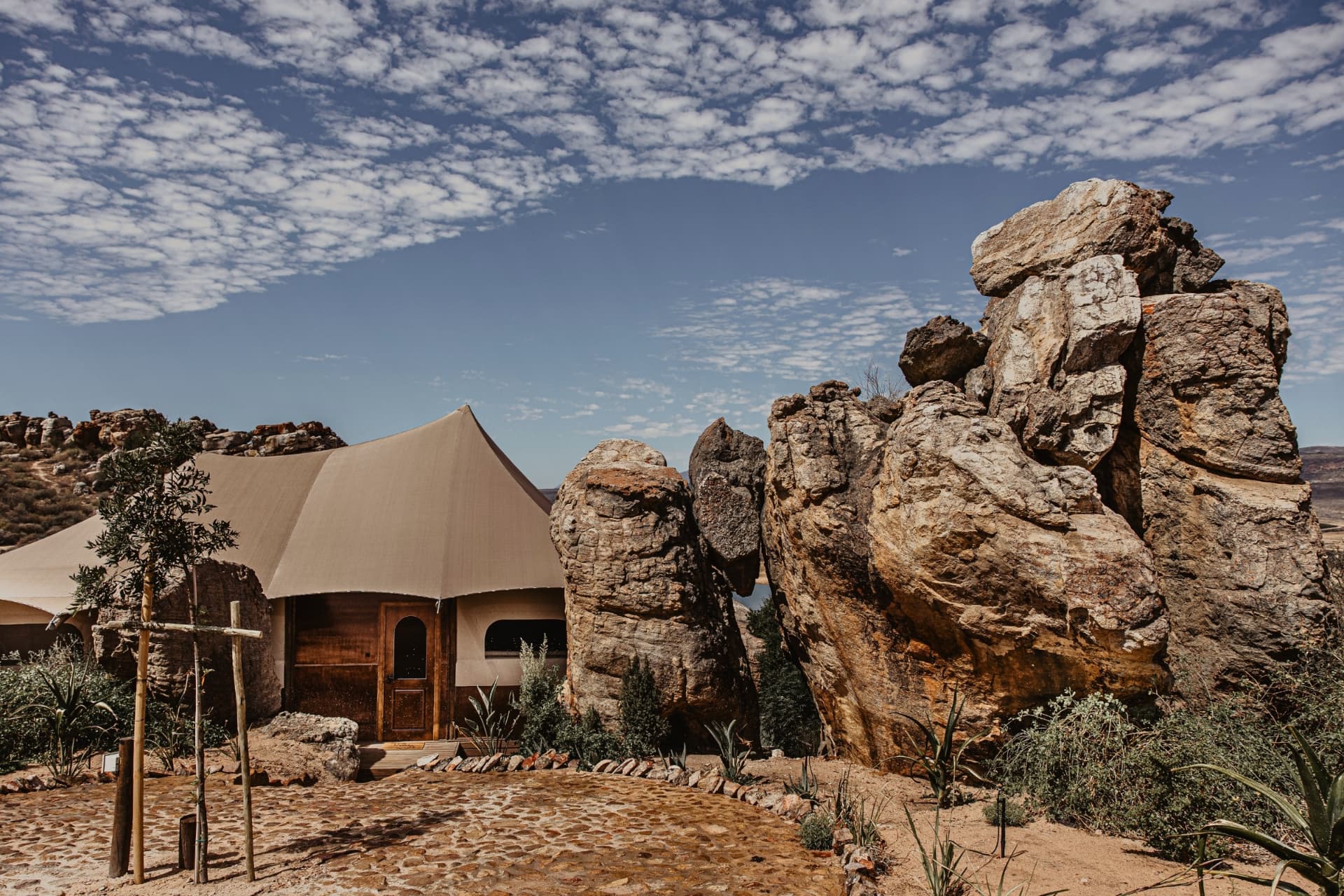
- Adeleen Cloete
AT A GLANCE HOW THIS STAY REDUCES ITS IMPACT
Energy usage Fully off-grid on solar; over 250 kWh of inverter-battery storage; all major appliances timed and app-managed
Water usage Boreholes, Olifants River surface water and rainwater harvesting; metered, timed and remotely controlled; on-site wastewater treatment plant
Waste management On-site recycling and composting; ~90% of food waste collected by supplier partners; all plastics in use are compostable
Culture + community Staff drawn mostly from the surrounding community and a nearby informal settlement, paid above minimum; staff transport provided; community crèche planned
Biodiversity + ecosystems Built on 3-4% of the site; tracks capped at 2.3m; tents raised on poles for animal movement; indigenous planting and dark-sky practice; no formal conservation partnership yet
Carbon footprint To Yamu Lifestyle Resort from Cape Town return = 0.08 tCO2
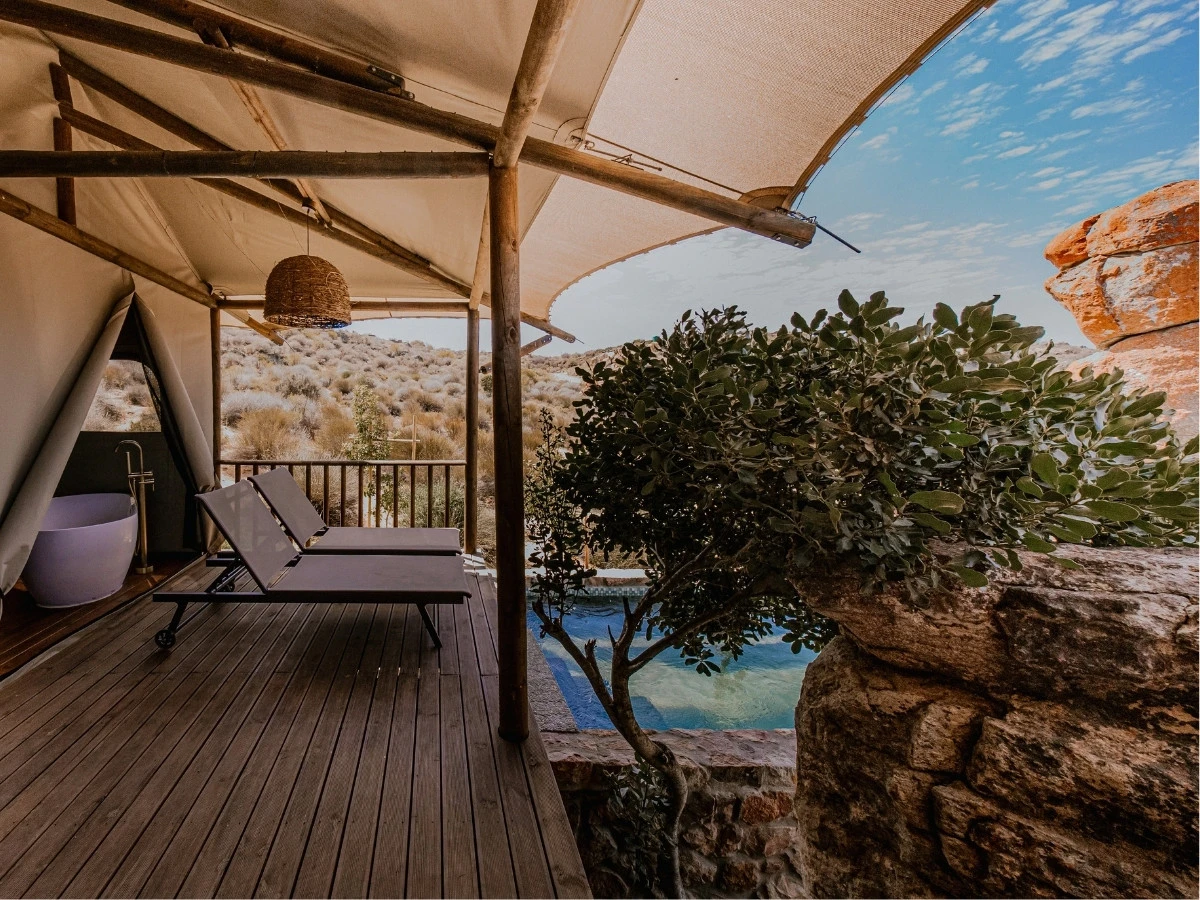
TOP There are seven tents, each set into the spectacular landscape, in this first phase of this resort ABOVE All tents have a small, private plunge pool IMAGES Courtesy Yamu Lifestyle Resort
Yamu Lifestyle Resort is a fantasy come to life
I first came across Yamu Lifestyle Resort on TikTok. Stefan Schunke, the owner, was speaking about the brainchild he and his wife, Maggie, brought to life on the banks of the Clanwilliam Dam two hours north of Cape Town. Whether it was the quirkiness of the videos or simply the idea of a beach far from the ocean, it sparked my curiosity.
I arrived cautiously optimistic during Yamu’s December 2025 soft-opening phase. But as the entrance gate with its bold “Y” slowly opened, it already felt as though the experience had begun.
REVIEW The Cederberg retreat on a river that’ll make you forget your phone
The gravel road winds steeply downhill toward reception. The staff prepared us before we started for it: they explained how everything would work, reassuring us that Yamu would “take it from there”.
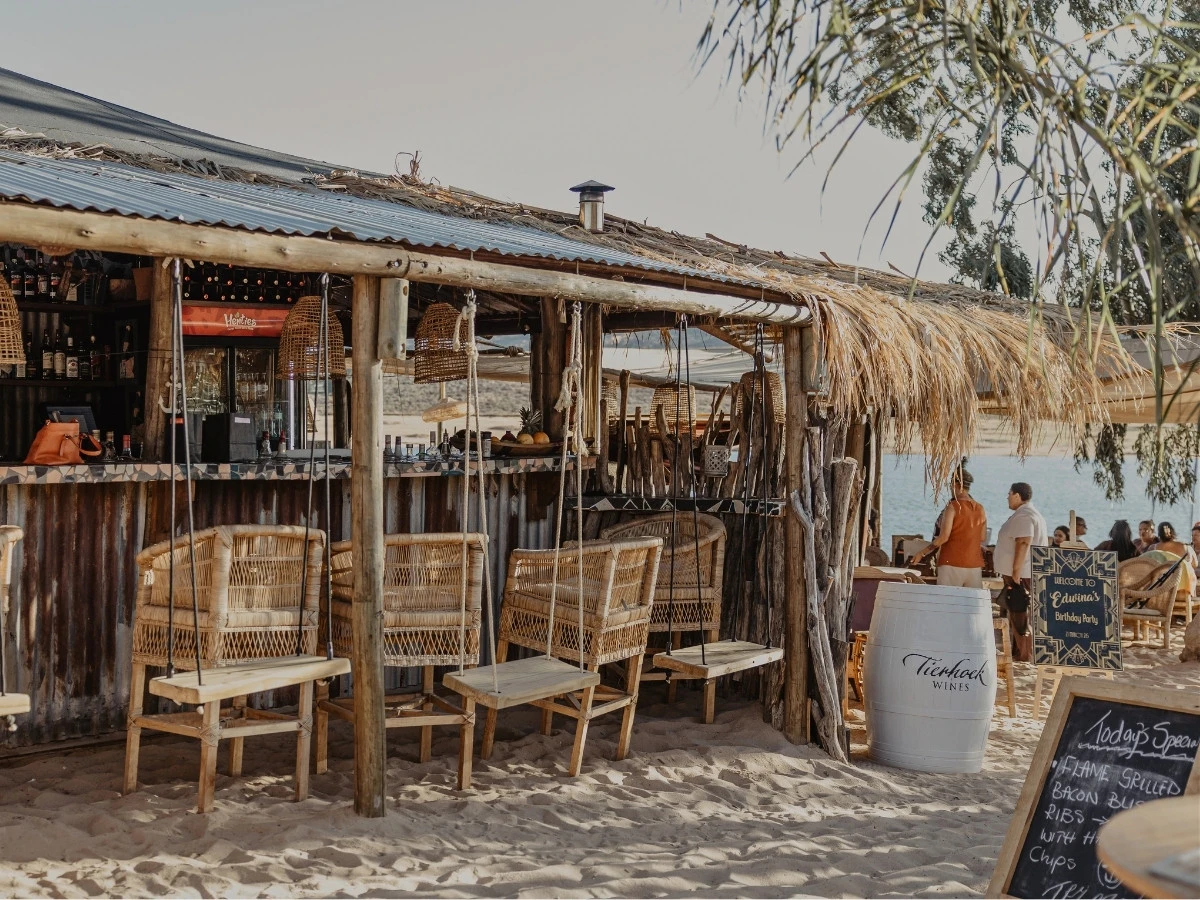
The Beach Canteen is what sets this resort apart. The sand had to be brought in; it was removed from excess on river banks following floods IMAGES Courtesy Yamu Lifestyle Resort
The beach Canteen on Clanwilliam Dam is a novelty worth travelling for
We’d expected the December heat around the dam to be unbearable, but a cool breeze moved through the Laguna Beach Canteen and there was plenty of shade.
The eatery on the beach feels extraordinary for the region. It has a tropical atmosphere, completely different from the rugged aesthetic usually associated with the Cederberg.
The atmosphere was social but surprisingly calm — no loud music, no forced energy. Guests arrived by boat throughout the afternoon, giving the sense of summer in full swing.
EXPERIENCE The secret eatery in Knysna most people should know about
When we were ready to retreat to our tents, Stefan picked us up. I mentioned I’d found Yamu Lifestyle Resort through his TikTok videos. He admitted to feeling slightly self-conscious about them, which is funny given they were the reason we were there. They’d given the resort personality before we had arrived.


There are plenty of quiet activities on offer—hiking, birding, yoga—but it’s also a resort for people who love action IMAGES Courtesy Yamu Lifestyle Resort
Yamu Lifestyle resort has seven luxury tents on the Clanwilliam Dam
Yamu Lifestyle Resort is set on a private site on Clanwilliam Dam’s shore, two hours north of Cape Town. It has seven off-grid luxury tents spaced across the fynbos and a sand beach (the sand was trucked up from the Olifants River after recent floods, sand that had to be removed, Stefan says).
We were driven down to the beach canteen by e-cart, passing colourful Muizenberg-style bathing huts on the way; it was charming.
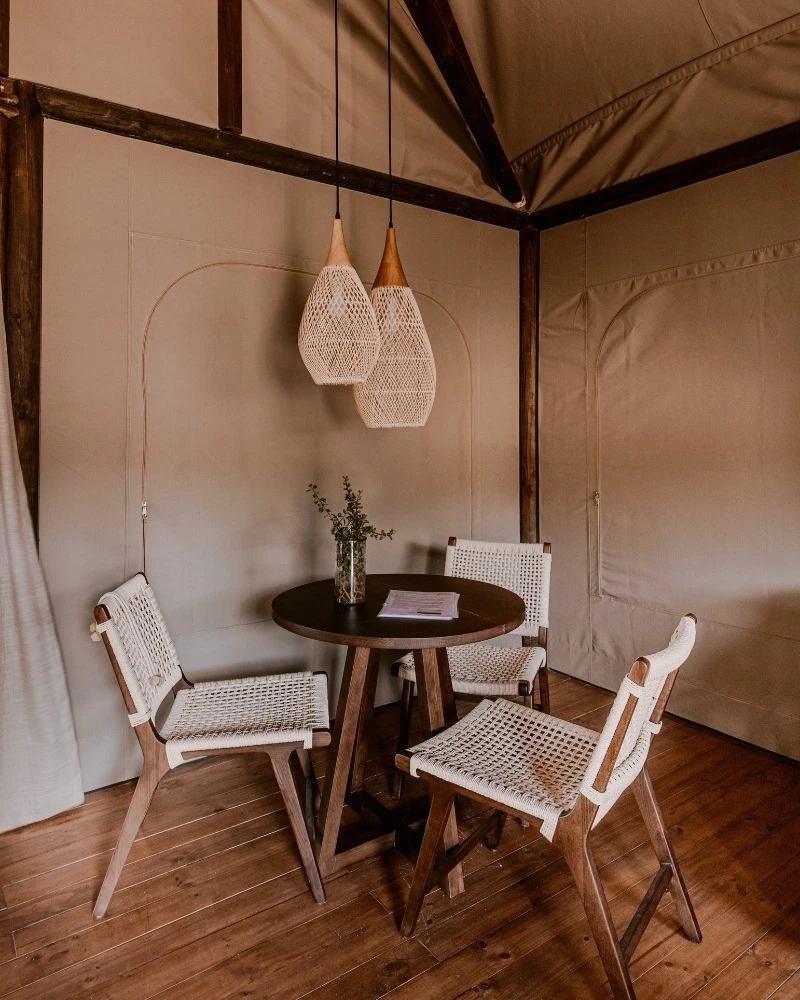

The style is restrained chic, simple furniture that echoes the colour of the landscape; it’s built for calm IMAGES Courtesy Yamu Lifestyle Resort
What makes Yamu different from other Cederberg luxury stays
Yamu is the only off-grid luxury tented resort on the Clanwilliam Dam. Its seven luxury tents are only a short distance from the social energy of the beach canteen, yet private enough to feel secluded.
There are three types of tent—Premium, Signature and Classic—each with a heated private pool outside, and inside, double-sided fireplaces. The interiors have warm, muted tones, timber, good linen, and canvas walls that do what canvas wall so when the wind picks up. The views are uninterrupted dam, framed by indigenous fynbos.
The tents are tucked discreetly into the contours of the land rather than imposed upon it, and are surrounded by Cederberg’s iconic rock formations. The tents are raised on poles so the natural inhabitants can move freely beneath.
REVIEW This charming Cape Town escape with a sauna in a garden will give you the reset you need
Then there’s Nima Spa. It isn’t housed in one space, it unfolds across the landscape. Massage rooms are inside canvas tents overlooking the dam, with an outside option. There’s also a rock pool, sauna and hot tub outside in the natural landscape.
The spa pamper-cum-nature saturation has its own remarkably calming effect on the body’s nervous system.
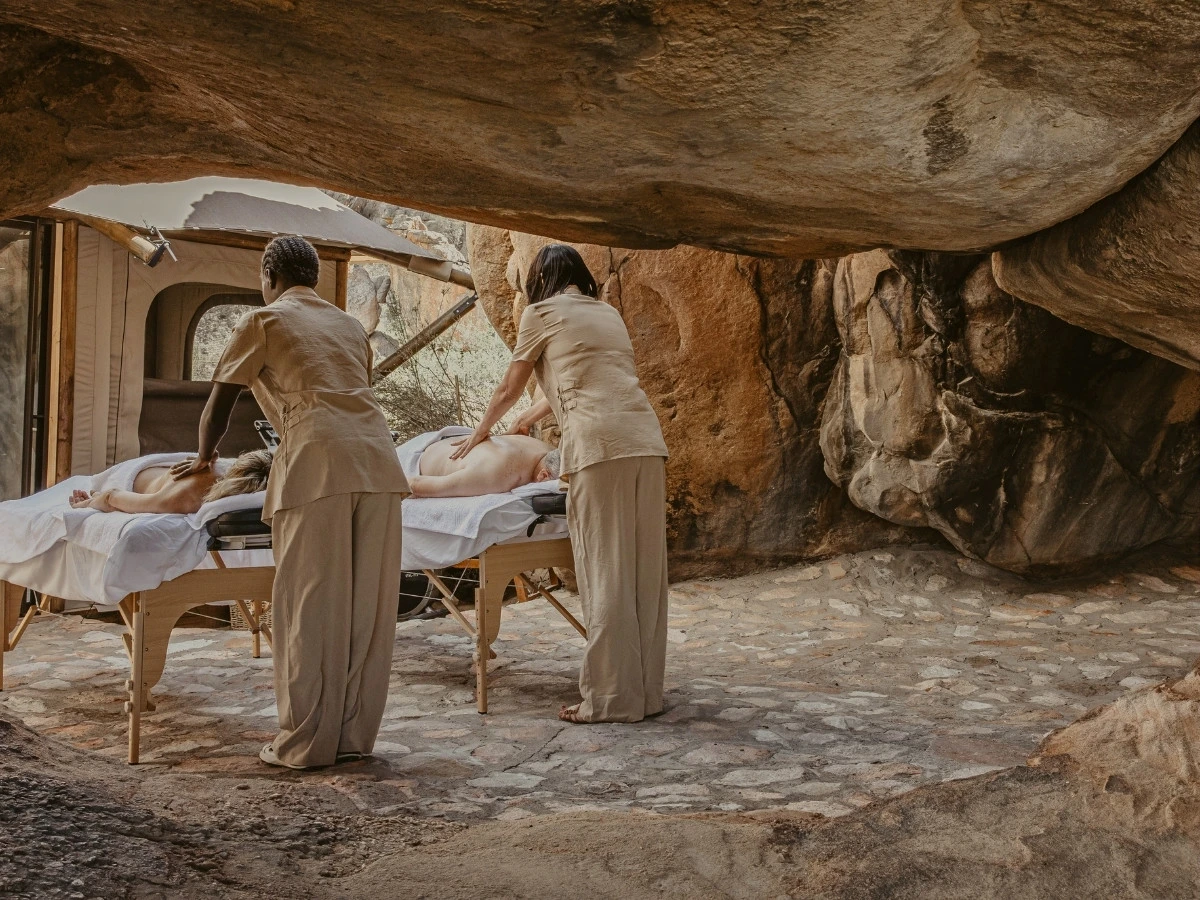
The spa is an indoor-outdoor experience, from massages under rock overhangs to saunas with a view IMAGES Courtesy Yamu Lifestyle Resort
Off-grid in the Cederberg: How Yamu actually runs
Yamu is fully off-grid on solar. Only e-carts are used on-site, minimising both carbon output and noise. The cart tracks have been kept to a maximum 2.3 metres to impact the environment as little as possible. And they’re very proud of their wastewater treatment plant.
It’s still in its opening phase, so many of the owners’ ideas are not yet in place, but they have ambitions, Stefan says: to build a homestead so staff can stay close to the site, saving the daily commute.
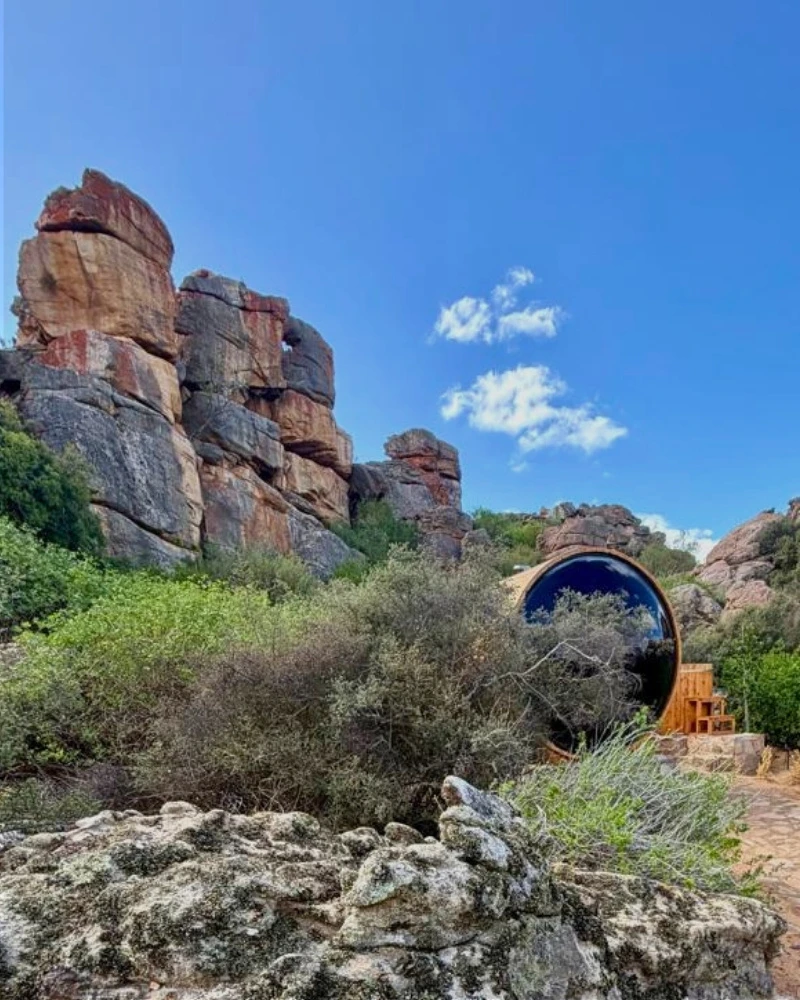
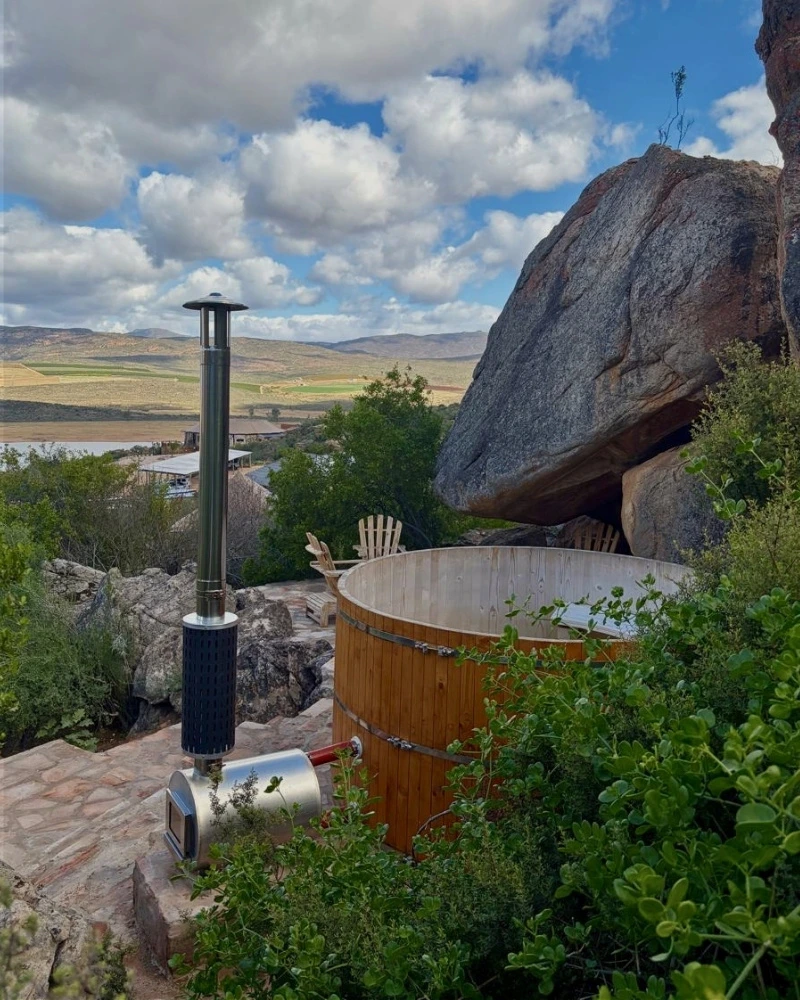
The spa is spread out, with charming and quirky spaces such as the sauna and hot tub with a view IMAGES Adeleen Cloete
The verdict: is Yamu Lifestyle Resort worth it?
What struck me is how smoothly everything operates. The e-carts don’t operate on a schedule, they’re simply ready when you are.
What stayed with me, though, was the feeling Yamu creates. Heading home, we considered stopping at a mall. But almost immediately my friend said: “I’m not going to a mall now. I want to revel in this feeling a bit longer.”
That feeling probably sums Yamu up best. It’s polished without pretension, luxurious without feeling performative. It’s a kind of barefoot luxury that lingers.
It’s still in its opening phase, so many of the owners’ ideas are not yet in place, but they have ambitions, Stefan says: to build a homestead so staff can stay on site, saving the daily commute, a community creche.
DETAILS
Stay There are three categories of tent at Yamu: Classic, Signature and Premium. Prices start at R3 192 per night for two.
Need to know The Laguna Beach Canteen is closed during the winter season and will open again in the South African spring school holidays). There’s an alternative restaurant currently operating opposite the rock pool. Yamu is also preparing to launch its main restaurant, Riverstone (the Pre-Launch will be on 29 May). It will be housed inside the resort’s striking ‘Great Tent’. Vehicles are parked at the reception area. Each tent includes the complimentary use of a private 4×4 e-cart, while a shuttle service is also available to transport guests throughout the reserve.
Activities There are many activities on offer, both on-site and off. Within Yamu Resort, there are water sports (canoeing, jetskis, boating and fishing), and the two restaurants. For more, see the website.
Website Yamu.co.za
YAMU LIFESTYLE RESORT'S APPROACH TO OPERATIONS
ENERGY The property runs 100% off-grid on solar, with an inverter-battery bank holding over 250 kWh of storage. Grid power is not part of the picture at all. Energy use is tracked around the clock, and all major appliances—pool pumps, water pumps, refrigerators and irrigation—are timed and app-managed. Pool pumps run no more than three hours a day. Lighting is LED throughout. In winter, the air conditioning is switched off entirely; gas-fed combustion fireplaces take over for warmth.
WATER Water is drawn from three sources: boreholes, surface water from the Olifants River, and rainwater collection. Use is metered, irrigation runs on timers, and pumps and switches across the property are fully automated and controllable via Wi-Fi. An on-site wastewater treatment plant handles greywater and effluent. Guests are reminded to use water mindfully at check-in, through discreet on-site signage, and across the website and social channels. During dry periods the approach is constant measurement and adjustment rather than blanket restriction.
WASTE Recycling and composting are handled at a central waste area, and the owners run their own waste to municipal disposal points rather than relying on a collection service. Around 90% of food waste is collected directly by farmer and supplier partners; used cooking oil is collected monthly by the manufacturer rather than discarded. All plastics currently in use on site are compostable, and suppliers have agreed to take their own packaging back after delivery. Single-use plastics are still in limited use ahead of the official opening, with the plan to switch fully to glass once the property is trading. On the build side, no material has been wasted—leftover wood, for example, was repurposed into photo frames.
CULTURE + COMMUNITY Recruiting in a rural area is a stated challenge—both for skilled hospitality staff and for quality F&B and construction partners—but the team is drawn mostly from the surrounding community and a nearby informal settlement. Wages are above the minimum bracket, training is ongoing, and staff are educated day-to-day on sustainability practice (down to not discarding cigarette butts, which the owner says adds up). Staff transport between Clanwilliam and the resort is provided. On-site staff accommodation is currently limited; a homestead is planned so core staff can live close to the site, which the owners flag as critical given how hard it is to attract skilled hospitality workers to a remote location. The kitchen sources locally where it can: vegetables from Vredendal, meat from Malmesbury, fish from Lambert’s Bay. The property has also contributed roughly R30 000 toward municipal cleaning and waste removal in the surrounding area, says the owner. Profit-linked staff benefit schemes are flagged as a next step once the property is trading in the black (we’ll follow up next year).
BIODIVERSITY + ECOSYSTEMS The property is not in a designated conservation area, and no formal conservation partnership is in place yet—the owners describe this as something to come, with the intention of exploring certification frameworks as the resort develops. What is already in practice is solid. The build sits on just 3 to 4% of the site. Tracks are capped at 2.3 metres wide. Tents are raised on poles, leaving the ground beneath hollow so animals can move underneath. E-carts were used in place of vehicles throughout the construction project, reducing noise and disturbance on site. Wooden poles were sourced from a mill in Mossel Bay, with quantities planned carefully to limit the carbon footprint; natural stone was sourced from the nearby Clanwilliam Dam construction project. Cement use was kept deliberately low. Some materials are imported—linen, leather, and certain pieces of furniture—while porcelain and most other materials are South African. Non-essential lights are switched off at night to protect dark skies and nocturnal wildlife, noise is kept down, planting is indigenous only, and no pesticides, herbicides or garden chemicals are used. Cleaning products are biodegradable, domestic pets are managed to protect local wildlife, and a strict no-feeding policy applies.