

Dog-friendly Piketberg farm stay with rewilded land and heritage cottages
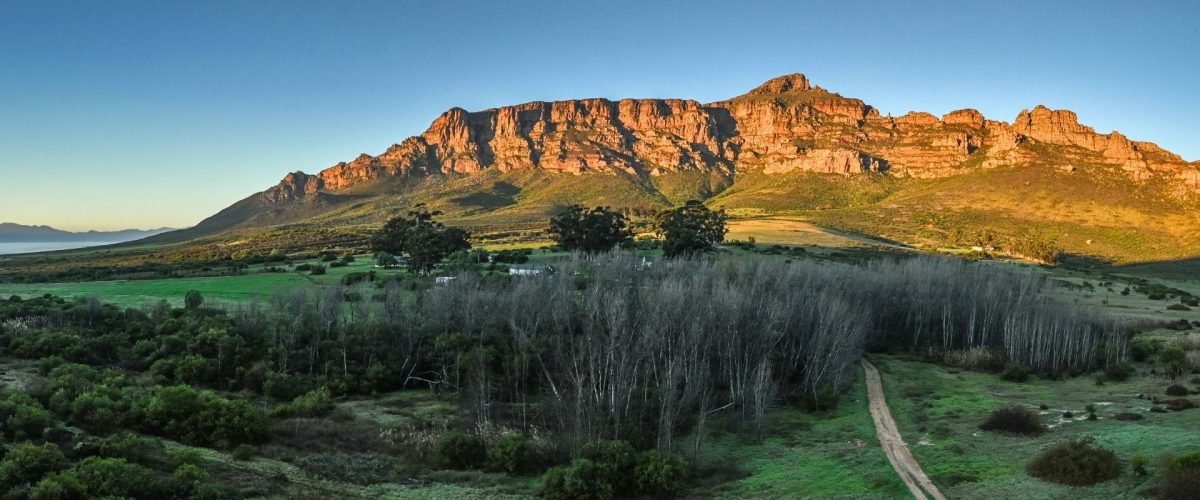
Wagenpad farm in Piketberg in the Sandveld is the ultimate family escape, with six houses from a romantic cottage for two to a cluster of houses for groups or big families
- Sonya Schoeman
AT A GLANCE HOW THIS STAY REDUCES ITS IMPACT
Energy Five of six guest cottages are solar-powered; smaller cottages run on a 12V system with low-wattage inverter; gas geysers and one donkey boiler supply hot water; farm homestead and staff housing on Eskom.
Water Sourced from solar-powered boreholes and natural mountain springs; grey water feeds gardens; black water to septic tanks with French drain overflow; water-wise gardens; free-roaming antelope graze lawns.
Waste management Waste sorted and sent to Piketberg recycling centre; compost bins for organics in progress; refillable glass bottles used for liquid soap dispensers.
Culture + community Almost all staff from the local Sandveld area; trained in wildfire management and chainsaw operations; provide on-site after-school care centre with informal schooling and activities; children’s education funded; subsidised school transport.
Biodiversity + ecosystems Part of Greater Cederberg Conservation Corridor; top two-thirds of farm is a reserve; Cape Leopard Trust and Black Eagle Project monitor fauna via camera traps; water courses cleared of invasive blue gums and oleanders.
Carbon footprint to get there From Cape Town in large, petrol car = 0,04 tCO2

The ice-cold, clear dam water is fed from the mountain and is bliss after a hike. IMAGE Garrreth Bird
Float in the cool dam after a hot hike; watch the birds
Do scenes ever lodge in your brain like little movie vignettes when you travel? At Wagenpad Farm, I was floating in the crisp, mountain-fed dam when a movement caught my eye. It was a greater striped swallow skimming the water’s surface, flying right at me. It was at eye level. I could see the flat of its head and liquid-black eye distinctly and, as it dipped to drink, a tiny wave formed either side of its beak.
That moment lives like cinema in my mind. It goes with the soundtrack of rustling poplars, thrumming bees, the calls of bokmakieries, francolins and, at dusk and dawn, the silky hoots of owls. Birdlife here is abundant.
Heritage was honoured in this renovation (as was Tina Turner)
When the Le Roux family bought the property about 20 years ago, Pierre le Roux was advised to bulldoze the many dwellings and start afresh. He ignored that; he loves the architecture of humble Klein Karoo and Southern Cape houses, having grown up there.
Add-ons were removed from original structures (some built as far back as the 1700s) and master builders from Wittewater and Mamre restored these using naturally available materials such as clay, and plaster mixed with lime and dung. The buildings were painted with eco-friendly lime paints.
Old materials found on the farm, such as bricks, lintels, doors, doorframes and reclaimed corrugated iron sheets, were repurposed. Lintels and some roofing beams were made from the blue gums harvested in alien-removal programmes on the farm.
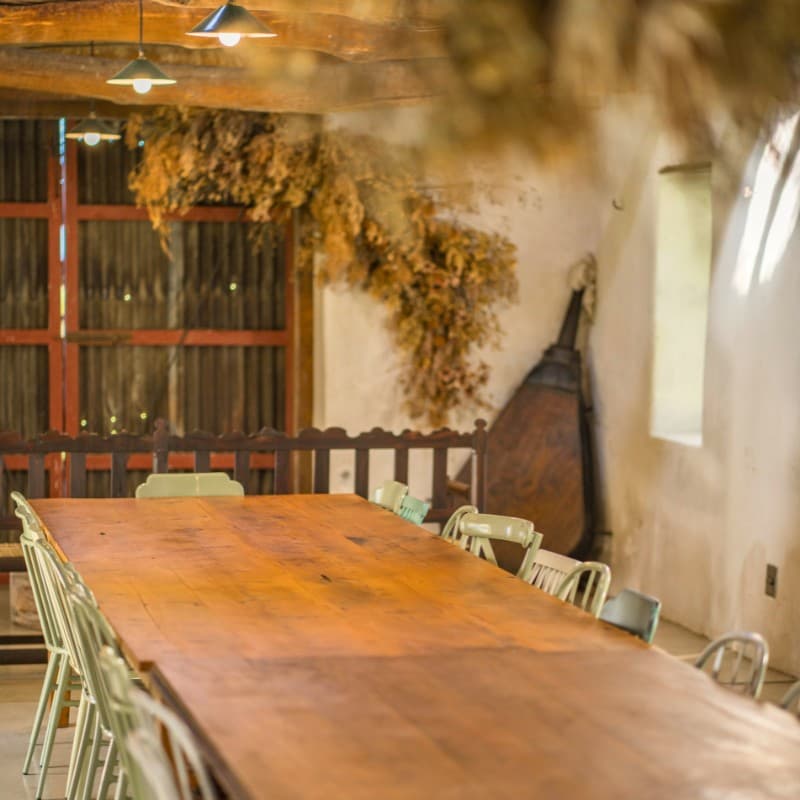
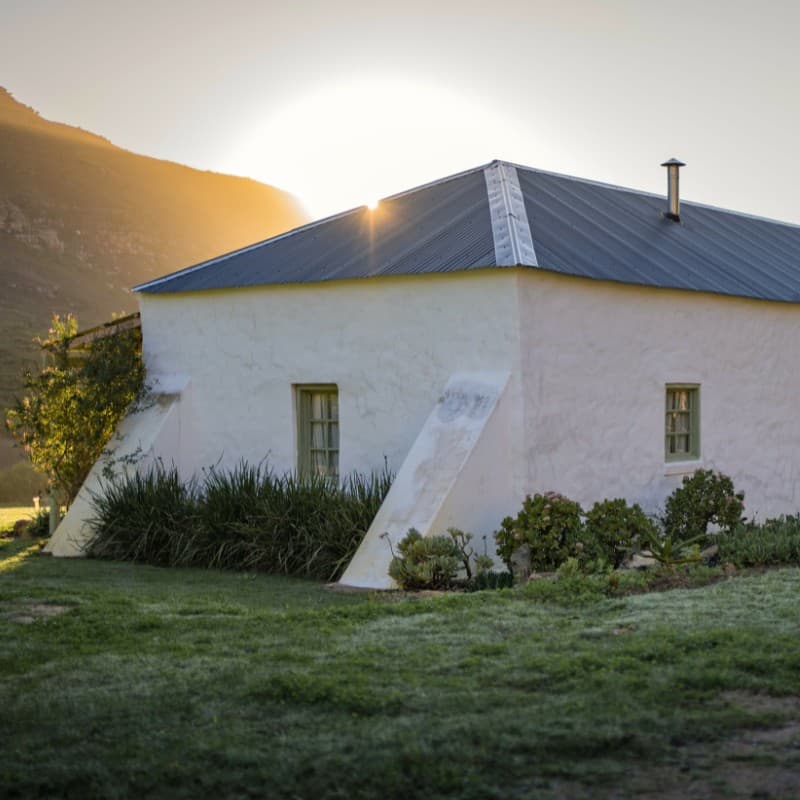
Tina Turner is the oldest building of the six, and is also where events can be held. IMAGE Maree Louw
The Tina Turner shed is the grandest old lady. She can be dated because her walls were made with rammed earth, a technique used up to the 1750s. Like her namesake, she’s magnificent, the milkmaid version of the rockstar diva. She’s now a roomy entertainment space, fitted with a kitchen and whatever else a successful celebration requires.
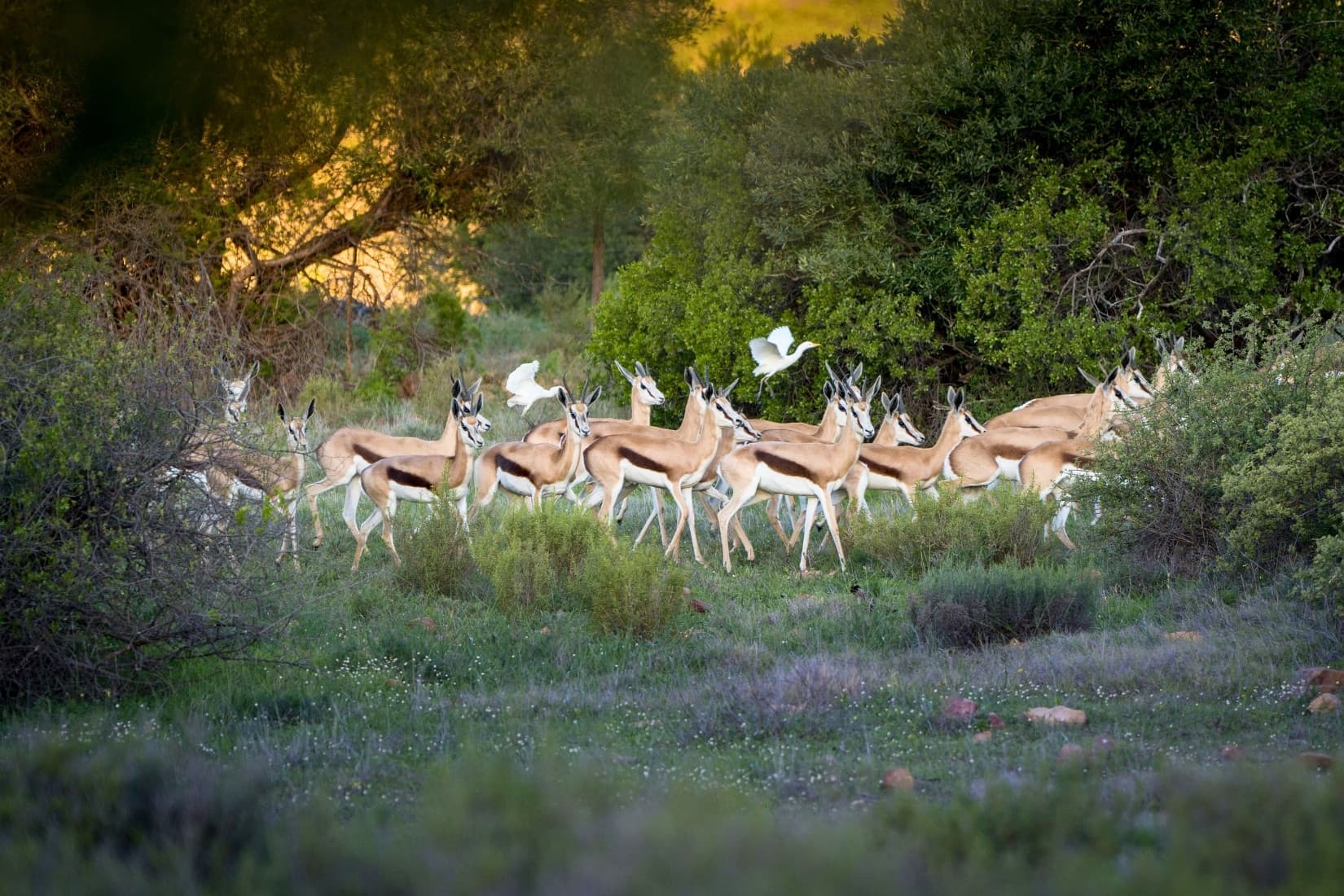
A section of the farm has been rewilded with springbok, zebra and other game IMAGE Garrreth Bird
A section was rewilded. Walk close to Cape zebra and springbok
The farm lies in the curve of a mountain range. There are no roads cutting through. Once here, guests are asked to walk rather than drive. The quiet is noticeable.
The upper part of the farm has been rewilded and species indigenous to the Sandveld area (Cape zebra, springbok and bontebok) have been reintroduced. It’s bringing new life: camera traps have captured Cape leopards, African wild cats, aardwolf, honey badgers, caracal, baboons, duiker and grysbok.
There are trails around the farm, up the mountains, through the poplar grove. One route meanders through the rewilding area, where dogs must be kept on a leash.
The night skies glitter. Piketberg is a few kilometres away and there’s very little light pollution. It’s classified class 2 on the Bortle Scale, which is described as ‘average dark sky’ but there’s only one better on the scale (class 1, obviously), which is as an ‘excellent dark sky’.
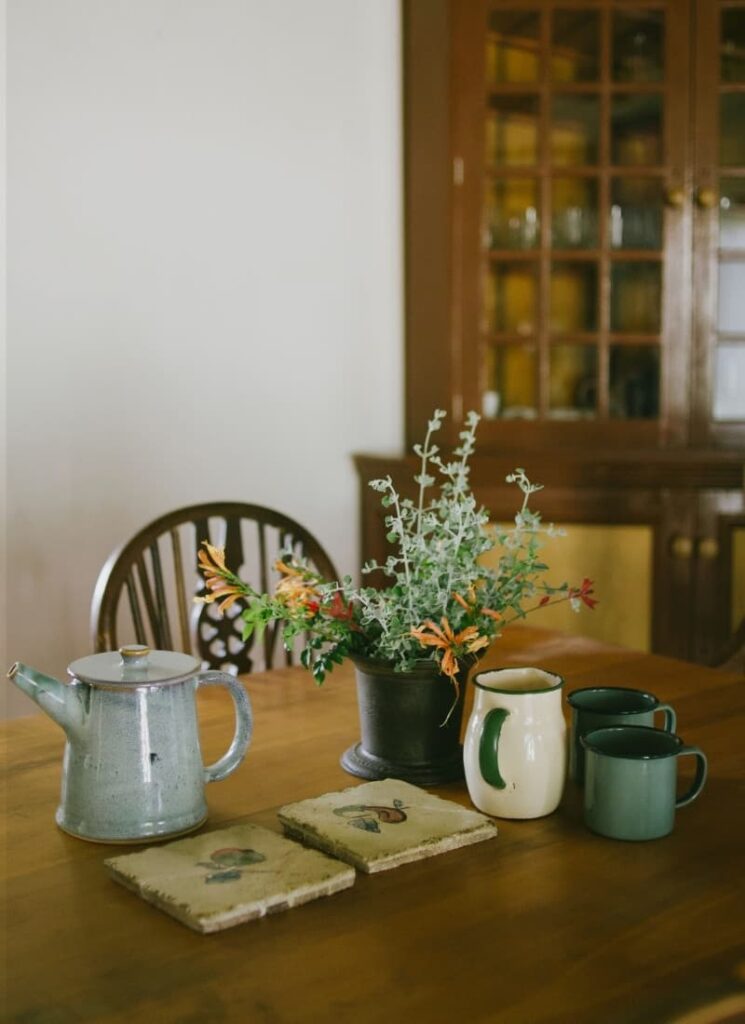
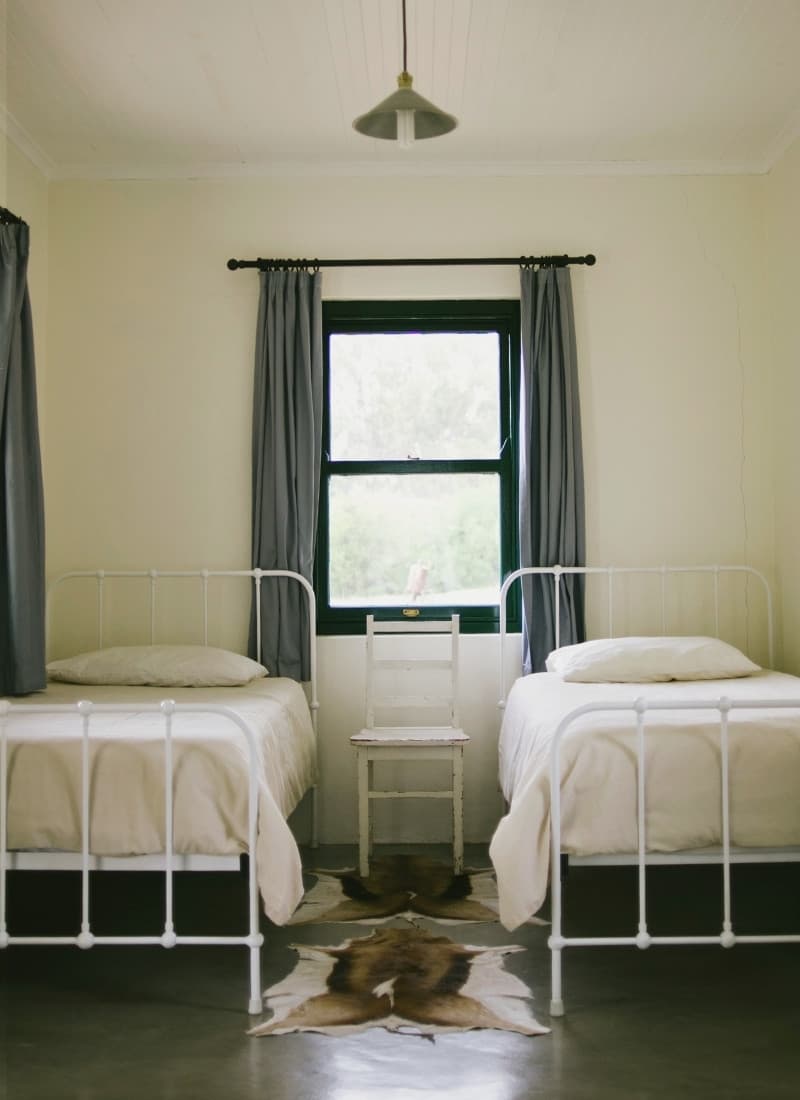
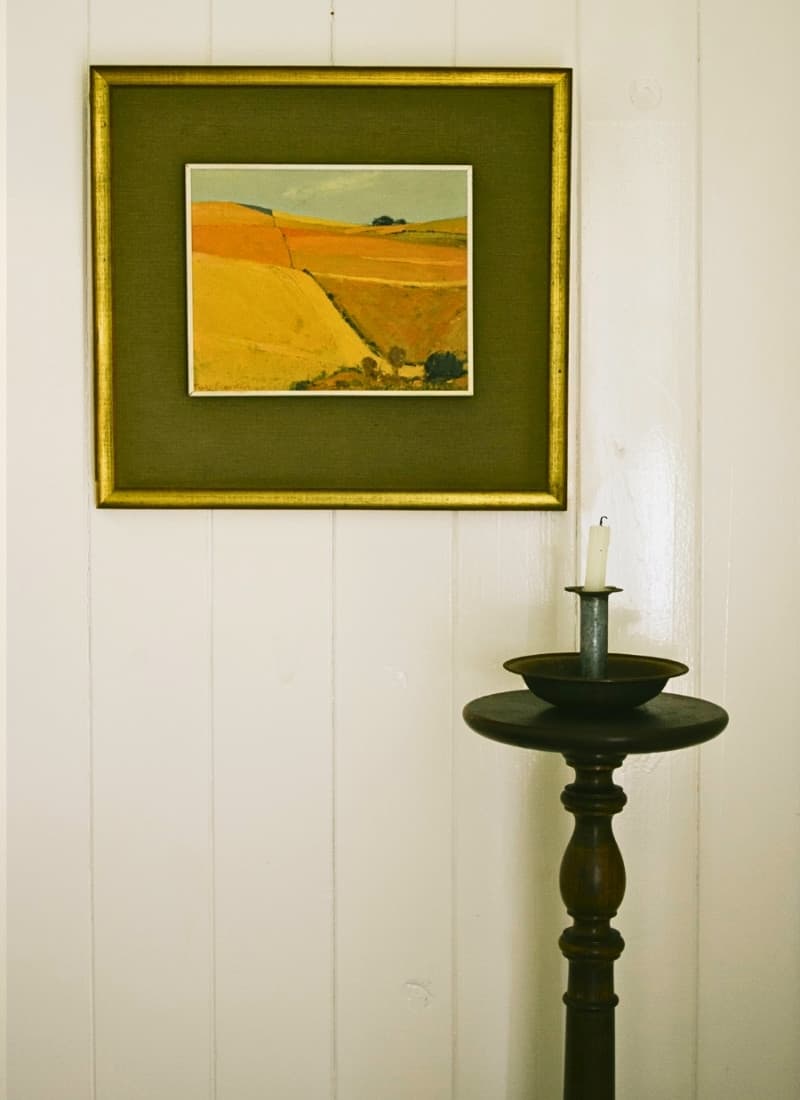
The cottages have wonderfully restrained feel, each item intentionally selected, yet it doesn’t feel at all precious IMAGES Maree Louw
There are six cottages, every one lovely, plus it's very family friendly
Each cottage has thick walls, roomy stoeps with comfy daybeds and couches, tin camping mugs, locally made wool blankets and an occasional Mungo and Jemima throw. All this in a palette of greens, whites, a warm sand, deep reds and wood detail and original artworks. They’re stylish, but unfussy so it’s a super-relaxed getaway for families with kids.
We stayed in Mooiheuwel, set apart and private. We hiked, swam in the clear dam water, read on broad daybeds on the deep back stoep or sipped coffee (and, later, cocktails) on the front stoep soaking up the views of the mountain and farm patchwork unspooling across the valley.
DETAILS
Stay Accommodation costs range between R1 200 and R1 900 per cottage per night, 2-night minimum stay. There’s also a camping option (R150 pp/pn), but it’s only applicable to larger events.
Need to know It’s self-catering. The closest town is Piketberg (about 30kms away). Winter nights are cold, and summer days can get very hot. There’s a man-made dam and one cottage (Oupa) has a very sweet, farm-style plunge pool.
Activities There are a few hiking/walking trails; birdwatching is good, as is stargazing; rock climbing is allowed at your own risk (find out more here). It’s horse-friendly; enquire if you’d like to bring your own horse (for a small grazing fee) and occasionally they offer horse-riding, so enquire beforehand.
Website wagenpad.com
HOW WAGENPAD FARM REDUCES ITS IMPACT
Energy usage The farm homestead, workshops and staff housing are powered by Eskom, while five of the six guest houses are solar powered. The smaller cottages run on a 12V system, with only a low-wattage 220V inverter system to charge devices and power music systems. There are limited plug points, and guests are asked not to use heavy wattage appliances. In the solar cottages, gas geysers are used to supply hot water and one cottage uses a donkey boiler. Solar water geysers are problematic in the Western Cape due to prolonged cloud cover at times, say the owners.
Water usage Water is drawn from solar-powered boreholes and harvested from natural springs on the mountainside, mostly in the upper reaches of the valley. All the cottages have their grey water going into the gardens. Black water/sewage flows into septic tanks, with overflow connected to an extensive French drain system. The gardens are water-wise, with endemic, hardy plants, although the natural couch-grass lawns around some houses are irrigated. The free-roaming antelope graze on the lawns, which reduces the power needed for cutting and trimming.
Waste management The owners are implementing a waste-management system, with compost bins for specific organics. Other waste generated on the farm is sorted and sent to the local recycling centre in Piketberg. To reduce waste, refillable glass bottles are used to dispensers liquid soap (it’s a Kloovenberg product and smells gorgeous).
Community and culture The owners describe the culture as ‘respect for and sensitivity to people and nature, and hard work and attention to detail’. Almost all staff are from the area with a long history and connection to the Sandveld area, and have been trained in skills such as wildfire management and chainsaw operations. There’s a “safe space” and after-school care centre that offers informal schooling and activities for the children on the farm, and the owners have funded numerous children’s education and subsidise school transport. The staff don’t have equity in the business.
Biodiversity and conservation The farm is part of the Greater Cederberg Conservation Corridor. The top two-thirds is a reserve; the rest is farmed with cattle and rooibos tea. The Cape Leopard Trust and the Black Eagle Project monitor the local fauna with numerous camera traps. Collaborating with the Working for Water programme, the farm’s water courses have been cleared of invasive blue gums and oleanders, a continuing programme. Some poplar groves remain as the family felt they were part of the farm’s heritage.