

12 things a guide gets you on a flower tour that you'll miss on a self-drive
The springtime extravaganza across the Western and Northern Cape is happening now. We asked two experienced tour guides—Carmen Lerm from West Coast Way and cultural botanist Rupert Koopman—what they add that gives the flower experience a boost
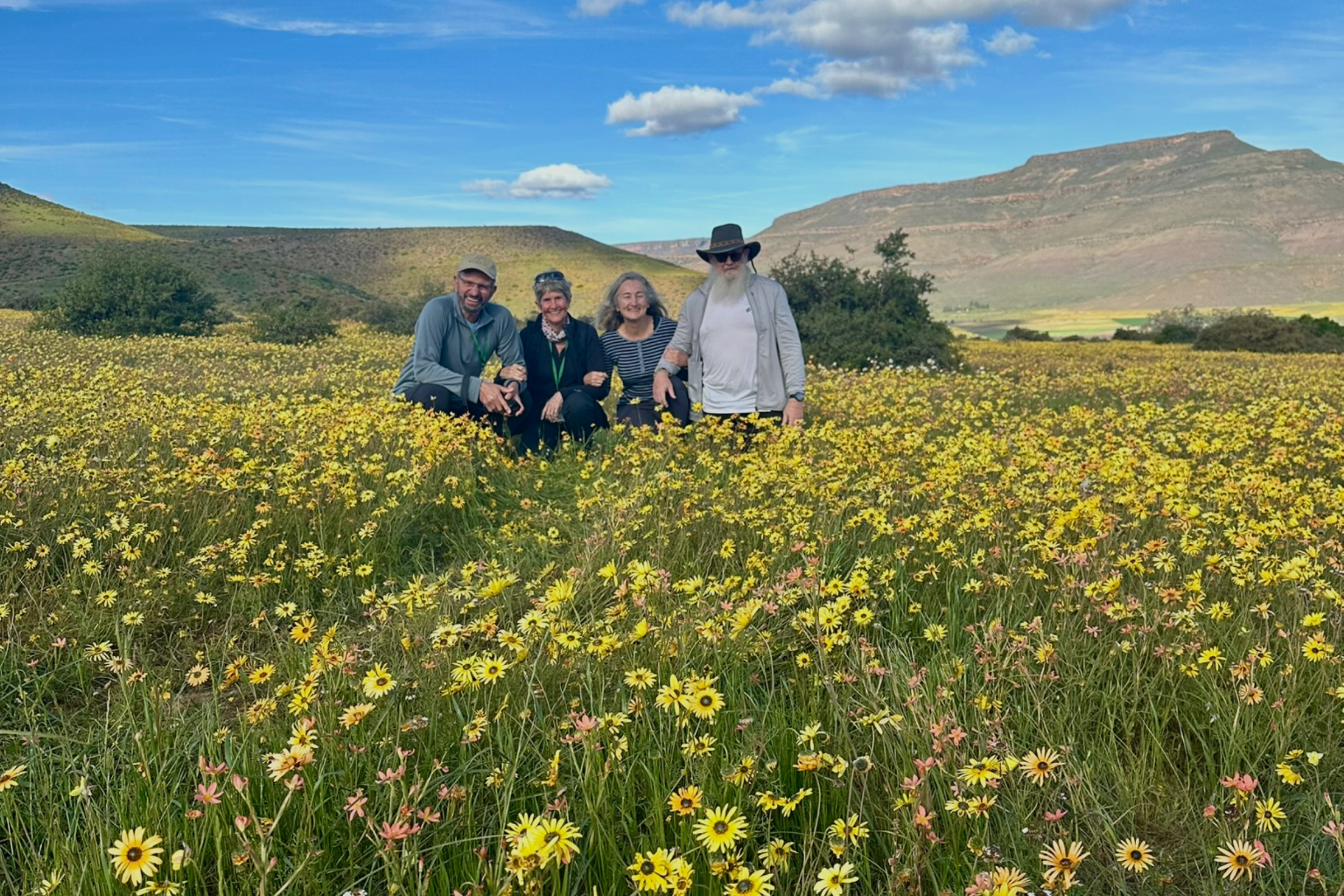
- Sonya Schoeman
I’ve always been a ‘go your own path’ traveller, and it worked out beautifully. Or so I thought, because you don’t know what you don’t know until you know. After my first guided tour, I realised just how much I’d walked straight past in places I thought I’d got under the skin of.
Here’s why that bites: most trips or experiences are a one-shot deal. Think about it: we go somewhere or do something once, have a great time; and next time you choose the new experience. So miss something the first time, and chances are we miss it for good. So for South Africa’s flower season, we wanted to get a guide’s perspective.
Rupert Koopman is a conservationist of 20 years’ standing. His day tours reveal a world of plants that pull together history, culture, politics, crime, conservation and philosophy — and he tailors the walk to his group’s interests.
EXPERIENCE This Cape Town botanist’s stories about plants will change how you see the city forever
Carmen Lerm of West Coast Way flower tours span five days. I’d trust because across a two-day interview, she knew every small town and everyone in it, and the reviews back up that the experience is good.
We asked them this question: What do you get from a guided tour that you won’t get on your own?
Botanist Rupert Koopman
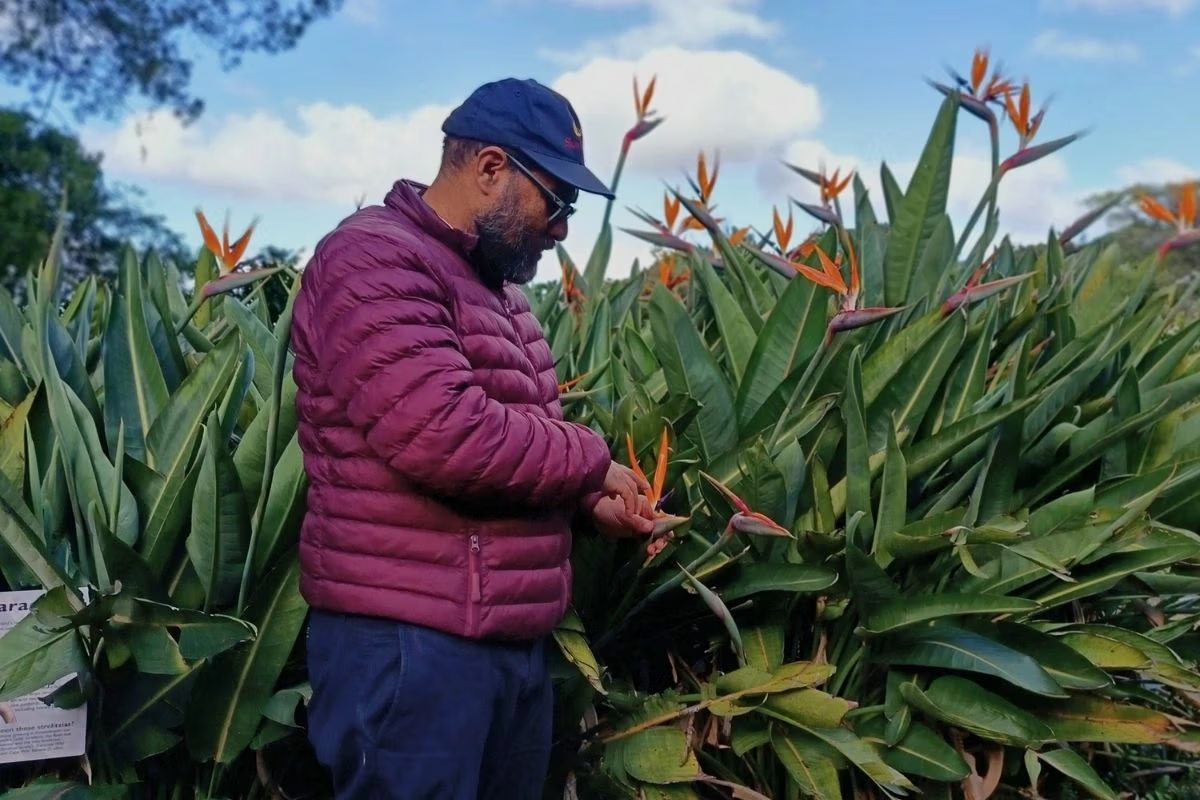
Rupert Koopman also does two-hour tours in Kirstenbosch Botanical Garden. We couldn’t believe how much we learnt in 900 metres IMAGE Travelosophy
1. Even if the flower season fails, he'll find something of interest in the Cape's endemic flora
We’re working with a natural system, not a garden, so the timelines are completely up in the air. You can be blessed with great rains and have a fantastic year, and then — and this is probably going to keep happening with all this climate-change-fuelled variability — you just don’t know what you’re going to get. This year’s a good example: after that really dry July the flowering’s been unpredictable.
So if the flowering’s great, it’s a bonus, really. It doesn’t matter how good it is, and it doesn’t much matter what time of the year — we’ll be finding things that are interesting. This is the Cape. We’ve got close to 70% endemism, so you’re going to see things you won’t see anywhere else on the planet. That’s a really reliable thing.
2. You'll understand the West Coast landscape
Firstly you’ve got to make people comfortable in a landscape, help them understand it and make connections to it. Then the plants are your markers for what’s happening. At different times of the year those markers are different, so there’ll always be a slightly different story — based on what’s flowering, or what’s not, or what should be flowering.
I’m interested in the history, in a sense of time in the landscape — both geological time right through to the contemporary. When I go to a new area I do a bit of a deep dive into the literature. Okay, what are the animals that used to be here? What’s the Khoi action that was here? Any archaeological information, anything more recent? And then of course I’ve got 20 years of my own to add on top of that.
3. Expert plant knowledge and climate context that interests you — and will move you
What you get from me is accessibility to up-to-date expert knowledge and context — and my own. Not only the academic knowledge of the plants themselves, but the context of climate change, the things other people might be nervous of speaking about. I try to make those accessible. Also, my knowledge is up-to-date, a function of the community I’m part of — there’s constant feedback.
There’s the use elements too — food, medicine. I’ve been on both the regulatory side and worked with restaurants, so it’s a rounded picture of what our plants do and are. And then, honestly, just love and appreciation, because they’re so cool. We’re very fortunate to live where we do.
If I think about the feedback I get from people, it’s that they never thought about things in that particular way. It’ll shift your perspective on something out in nature. What that something is depends on your interest — but it’ll move you.

Pedi se Baai in Namaqualand. Rupert first familiarises hikers with the landscape, then reveals the world of plants IMAGE Rupert Kooopman
4. The South African history, stories and politics behind the plants that can shift perspectives
I’ve a neurodivergent interest in things, and an encyclopaedia of stories in my head. In terms of history, it isn’t just history for its own sake — it’s the complex South African historical and political story woven into the information, which is what makes it rich.
For example, when you’re up on the Tygerberg mountain, you can see Robben Island, the Cape Flats, into the Boland — you see the whole of Cape Town from a completely different perspective. It’s actually a really good way to start a trip in the Cape. That contextual layer, alongside the sensory one, is what shifts something for people.
5. A curated nature experience that speaks to your group's specific interests
I do a round of introductions in the beginning of a walk because it helps me find out where people are at. The more time you spend, the more you can really hone in on what people are interested in.
There’s no standard script for an area. For each place I’ve got my own experience of going there looking for plants, thinking about it from a conservation point of view — what’s the vegetation type, how much of it is left — and then the library comes in. I’ll pull a couple of books off the shelf and see if there’s an interesting fact out there.
On the day I’m always trying to dance around the pieces to see which angle is going to work — cultural, taxonomy, whatever it is. With younger kids you dip into the sensory stuff, the smelling and touching. I pay attention to whether people are flagging. How do you keep engagement and energy up? Sometimes it’s not by talking a lot — it’s by stepping back and letting them experience the time.
Some quiet time is good, so they can listen to the birds. It’s the curation of a nature experience that tries to meet you where you are.
6. A connection with people of similar values
I do that round of introductions up front because it helps me find out where people are at and what they’re interested in. What’s lekker is that you see really nice conversations sparking. It’s a place to connect not just with nature but with strangers who have a similar vibe.
That’s a very human thing — we want to be around people with similar values. We don’t usually think of being interested in nature as a value, but it definitely is. If you’ve set aside the time, you’ve paid, and you’ve entrusted yourself to me for that period, it’s a privilege I don’t take lightly.
7. Short walk accessible to you, your kids and the grandparents
Our standard Kirstenbosch walk is two hours and 900 metres. Tygerberg’s a bit longer. We’re not talking about massive hikes — it’s deliberately structured that way. People have limited time and limited attention, and there’s accessibility to think about. I want the walks to be 8-to-80 accessible. I’ve had four generations of one family on a Kirstenbosch walk. Anyone can do it and get benefit out of it.
The full-day private walks — Postberg Nature Reserve through to somewhere like Tsaarsbank, in Langebaan — that’s a different kettle of fish. But the publicly accessible ones are two hours. They’re meant to be introductions, with follow-up in mind, and I’m starting to get a small group of repeat walkers, which tells me they like the product.
West Coast Way owner Carmen Lerm
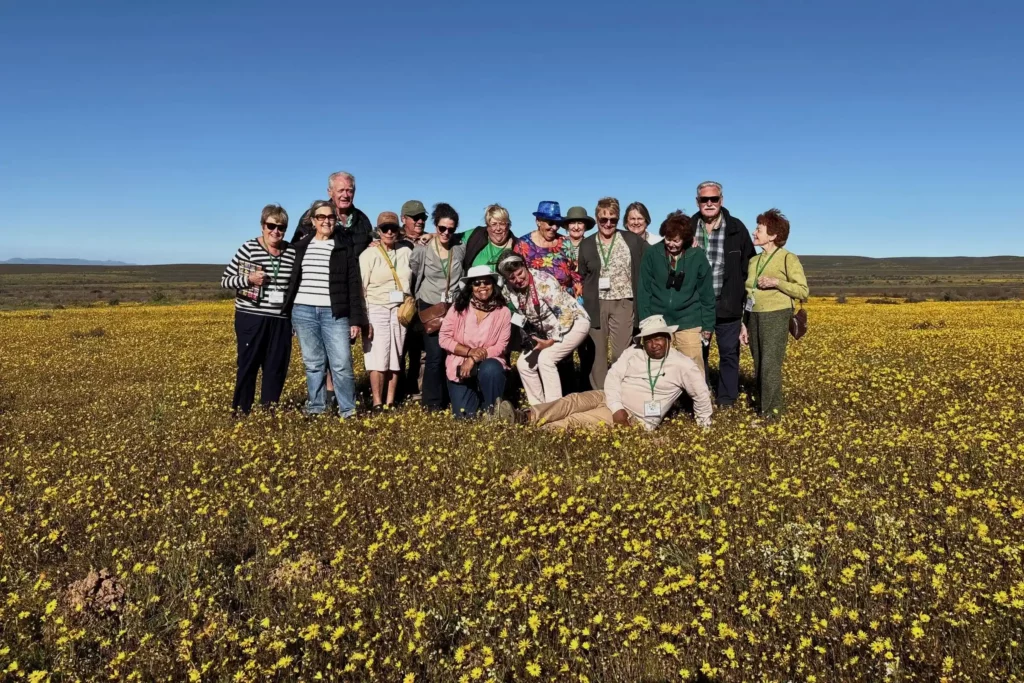
A group on a West Coast Way tour, where all the details are taken care of. Carmen Lerm is in the centre in a green top. Tannie Lana is next to her in the blue hat IMAGE Courtesy West Coast Way
8. Access to private West Coast farms a self-drive can’t reach
The West Coast is like a mega nature park, but people don’t always realise it’s made possible by privately owned land. A hidden gem isn’t hidden because it’s small — it’s because it’s so seasonal. A farm might only open for two weeks: the farmer takes all the cattle and sheep off a huge part of the land, opens the gates, and visitors from around the world can come in.
Those owners are one-of-a-kind, multi-generational people, and you become part of the family very quickly. It’s all built on a relationship of trust — the landowner trusting me, and the guest trusting that I have the knowledge to take them to the right places.
9. Safety and comfort, especially if you aren't familiar with these more rural areas
We’re offering people safety and comfort. You might not have the confidence to drive Pakhuis Pass or through the Cederberg on your own, just following Google — you’d fly past and only hear afterwards about the place everyone tells you about.
And nothing is guaranteed. You can arrive on a farm to loads of flowers and go back two weeks later to bare ground. So you need strong nerves and a real sense of skill — and that’s where the company comes in. People just decide on a date, book, pay, rock up, enjoy, relax. That’s exactly how one of our guests put it.
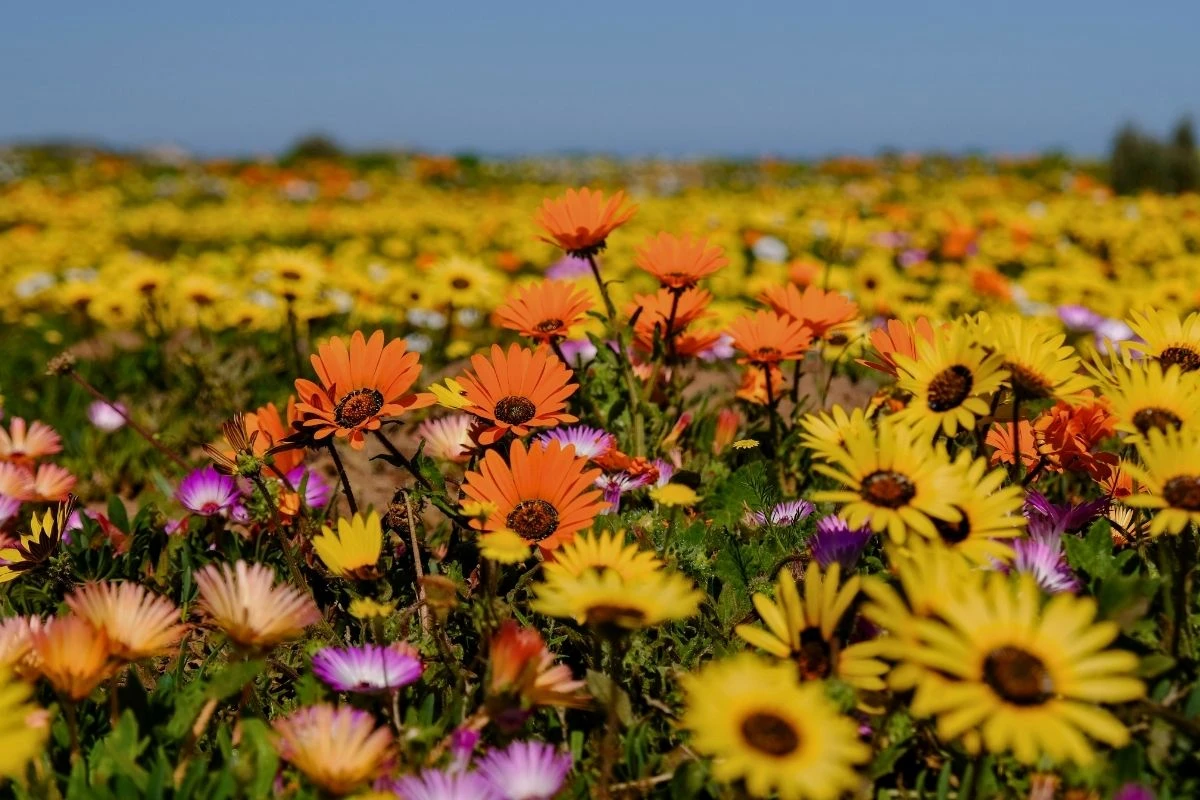
The abundance of blooms very much depends on the winter rainfall, which is likely to become less predictable with climate change; however, a guide will be able to find those pockets of blooms IMAGE Courtesy West Coast Way
10. Local knowledge that'll save you a wasted day on the West Coast flower route
Doing a West Coast tour is very involved, and my job is to maximise the time. If someone spends three full days here, I want them to get the most out of every one — not lose a day to guessing and dead-end farm tracks. You could drive past and miss an important place, and only hear about it afterwards. I know which farm is open, when the light is right, and which two hours to spend where. That local knowledge is what you’re really paying for.
11. Connection to the West Coast farm families and local guides
Wherever we go, it’s about connecting people to things they’ve never had time to look at. There’s Tannie Lana — the induna of flowers, sixteen going on a hundred, glitter hat and a multicoloured jacket. Her hand goes up and everybody has to fall out of the vehicle for the flower that’s blooming only right now, this one week.
We use a lot of local site guides. At the Nieuwoudtville church the local woman who worked her way up to tourism officer takes you round; at the waterfall the original families sell their konfyt and dried fruit and skanskoek. You end up meeting people’s grandchildren by the end of the day.
And we invest — we insist on paying, even when Tannie Lana says the box wine and the bobotie are in the corner and you don’t have to pay a thing. They don’t do it for the money; if they did, they wouldn’t do it at all.
12. A transformative experience led by a cultural guide who knows stories not scientific names
I’m a qualified cultural guide, not a botanist, and honestly I most probably underplay my knowledge of the flowers. When I started, I stressed — I thought I’d have to know every scientific name. And guess what? No one is interested.
They’re interested in the transformative experience: the colours, the smells, the absolute quietness except for the bees. People can easily feel intimidated by a guide — I know, because I didn’t start off life as one, so I’m very aware of it.
My main job is social connection. The trick is that if you stay as amazed and as hungry about the flowers as your guests are, you have a way of connecting. People who know all the flowers sometimes have no way of connecting with people who don’t.
DETAILS: Rupert Koopman's upcoming tours
RUPERT KOOPMAN’S UPCOMING TOURS
Contact Direct Mail Rupert @rk_ct
DETAILS: West Coast Way's upcoming tours
WEST COAST WAY’S UPCOMING TOURS
21-25 August, 2026