

Every plant is a clue: How botanists make sense of the world around them

Drop "plant people" anywhere on the planet and they'll find it interesting, says Ismail Ebrahim, head custodian of SANBI's Custodians of Rare and Endangered Wildflowers. But working in this field is not all fun and roses
The natural world gives me a spiritual connection… I need to make. If I’m just surrounded by buildings or man-made things, my energy levels keep dropping. I need a natural environment to be able to replenish my energy.
My spirituality lies in the connection with God… and the best place for me to find that is in nature because it’s what God created. So when I’m up in the sticks … I feel it’s an easier way to connect because there’s no distraction and no barriers for communication. I sometimes pray vocally out there.
I think a lot of the cultures in South Africa have some direct connection to the veld. Even if sometimes those connections are watered down through the generations where it has just become a ritual thing and the value of what you get from it is a bit of a miss.
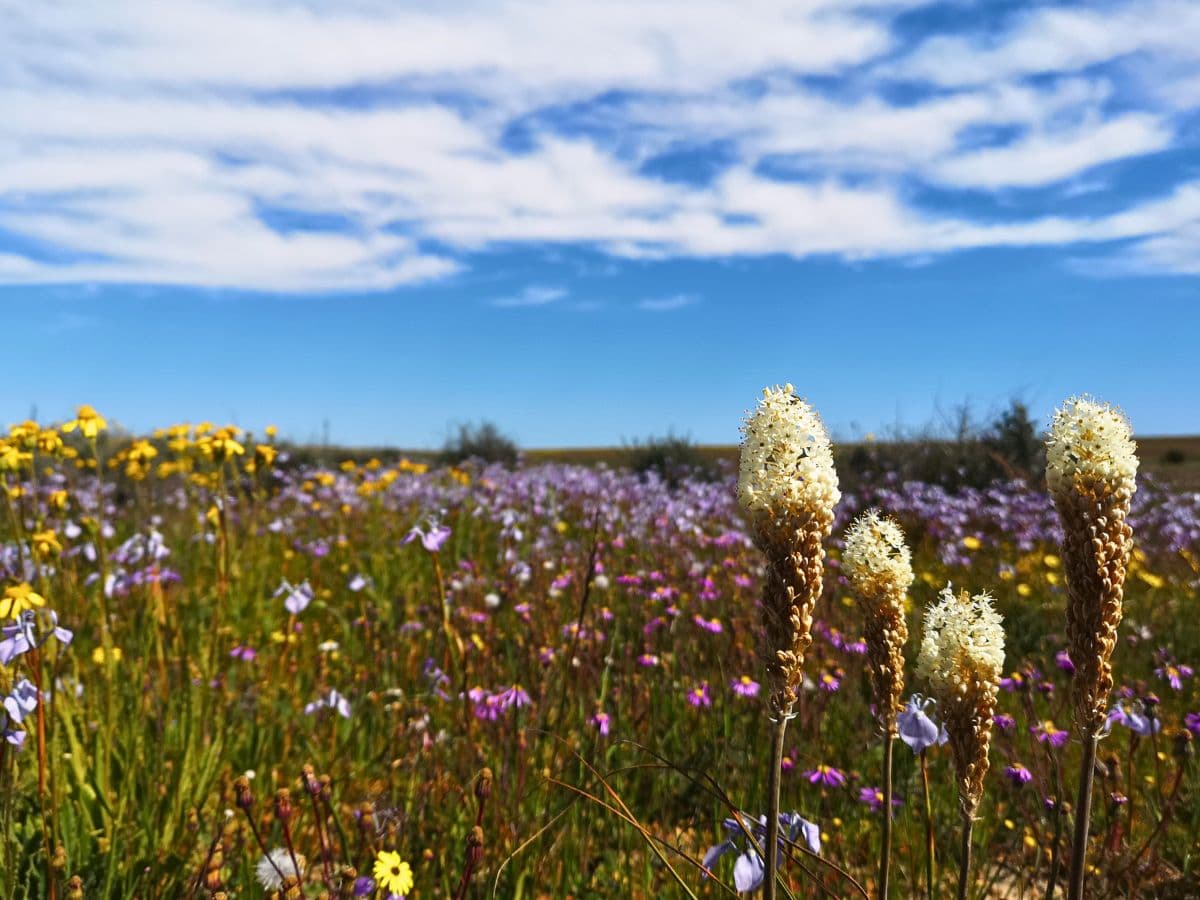
Springflowers in Nieuwoudtville in the Northern Cape, one of South Africa’s most spectacular nature events IMAGE Ismail Ebrahim LEAD IMAGE Kirsten du Preez
My father used to do an annual trip to Durban… but it was basically to visit family and we wouldn’t stop along the way. For some reason my dad loved the Wild Coast Inn at that time, so we would drive [from Cape Town] and spend two days there, stop in at my cousin’s place and stay for two days there, go to Durban, stay for two days there and then drive back.
Most of the time he was just going up to make business deals… and we would be driving around with him to visit guys from this factory and that shop, just sitting in the car and him talking to guys.
My dad was a businessman, so we worked in shops seven days a week. The usual thing in our family was when you finish [high] school, then my dad would open another shop and you kind of manage the shop. We were six kids, four boys… My dad basically had free labour.
I love travelling with this really wonderful taxonomist… Professor Charlie Stirton (he’s a world-renowned taxonomist and such a humble person) because for every minute of driving, he’s observing interesting things about the landscape.
I remember he once said to me… “The most exciting part of your journey… is how many observations you make during your journey.” If you’re just driving and you’re looking at the road it’s gonna be so boring, but you know you can make it exciting by not only looking at what’s around, but also trying to analyse what is going on. It’s like your access to understanding environments is through the plants.
I think that, as plant people, you could drop us anywhere… in South Africa—or anywhere in the world, really—where there is natural vegetation and we would find it interesting.
"I want to be in the middle of nowhere. We want to have our campfire and we don't need all the equipment and microwaves and all that kind of stuff"
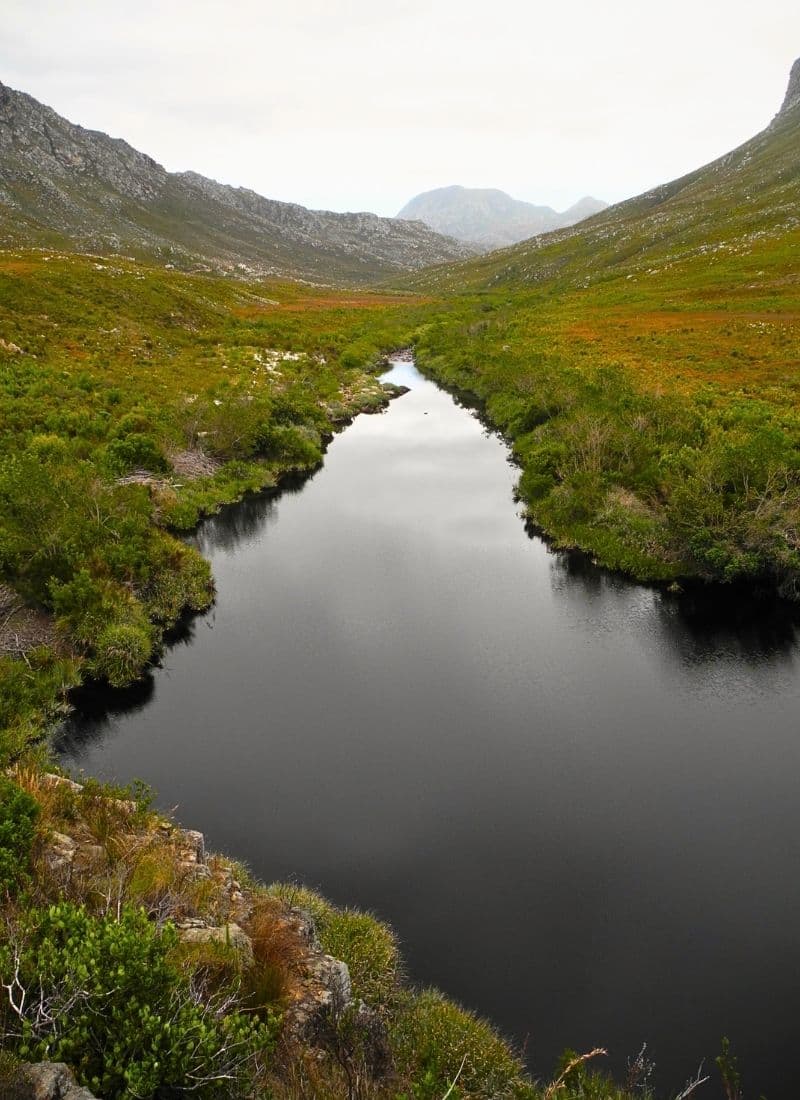
The Kogelberg is one of Ismail’s favourite natural spaces, one he feels a great connection with
IMAGE Ismail Ebrahim
The Kogelberg is one of Ismail’s favourite natural spaces, one he feels a great connection with
IMAGE Ismail Ebrahim
"I want to be in the middle of nowhere. We want to have our campfire and we don't need all the equipment and microwaves and all that kind of stuff"
A few years ago, we did a project in the Karoo, where there was… the threat of Shell gas fracking. We had very little data available about where the sensitive areas were, so we had to go out and collect it. That took us on this journey into these completely different landscapes we weren’t used to — these amazingly remote landscapes where you could be out in the field for four days and not see another person. It gives you quite a different feeling to work with.
Although it’s quite a dry landscape, there’s very little pollution and… there’s this freshness of air, very little noise, it’s not very buzzy. I experienced these incredible feelings of calm and peacefulness. I think that’s one of the things that travel does, it takes you to different places where the energy of that place has a different experience to offer.
It depends on how you travel – if you’re not open to experiencing it then… you’re not going to receive that. But if you’re in the wide-open natural spaces and you open yourself to that, to accepting those kind of feelings and energy, then it becomes almost a transformative journey.
But working in the conservation sector is not always as flowery… and cheerful as people think it is, because we’re working with habitat transformation, there’s a lot of loss of biodiversity.
There’s a lot of people that couldn’t give a stuff about biodiversity and for people who are working in it… it has an emotional, spiritual and mental impact on you when you go down the West Coast and you see these beautiful landscapes are being ripped apart for diamonds, for example. I know that for some people having a diamond on their finger has all the meaning for them. But for us, we’re seeing the stark realities of what is being lost through that process.
But the emotional strength comes back when… you are in an environment that is untouched and natural. And I think people need to open up more to that to allow in that energy, because even in the last five or seven years, it’s become quite bad.
That’s why when I travel I wanna travel far, where you can… really get that peace of mind. I try to go to places where I haven’t been before. I absolutely love the Overberg-Garden Route area, that really sticks out for me. I also love the mountainous areas, like the Cederberg, Groot Winterhoek mountains. It’s a bitter-sweet thing because I love the mountains but I’m too unfit to climb them.
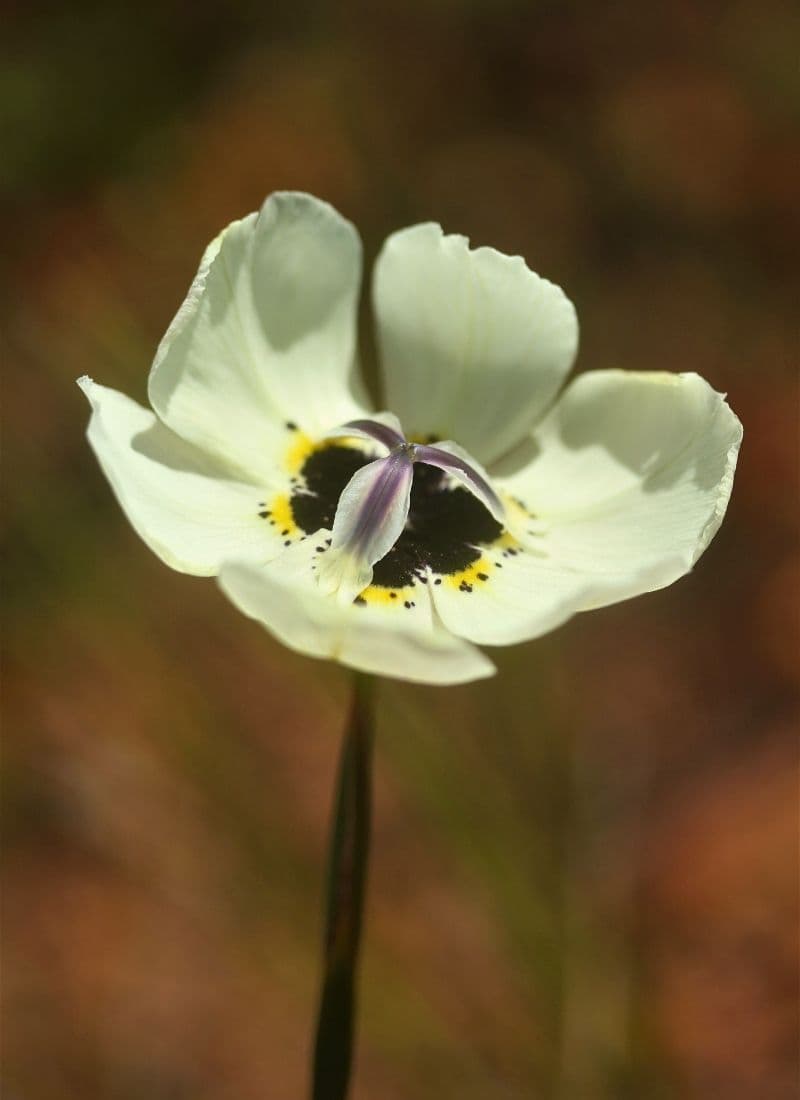
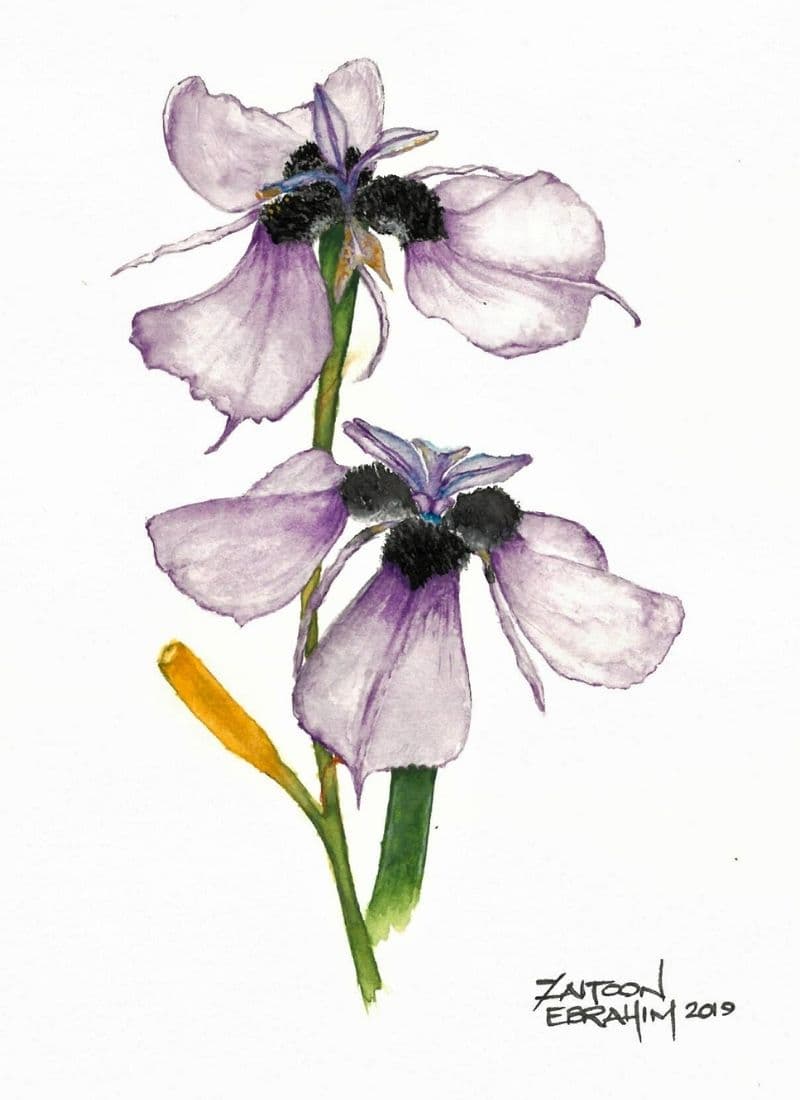
From left, Ismail rediscovered the Morea cistiflora wildflower in 2020; a delicate watercolour by Ismail’s wife, Zaitoon IMAGES Ismail Ebrahim
From top, Ismail rediscovered the Morea cistiflora wildflower in 2020; a delicate watercolour by Ismail’s wife, Zaitoon IMAGES Ismail Ebrahim
I have a connection with that area around the Kogelberg… Betty’s Bay, Kleinmond. I think it’s just a combination of like very interesting plants, lots of rare species, lots of interesting things. Amazing mountains, amazing river, amazing ocean.
I’ve only done one or two trips to the Blyde River Canyon… but I’d love to do more. It’s one of my bucket-list places. And Swaziland, which I went to way back when and have been wanting to go back.
There are a couple of things our family looks for… in a holiday place. It must be quiet and kind of remote. There must be no other people there. And it must have a place to swim and there must be cool plants around for me. We don’t care much about activities because most of our stuff is nature-based.
We love camping, that’s our kind of thing. I want to be in the middle of nowhere. We want to have our campfire and we don’t need all the fancy equipment and microwaves and all that kind of stuff.
Both my wife and my son are also keen on art, so when we go away… we’ve got a box full of art supplies and we just spend half the day drawing or painting, and then the other half, we’re running around in the veld and playing soccer or whatever.
It’s exposing yourselves to a different thing… because now you get to have conversations, connect with your people and family members get to have fun in a different way. I think people are afraid of that because they have these routines and without the routine, who are they? Without your Facebook and social media profile, who are you? What are you going to do?
I think when people travel, they should take it as… an opportunity to be able to be without those things and be yourself, be with the people that you are out there with. And just have fun. Experience.