

Dlala Nje's Loopy Luptak: "Jo'burg gave me all my stripes. I owe my life to that city"
Now the co-founder is using those hard-earned lessons to build Dlala Nje, Cape Town
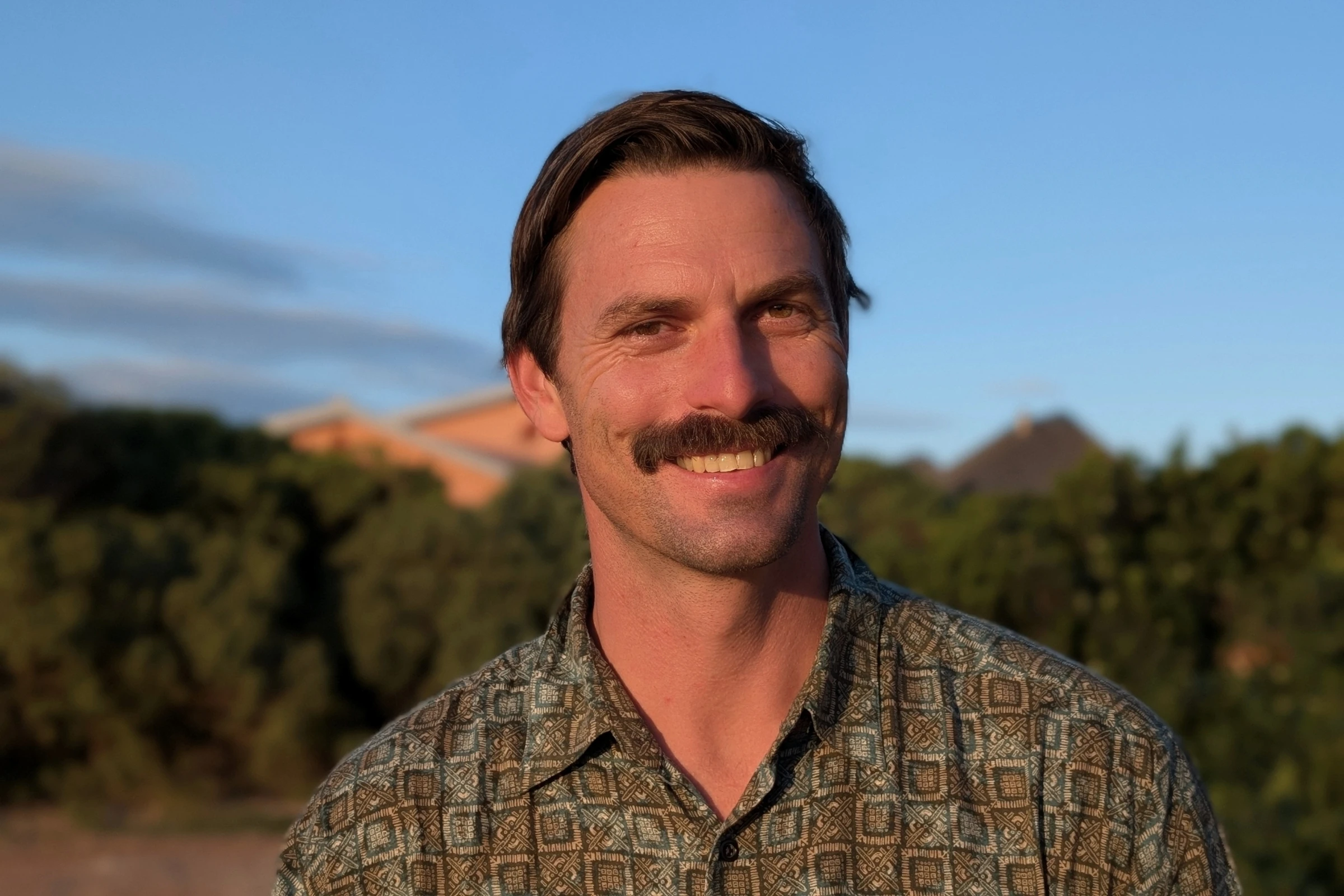
- Sonya Schoeman
How Dlala Nje's bringing its Johannesburg learnings to add a layer to Cape Town's tourism
I come from a family that didn’t travel too much. My parents grew up under communism and the borders were mostly closed and everything was under heavy surveillance. We immigrated to SA from Czechoslovakia in 1990.
Things felt like a struggle when I was a growing up… we didn’t have much disposable income to do holidays. The ones we did were with my extended family, who were born here. We mostly went to Margate, in KwaZulu-Natal. They had a house there. One particular memory that stands out is Sun City, Valley of Waves — that was really fun.
I did a solo trip on a motor bike through Vietnam… over two months in 2013. That was special! The culture, food, people, geography was so foreign and novel to me. It captured me through all the senses.

Fundi Mbambani, from Bridges for Music, walks with Loopy in Langa. This changemaker shows Cape Town through its music history (and can teach you to dance just like a local) IMAGE Courtesy Dlala Nje, Cape Town
I’m actually a chartered accountant. I had this golden opportunity to work for a multinational in any country I wanted to. I chose not to do that, because I moved into this building (the Ponte Towers) and people were curious to find out more information about what it was.
INTERVIEW This Cape Flats birder’s unique take is reaching people beyond her neighbourhood
I think I spent my life in the counter narrative. Even as a white person growing up in South Africa, I find more comfort in places where people generally wouldn’t find comfort or a sense of belonging or purpose.
Dlala Nje's Ponte Towers tour was about human connection and opening their own homes
The travel thing happened by accident… when we opened up the Dlala Nje Arcade in the Ponte Towers. That was what we wanted to do in the beginning. My partner, Nickolaus Bauer, is a journalist and he was working at the Mail & Guardian at the time, and I was working at Ernst & Young. We wanted to keep our full-time jobs and just continue to run the arcade as a side hustle.
But as time went by, we started doing the tours… and we ran them through our own homes. That’s what gave us a lot of authenticity and street cred, because the people that we took around, we made them feel like locals.
We realised that, because we were living in the building and… we’d started the tours as a residence project, not a project where you parachute into these townships or inner city districts, it made it more appealing for people to come and visit us.
That’s how travel’s supposed to be. You were in someone’s apartment and the human connection that you had with that person was the reason why you were there. The building became a tool to tell a story, but they were actually there to visit you and find out what life was like living there.
90% of the people that we were taking on our experiences… in our first year were foreigners. That said a lot about people of Johannesburg and their willingness to explore their own city.
I suppose my life has always been about trying to… bridge the gap between my lived experience and the perception of Johannesburg at the time. Jo’burg has the perception of being the most negative place in the world, even today. But I didn’t experience that. I thought it gave me all my stripes and I owe my life to that city.

Grant Ngcobo started at Dlala Nje, in Jo’burg, handing out waters to tourists. Now he heads it up CEO IMAGE Courtesy Dlala Nje, Cape Town
Why Jo'burg's inner city became Dlala Nje's most powerful tourism product
Essentially, we took a building from being the poster child for urban decay… in Johannesburg to becoming a world-famous tourist site. In a really tough place to sell tourism. But the Ponte Towers resembled a microcosm of South African society and we could tell the journey into democracy through that building.
We managed to create a tourism product out of… something that people didn’t necessarily want to see. We didn’t have a fancy mountain or a classy vineyard or really nice restaurant with a lot of good reviews. We had a space that people avoided the majority of the time.
That’s what these tours aim to do… is challenge your perspective on the inner city through these intimate experiences.
But you won’t believe the blockages we have from concierges… at big hotel groups in Jo’burg and even Cape Town. There are so many different levels and barriers you have to overcome to get people on alternative experiences.
The thing I’m proudest about at Dlala Nje is… who’s running it now. His name is Grant Ngcobo. He used to come to play arcade games at the Dlala Nje community centre, an NGO we’d set up and operated in the Ponte Towers.
When we started doing tours… on the weekends, Grant began helping out, giving people water, getting people into the lifts. Now he’s 27 or 28 and he’s running the show. He’s been there for the last 12 years.
It’s fantastic to be able to show… the trajectory of a tour guide is not just limited to being a tour guide, but that he can actually become an owner.
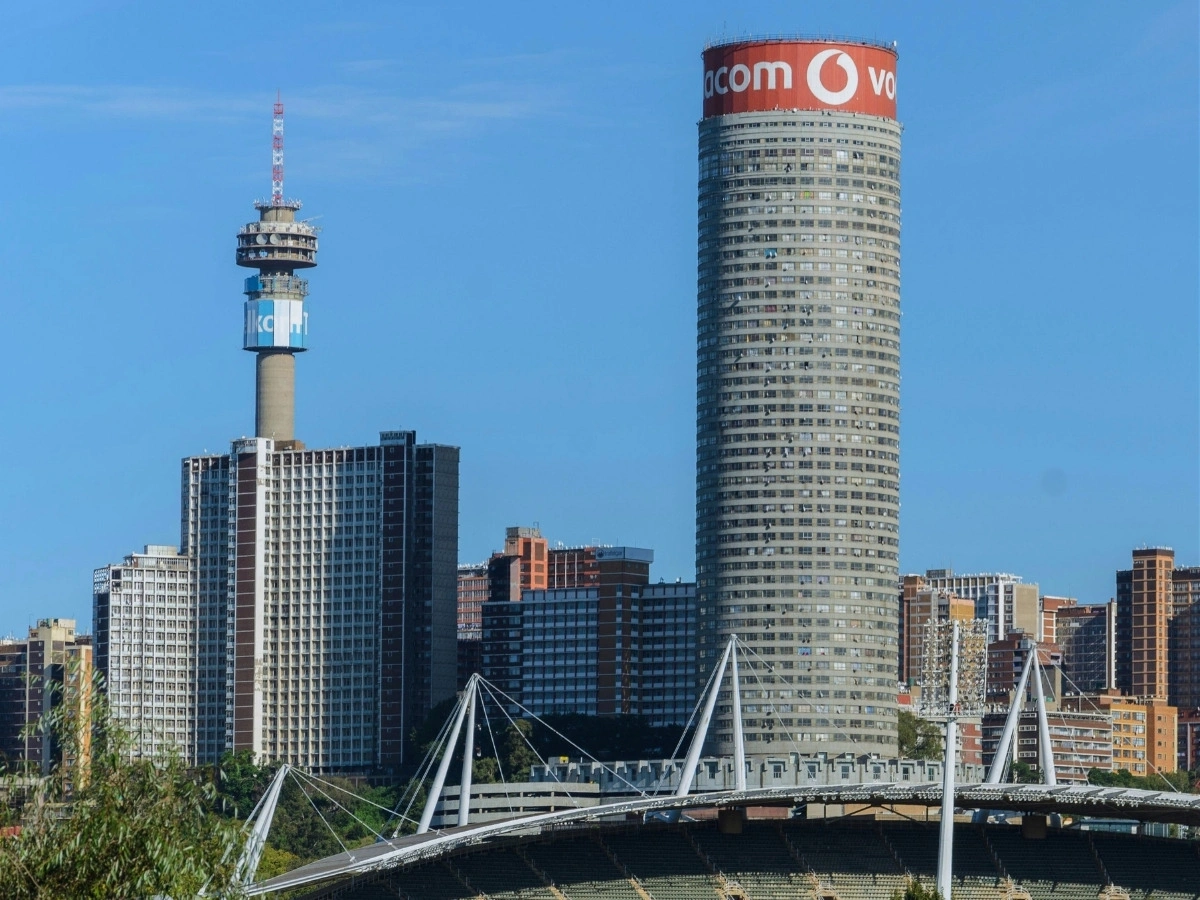
The iconic skyline view of the Ponte Towers in Hillbrow IMAGE Steward Masweneng
What the N2 wall hides: The people being left out of Cape Town's tourism picture
The product is the important thing… Now when you take that to Cape Town, you know, it’s trying to build a wall down the N2 to hide or maybe alter reality about the people who live down the sides of that road. So when a tourist is driving from the airport to their AirBnB in Sea Point, they’ve got a very different reality of Cape Town.
It’s crazy that a lot of the people who make the city look so beautiful for visitors… are the people who have to travel really far and spend half of their income on transport. Then they are very vulnerable in the evenings when they have to come back, to the point that their own employer has to arrange transport on their behalf. What’s the long-term vision for that?
Cape Town is one of the cities in Africa that… probably generates the most income from tourism, and it’s also quite a small place. Because it’s such a small place, it means that people cluster, and the spatial geography that existed in the apartheid days kind of still exists at the moment.
The part that irritates me the most is that… when people land in Cape Town, they often go to an AirBnB somewhere on the Atlantic Seaboard or in town and they drive past all the inequality, and leave without thinking about what their role may be in it.
They have this view of Cape Town through a lifestyle lens… which misses a lot of its beauty and authenticity, and they leave almost feeling as if they visited another European city. But they’re in Africa. Then there’s what the media says about the township side, which prevents them from being curious or inquisitive or interested in any of those places.
And the irony is if you walk through Langa… you’ll see how their walls are this high [indicates low height]. Then you drive through Constantia and the walls are like five times higher and have electric fence or razor wire on the top and it makes you think.
Maybe this is quite controversial to say, but I believe that… the more tourism grows in Cape Town, the more unequal the city becomes. If it continues on the current trajectory, where it’s very concentrated and the wealth is not being distributed into more alternative experiences, you’re going to have over-tourism on a scale where it’s going to be difficult to curate around the poverty. There’s only so much money you can spend on a wall down the N2.
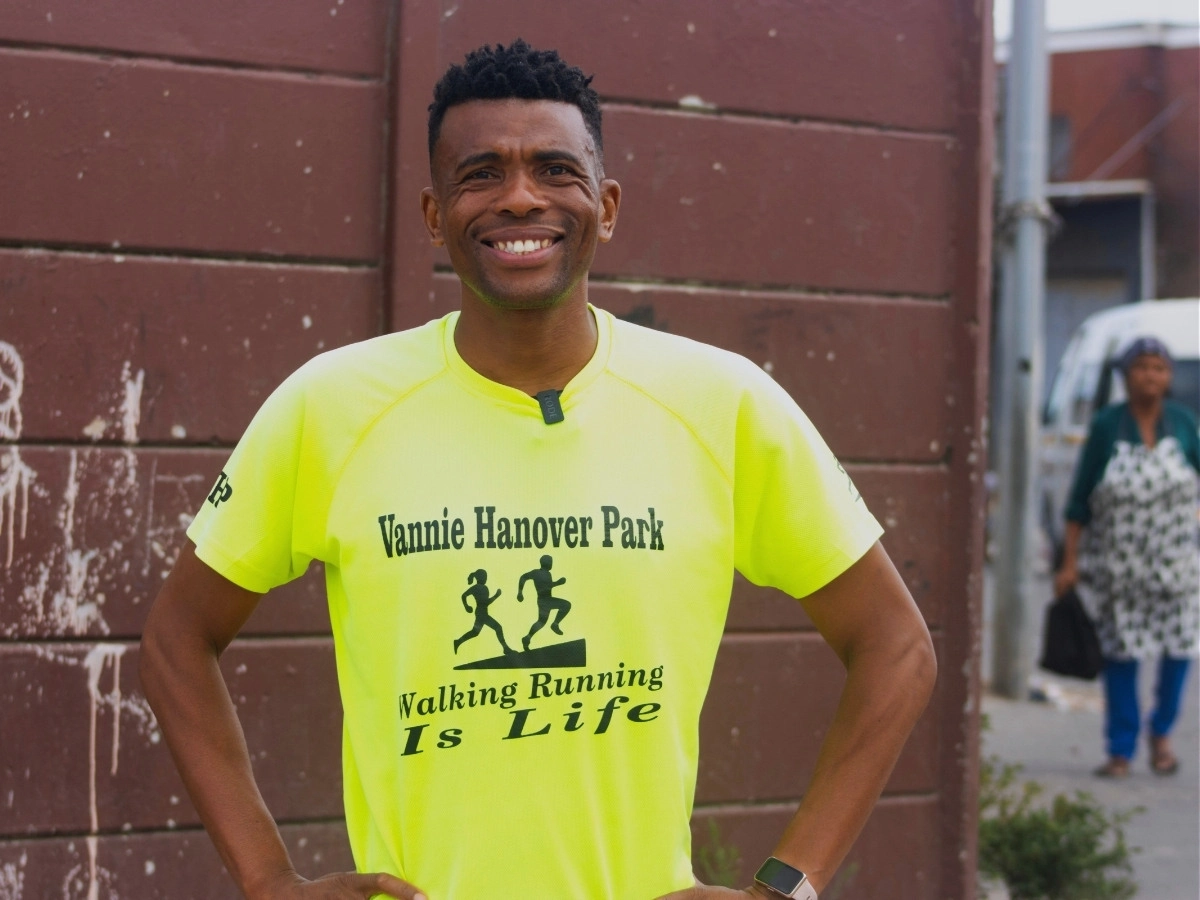
Glenn Hans ran himself out of a bad situation and into a new future; now he shows other youth in the Cape Flats how an active lifestyle can help do the same IMAGE Courtesy Dlala Nje, Cape Town
Community changemakers, not tour guides
We’re location agnostic. We don’t show people Cape Town… we rather introduce them to the young changemakers who are shaping the city’s future, as experiences. Whether that person is in Khayelitsha, or in an art gallery in the CBD, doesn’t really matter.
One of our changemakers came from a gang in Hanover Park… and now he’s got Hanover Park’s first running club. You can go run with him at his club in Hanover Park, but he can also come run with you on the promenade and share his story. It gives people a context of how crazy gang violence is in South Africa — not to put a damper on anything, but to put a layer of context of the city of Cape Town’s complexities.
What Glenn Hans is doing in his community… for physical health and mental health for young people, bringing them into his journey and running with them every Wednesday evening and doing aerobics classes with them every morning of the week, says something about him.
Through people, we’re able to take what a lot of tourism is trying to hide and… bring it into the foreground in an appreciative way, where both parties have something valuable they can exchange.
Dlala Nje’s approach is that communities, people, have… agency. These guys actually have something genuine, and it’s something that they own, that they’ve created on their own. That’s worth experiencing it as a standalone product.
What makes our experiences unique is… that our changemakers aren’t tour guides. Because if they were, then it would come across as a polished, one-directional type of experience where you pay money and you go on this activity. The more out of the tourism lingo you are, the better the experience is going to be.

Cape Point, the place where the two oceans don’t actually meet (but every tourist believes they do) IMAGE Dmitriy CauseLove
Cape Point, wine farms and the aesthetic trap
The funny thing is that people will go to Cape Point Nature Reserve… believing it’s the point where the two oceans meet. But it’s a lie. You have to tell them that, actually, the most southern point of Africa is a few hundred kilometres on the road.
Cape Point reserve has more daily visitors than the Kruger National Park… and it’s an extractive exercise; people just go there to take a photograph. Foreigners are paying 700 bucks to take a picture and a small walk, but there’s so much that they’re missing: All the explorers that had to navigate those seas; all the precious marine life that sits in those ecosystems is ignored; the idea of the biome, the fynbos and this beautiful fauna library that we have, it’s completely overlooked.
It’s the same as when you go to a wine farm. You leave with a bottle of wine and a photograph, but it’s all aesthetic. I’m trying to add a layer of depth into travel that really gets people engaged with the fabric of our society.
When you can create a tourism product out of something… that’s not as polished as conventional tourism looks for, and you can be creative around how you market it in a way that makes it attractive for people, then I think you’ve got something.
Why responsible tourism in South Africa still isn't reaching the right people
We learned this in Dlala Nje’s Joburg days… if you can find a way to weave in something through the idea of surprise and delight, that’s the key. Then you’ve got the potential to basically create the highlights of their trip through a moment where they didn’t expect it.
If you put responsible tourism on the agenda tourist to South Africa… it can feel like they have to make a choice between doing something responsible and doing something that they have to tick off their bucket list. So more often than not, they’ll give the responsible travel agenda a skip.
But responsible travel is just making a place better… through your engagement with it, whether it’s from a conservation standpoint, or a communities-and-people standpoint, or supporting local people in a way that brings the bar up, spreads the wealth that tourism generates in a more equitable way.
Our core target market in Joburg was the rebellious traveller… the person who would get told that they shouldn’t go into the CBD and goes anyway. That’s exactly the same market that we’re going for here in Cape Town.
My approach now is to align with our big markets… UK, Netherlands, Germany, the US—and partner with responsible tourism DMCs and operators in those areas who align with the same values as us. Then it’s an easy sell for them.
When we go into the local market I would seriously consider… doing a differential price so that young people who also want to experience these young changemakers and be inspired by them and what they do aren’t priced out of the picture.
At the end of last year, we did the Wonder View loop… just outside Blyde River Canyon. All those little spots when you visit, you’ve got a rate for locals (much cheaper) and a rate for foreigners. We were travelling with my wife’s family from France and they started giving me examples about the Louvre and how they are making it more expensive for foreigners and cheaper for locals.
They told me about this amazing idea that all museums in France are… free of charge for under-18s. Imagine you had access to South Africa’s national parks and museums and everything as an 18-year-old for absolutely nothing? The tourists and the locals that are older than 18 cover the cost of everything.