

How a Cape Town botanist uses plants to change how you see place
On his Kirstenbosch guided walks, Rupert Koopman tells entertaining and unexpected stories unpeel its layered human and ecological history
How a Cape Town botanist uses plants to change how you see place
On his Kirstenbosch guided walks, Rupert Koopman tells entertaining and unexpected stories unpeel its layered human and ecological history
WHY WE LOVE THIS SLOW-TRAVEL EXPERIENCE
Time spent with a knowledgable insider can fundamentally shift how you experience of a place, even one you think you already know. Through Rupert’s easy, generous storytelling, plants, people and history are connected, showing how human’s actions affect communities and biodiversity. This understanding can really change how you move through that world and interact with the people around you.
SUSTAINABILITY PROFILE
The walk through Kirstenbosch is entirely on foot, following set paths. No plants are harmed, and the tea ingredients are from suppliers who grow the plants sustainably. The biggest contribution to your carbon footprint is likely to be getting there, which you can work out on this carbon calculator.
All walks start with you and your companions
Forget scripted guided walks; Rupert Koopman’s tours of Kirstenbosch National Botanical Garden—walkshops, he calls them—are nothing like that. His walkshops begin with conversation and introductions first: who are you, what interests you, what brought you here? It’s not hard to open up to strangers in one of the most (universally acknowledged) gorgeous gardens in the world, so a friendly ease soon blossomed.
Our group’s interests—history, food, scented plants and birds—shaped the day’s stories. Rupert is comfortable giving room to others’ knowledge and building on that, and it’s this generosity of spirit that makes each walk unique. Ours was knowledge-rich and we learnt a lot: here are just six things I learnt.

Walking through Kirstenbosch National Botanical Garden is one of the greatest pleasures Cape Town has to offer a slow traveller IMAGE Joshua Kettle, Unsplash
1. South Africa's unexpected export to the world is a tart invasive species
South Africa has its share of invasive plants (mostly from the A-team: the Americas, Australia and Asia), but South Africa’s revenge is small and tart: The sour fig (Carpobrotus edulis) has run amok in the Mediterranean, California, Mexico and Australia, where nothing eats it.
If you eat it, though, and love vygie jam, buy it in Gqeberha and further east; the Carpobrotus deliciosus fruit’s sweeter there, Rupert revealed.
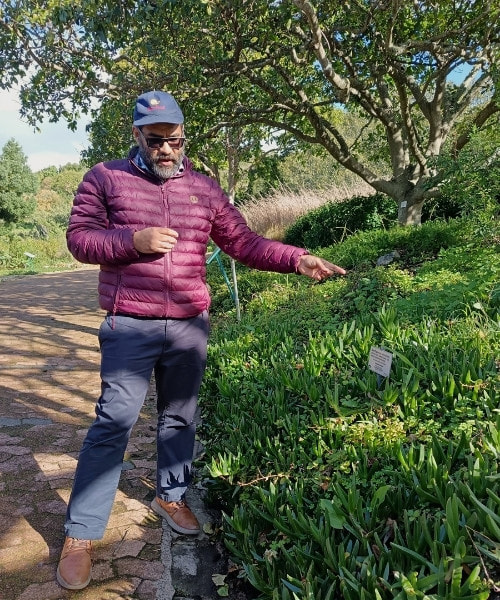
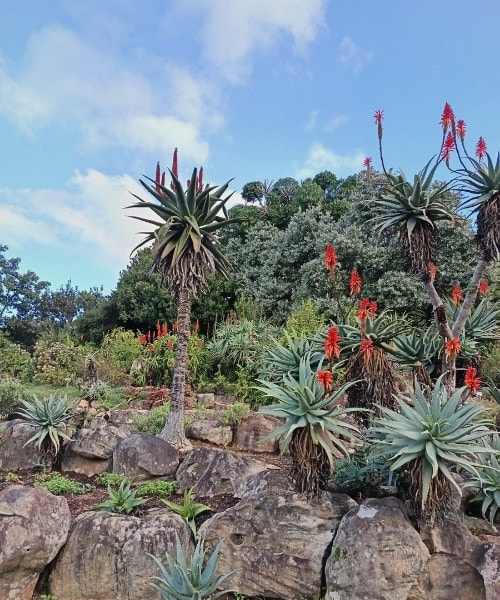
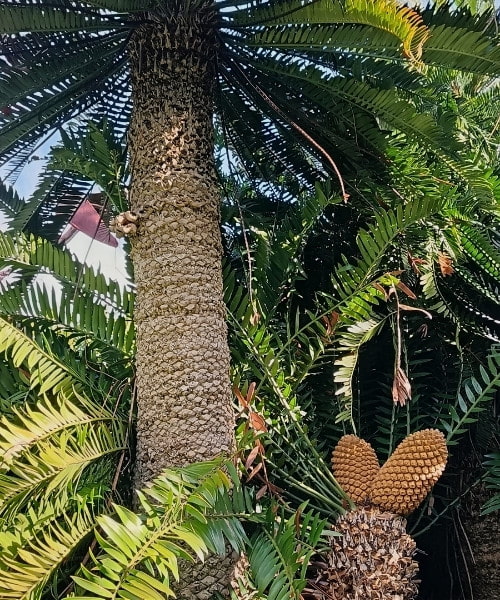
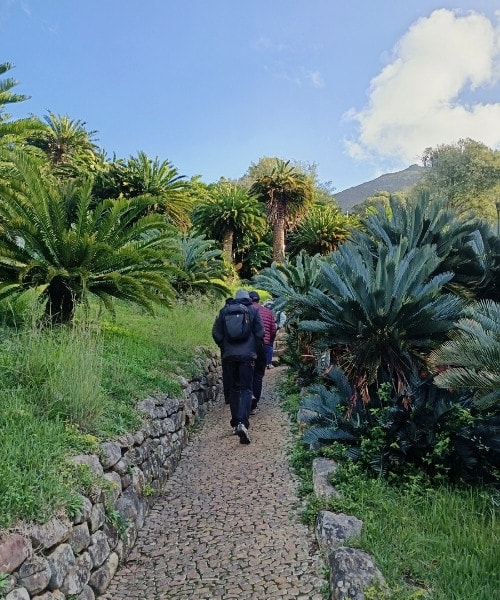
FROM TOP Rupert describes how vygies have spread to many other parts of the world, a rare case of South Africa exporting an invasive rather than receiving one; a display of aloe species in bloom; these rare Wood’s cycad (Encapharlatos woodii) in Kirstenbosch were discovered in 1895
CLOCKWISE, FROM TOP RIGHT Rupert describes how vygies have spread to many other parts of the world; a display of aloe species in bloom; people walk through the cycad garden; rare Wood’s cycad (Encapharlatos woodii), the only ones ever found, discovered in 1895
2. The link between Knysna's ancient yellowwoods and the decline of Cape parrots
At a towering yellowwood (Afrocarpus falcatus), we learnt that Knysna’s trees were true giants compared to the one we were craning our necks at.
The Knysna trees host epiphytes and Cape parrots, which nest in the yellowwood trunks and feed on the fruit. When many of the large trees were lost to logging, the birds suffered, too. Today they’re found from Hogsback, in the Eastern Cape, to KwaZulu-Natal, a shrinkage of their historical range, which once extended as far as the escarpment running through Mpumalanga and Limpopo.
At Colonel Bird’s spring-fed pool, with ferns as tall as teenage boys and water pure enough to drink, the conversation turned to the untypically heavy and sometimes disastrous rain events in recent years. It’s the result of warming temperatures, because hotter air holds more moisture, Rupert explained.
3. South Africa's struggle history shows up in Kirstenbosch garden, too
Kirstenbosch Gardens was officially established in 1913, but the space it occupies illustrates the conflicts of South Africa’s colonial past: Khoikhoi grazing routes and living spaces unseen and unrecognised, van Riebeeck planting wild almonds and thorny shrubs to keep the grazers out. This was a struggle between people who saw land as communal and those who believed in property rights; the latter unfortunately thought ‘communal’ meant unused and unclaimed.
Unlike many other botanical gardens in the world, whose central tenet as colonial projects was to test whether foreign plants could survive in this climate (hello, invasives), Kirstenbosch was founded as the country’s first entirely indigenous botanical garden.
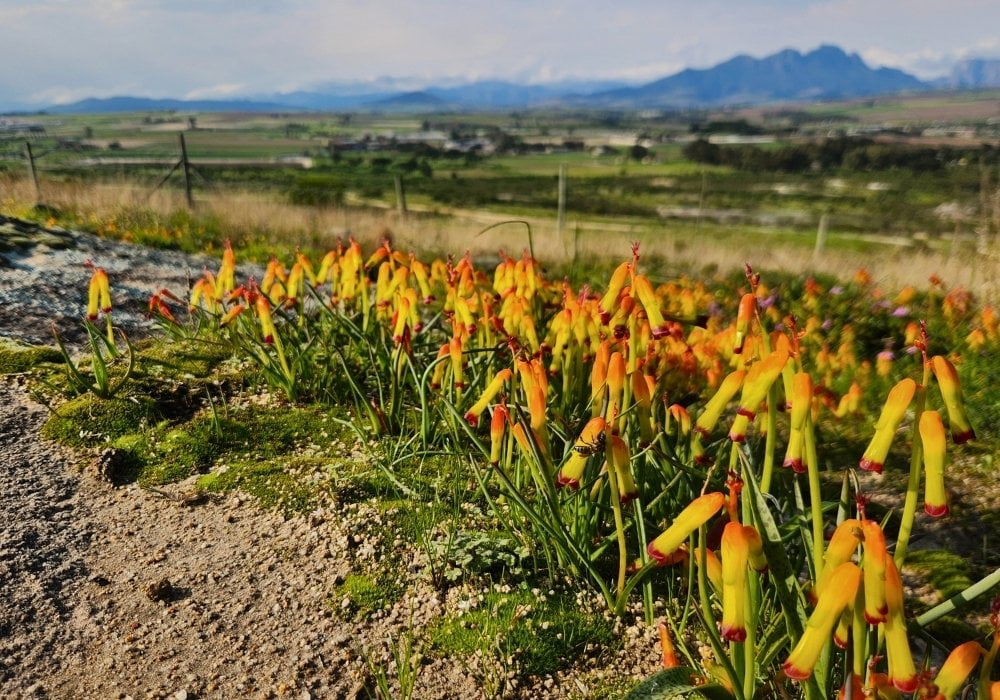
Lachenalia quadricolor is a species on SANBI’s Red List. There are only four known subpopulations in small urban parks. Rupert captured these in Cape Town’s Bracken Nature Reserve, another interesting walkshop he leads
4. Racist plant names are being changed, 100 years later
The coral tree (Erythrina lysistemon), infamously called the k-boom, opened a conversation about how some plants are only now (a century later!) shedding their offensive labels, common names and species epithets.
Also, during both colonial and apartheid eras, there was rampant exploitation of local plants and indigenous knowledge. The Nagoya Protocol, passed as recently as 2010, has put a legal framework in place to prevent such exploitation.
5. South Africa's plants have a secret life on film
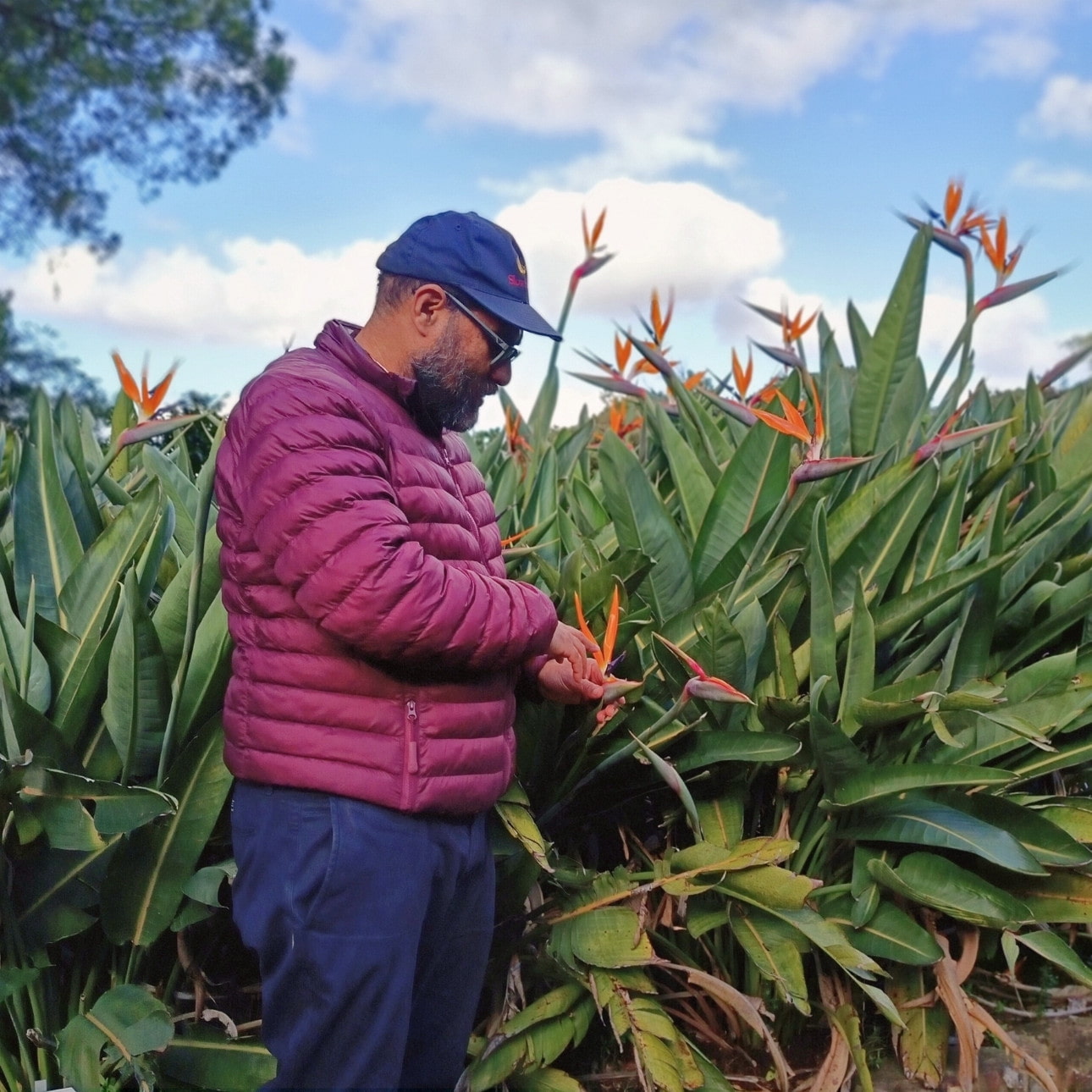
Rupert loves to play ‘spot the South African plant on TV’. Two of many: a strelitzia on Friends and a blue plumbago in Glass Onion : A Knives Out Mystery.
The strelitzia also has a sexy twist. While sunbirds sip its nectar, proper pollination requires a more buxom visitor. When birds such as the thrush land on the plant’s perianth segments, these slide open under the extra weight, revealing the pollen, and bird becomes an unwitting reproductive agent.
6. Spending time with plants can reset your mind
There are so many sensory delights to be had in this garden, and Rupert explores many. We crushed rubbed wild rosemary and imphepho between our palms, cupped hands over face and breathed in deep. Instant reset. When I opened my eyes again, someone had turned the colour up on life.
But the magic moment was this: Sipping icy, honey-toned water that flows directly off the mountain. The colour comes from tannins leached from fynbos plants by the acidic mountain water, and the earthy note it adds is surprisingly good with whisky, said Rupert; it enhances the peat flavour.
Most Kirstenbosch walkshops end with herbal tea at Happy by Nature nursery. It’s made with local medicinal plants, different each time. Our mix was honeybush, buchu and cancer bush. Complex, arresting, slightly bitter; a memorable final act with health benefits.
THE LOW-DOWN
ABOUT RUPERT With a degree in botany and environmental science and more than 10 years with CapeNature and South African National Biodiversity Institute (SANBI), Rupert’s knowledge of plants is encyclopeadic. Why’s he such a good cultural guide? “I read broadly, spend time with people smarter than me and love linking things and giving context,’ he says. He’s also a certified tour guide with Trade Glo International and is registered with the Western Cape Department of Economic Development and Tourism.
WALKS The Kirstenbosch walkshop takes about two hours. Rupert offers other tours, too, including a fynbos walk on the West Coast landscape that inspires the world-famous Wolfgat restaurant’s menu. Follow @rk_ct to keep track of upcoming events.
COST The Kirstenbosch walking tour costs R300 pp, excluding entry fee to the garden (from R100 for SA residents; R40 for children). The West Coast Fynbos Walk costs R350.