

7 Koppies Boutique Hotel, Franschhoek: An exquisite gem with a fynbos focus
This luxury guesthouse exists to support the conservation of fynbos on the farm

- Sonya Schoeman
AT A GLANCE HOW THIS STAY REDUCES ITS IMPACT
Energy usage Eskom grid with solar laundry, solar pool heating, solar geysers and battery storage; the owners aspire to building a solar farm, but it’s not yet built.
Water usage Two boreholes make the property largely independent of municipal supply; reverse osmosis replaces bottled water.
Waste management All food and garden waste composted on-site; remaining rubbish sorted for recycling off-site.
Culture + community Local Franschhoek team, fair wages, annual increases and near-zero turnover; founders also run an export venture backing local makers.
Biodiversity + ecosystems 50 hectares of privately held fynbos, no formal conservation designation, but habitat is conserved through alien clearing, firebreaks and controlled burns; no pesticides are used on the farm
Carbon footprint To 7 Koppies Boutique Hotel from Cape Town return = 0.03 tCO2

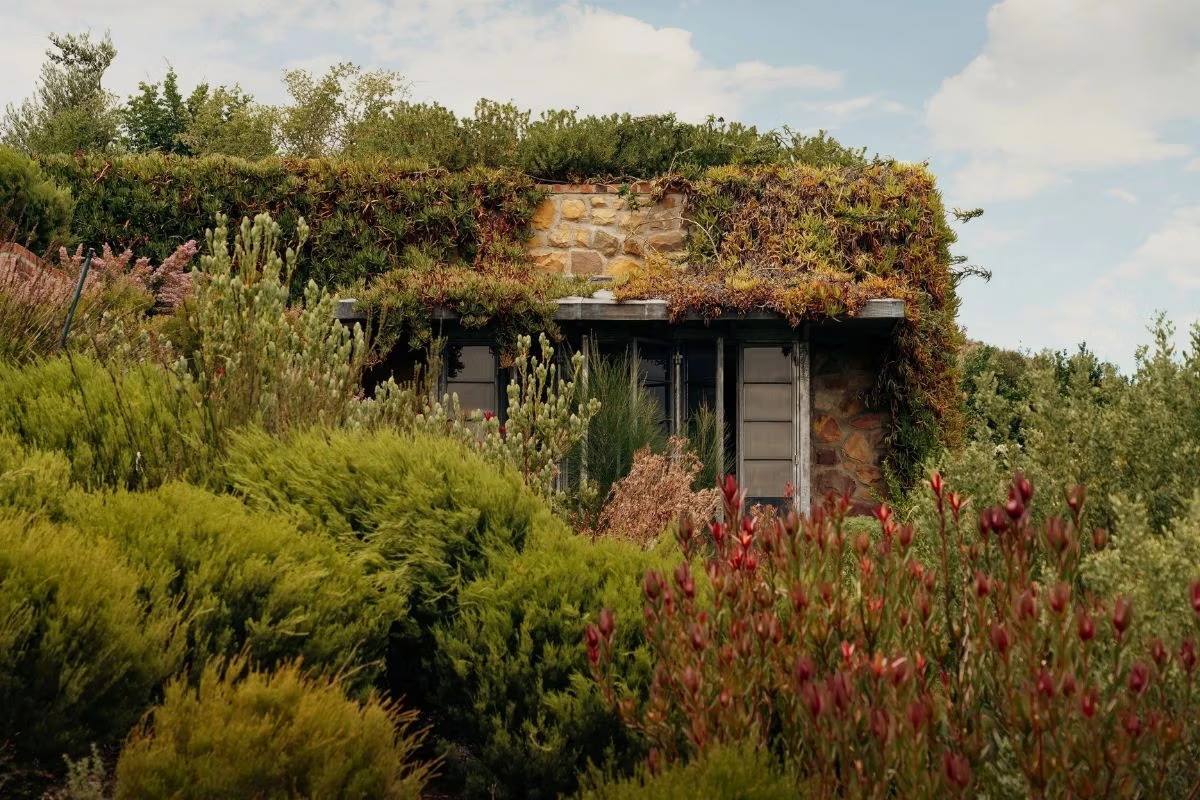
MAIN IMAGE 7 Koppies Boutique Hotel overlooks a valley in Franschhoek and is surrounded by seven koppies on the farm ABOVE, FROM TOP The Garden Room opens up to the terraced vegetable garden; the Valley Suite with its flourishing roof garden IMAGES Courtesy 7 Koppies
7 Koppies: As calming as a cup of chamomile tea
At 7 Koppies Boutique Hotel, the biodiversity feels almost tactile. It’s in the abundance of bird calls from the garden that spreads from the house into the fynbos, the insects buzzing about the extravagant diversity of flowering plants, the pollinators making sure the whole system performs optimally.
There’s an enormous ficus centre stage at the entrance. A rope swing hung from one branch, swaying serenely; above, a tortelduifie cooed soothingly.
I hadn’t even stepped into the building and I was already as deeply steeped in calm as a chamomile teabag.


FROM LEFT The kitchen area leads into an outdoor sitting room, a grassy area, the refreshing pool and the mountains beyond; this is a house filled with collectible art IMAGES Courtesy 7 Koppies
Inside 7 Koppies: Art, William Morris materials, impeccable style with a splash of humour
7 Koppies is one of the most beautifully put together spaces I’ve stayed in. There’s art in every space, oil paintings, watercolours, sculptural lights, African sculptures, and interesting collections from brass bells to straw hats.
Everything feels personal, hand-picked by someone with an impeccably stylish–and humorous–eye. The William Morris fabrics, exquisitely matched colours, a bright and brazen lemon lamp base. The owners are true citizens of the world, with British, Sri Lankan, German and Italian roots and tendrils. One trained in architecture, the other has a talent for interior design.
This project was destined to be a beauty.

The Courtyard Suite, with its dusky pink walls and soft calico curtains, is a comforting, happy space IMAGES Courtesy 7 Koppies
The rooms: romance, fireplaces, no televisions; the design promotes being present
The seven-roomed boutique hotel is built on 50 hectares of land; the seventh room is in a separate cottage. General manager Francois Louw grew up here: his mother built the original main building, and he planted the magnificent ficus at the entrance when he was just 10. The house, which the owners describe as Cape Dutch meets Arts and Crafts, was renovated into the spacious, elegant, easy-living space it is now.
I slept in the Courtyard Suite, which is a generous space and lets in abundant light, softened by muslin drapes through which one can see the greenery beyond. The king-sized four-poster is beautifully made up with a soft Indian block-print cover. They have prepared for winter: there are heated blankets and this suite comes with a combustion fireplace.
Each space is unique, each as considered and gorgeous as the next, the walls and shelves punctuated with art, books and treasures one can pore over. There is no wrong choice here.
Also, there are no televisions, so the outside world spills into the rooms. That night, I heard owls calling across the koppies, a nightjar that sounded as though it was perched on my windowsill, and third caller I never identified.
7 Koppies lays the groundwork for being present.

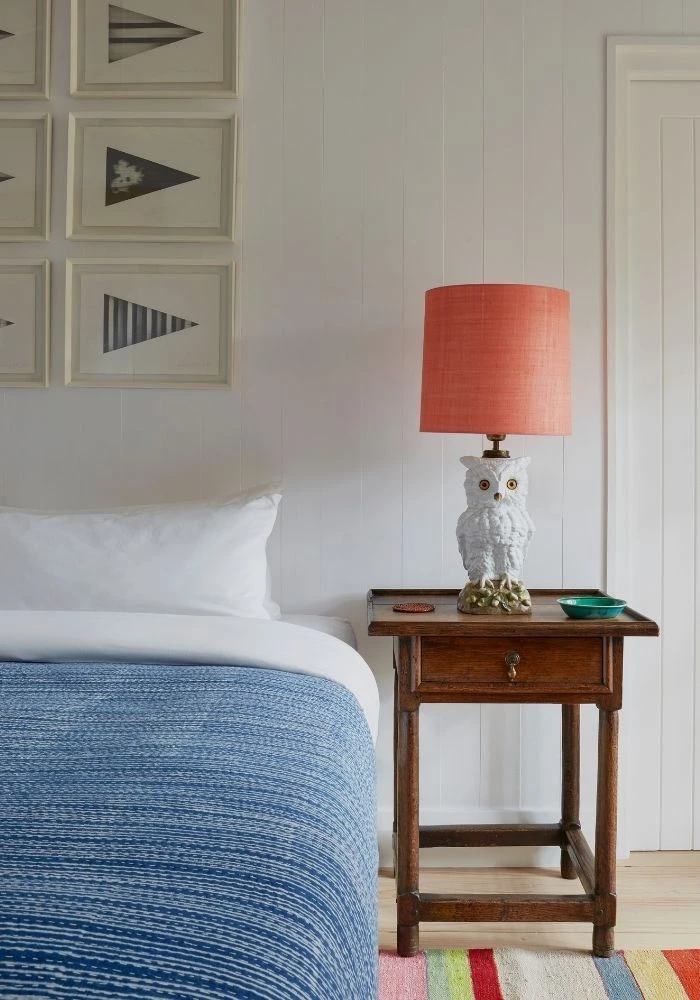
FROM LEFT One of the most spectacular hot tub settings we’ve ever seen (sociable cat included); the Orchard Room overlooks the productive gardens and we loved the playful owl lampshades IMAGES Courtesy 7 Koppies
Things to do at 7 Koppies (if the hot tub and fynbos gardens aren't enough)
Franschhoek is a 15-minute drive away, with its restaurants, cafés, galleries, museums, gardens and famous wine farms, and the tram to trundle you between them. I didn’t want to leave the space. For the nature-orientated guest, the farm itself is amusement enough: extensive gardens that include an extensive vegetable plot that supplies the ingredients for guests’ meals, diverse fynbos and paths for hiking and cycling around the property.
The land is what inspired the guesthouse in the first place.
“From the beginning we valued the fynbos and the extraordinary natural landscape that surrounds the house. However, we quickly realised that protecting and maintaining this land requires considerable care, time and resources. Turning our home into a small guesthouse was therefore a practical way to ensure that the land could sustain itself while remaining protected,” said one of the owners.
When I was there, staff were conducting a controlled burning.
Besides hiking and cycling, one can do an audit of the fynbos from a hot tub in one of the most beautiful settings under a koppie overlooking the expansive valley below. It’s entirely private, save for an occasional peeping tom: Richard, the cat.
There’s a sauna, surrounded by ivy-covered walls; a sliver of pool 25 metres long overlooking the abundant indigenous plantings below, and two outside sitting rooms, a Sri Lankan architectural import South Africans should steal, with comfortable corners for reading, eating and a cocktail or two.


This salad comes straight from the garden. We can vouch for its deliciousness IMAGES Courtesy 7 Koppies
Indigenous plantings in the gardens complement the wild fynbos and bring the birds in
Franschhoek is one of the most developed corners of the Western Cape, and farmland is where plant diversity usually meets its end. So a farm, even a small one, where plant diversity is the point is a farm worth its weight in proteas.
I try to ration my superlatives, but these gardens have earned a few: spectacular, striking, superb, smart. Landscape designer Francesca Watson and the owners have planted predominantly indigenous, water-wise trees, shrubs and plants, and the birds have moved in accordingly. Conservation is active here — controlled burns of the fynbos were under way when I visited.
Botanist Fiona Powrie and her team keep the vegetable gardens on sustainable lines, down to zero-waste composting and a wormery.
And the place runs on its people. The owners are often abroad, so operations manager Danica Louw holds things together with what seemed like a light touch. By day, Artwell Tofu and his team of cooks and garden caretakers look after guests; at night, M’am, the methodical Malinois, lays the foundations for a peaceful one.
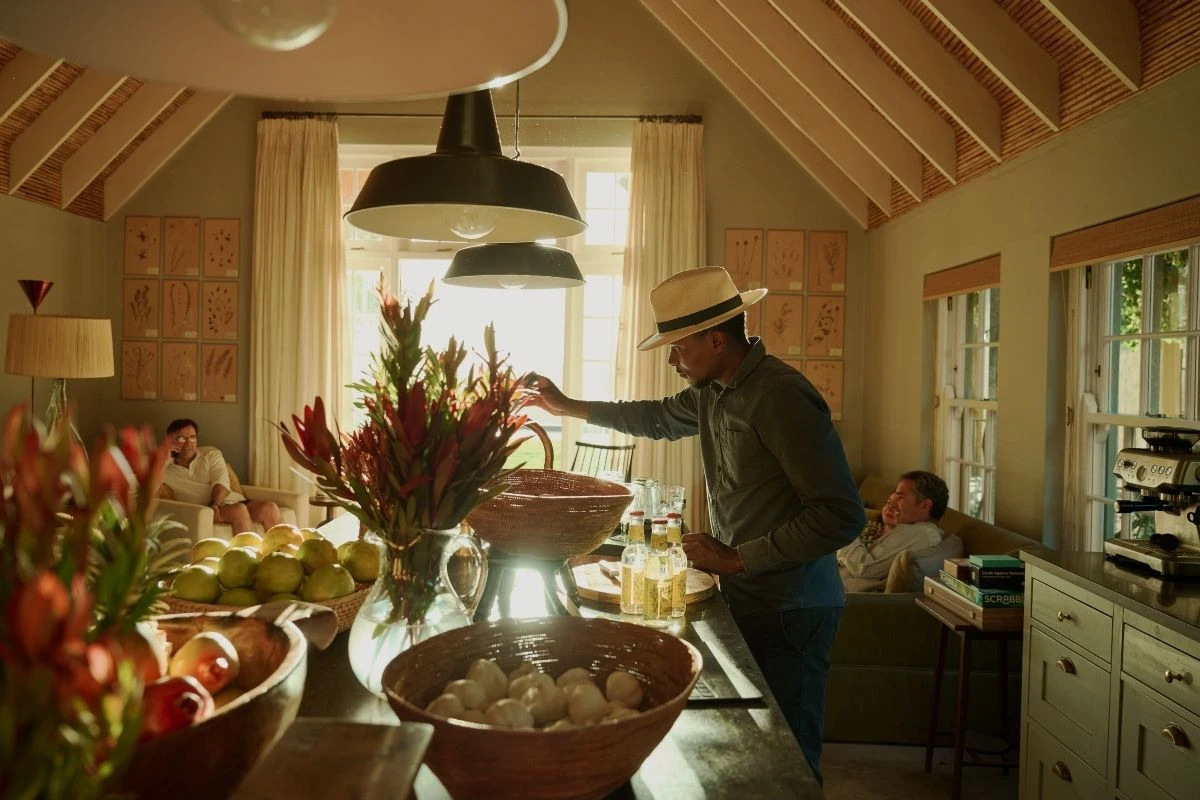
House manager Artwell Tofu is the consummate host, welcoming guests and discreetly taking care of every need IMAGES Courtesy 7 Koppies
DETAILS
Stay hotel, or guesthouse as the owners sometimes call it, is a sprawling building designed to give each set of guests privacy. Every suite is unique and a visual delight. The most private spaces are the Valley Suite, the Courtyard Suite and I thought the upstairs was a treasure. The vibe is very laid-back and homely, albeit a rather genteel home. Prices start at R4 900 per room per night, breakfast included.
Need to know The farm is off the Wemmershoek Road, off the R45, and can be tricky to find. This is why it’s important to save the directions, which are sent to all guests before their stay. Franschhoek is 15 minutes away by car, but if you prefer to stay in, meals from the kitchen can be ordered ahead. There is wifi, but no television.
Activities There’s plenty to do here: hike, walk, cycle, bird watch, swim. The gardeners are delightful people eager to share their knowledge (I spent a considerable amount of time there, learning what to plant and when). Otherwise, all Franschhoek’s activities are available, and if you don’t want to drive yourself, transport can be arranged for you.
Website www.7koppies.co.za
7 KOPPIES' APPROACH TO LOW-IMPACT OPERATIONS
ENERGY The property runs its laundry, geysers and heats the pool via solar, but still draws mains electricity from Eskom, backed by inverters and battery storage that carry it through outages. Light bulbs are LED, including rechargeable warm lights, and air conditioning is switched off in empty rooms. The stated ambition is a small on-site solar farm and eventually an electric vehicle for local errands, moving the property closer to off-grid; both are goals rather than current infrastructure. There is no formal offsetting; the approach is to reduce demand.
WATER Two boreholes supply the property, leaving it largely independent of the municipal system – no small thing in a region that has lived through serious drought. Levels and quality are monitored regularly, and irrigation is timed to limit evaporation. Planting is largely indigenous, which needs far less water than exotics. Guests drink filtered borehole water from a reverse osmosis system, which removes the need for bottled water. There is no rainwater harvesting or greywater recycling in place, and guest water use is left to individual discretion rather than managed.
WASTE All compostable food and garden waste is processed on-site and returned to the vegetable beds and gardens, keeping a significant volume of organic matter out of the waste stream. Remaining rubbish is collected by the local service and separated off-site into recyclable and non-recyclable material, diverting glass, paper and some plastics from landfill. Single-use plastics are kept low: plastic bottles are rarely used thanks to the reverse osmosis water, and supplies are bought in larger containers to cut packaging.
COMMUNITY + CULTURE The team is drawn from the surrounding Franschhoek community and has stayed remarkably stable, with almost no turnover. Staff are paid fairly, receive annual increases, and are offered training and career development; there is no equity scheme, but good work is rewarded through bonuses. Procurement leans local, championing the valley’s produce and wines. Beyond the guesthouse, the founders run a separate venture, Out of South Africa, which exports South African artisanal goods to Germany, a channel for local makers to reach an international market.
CONSERVATION + BIODIVERSITY 7 Koppies is built on 50 hectares of fynbos in the Cape Floristic Region, one of the world’s richest and most threatened plant kingdoms. The property itself holds no formal conservation designation, but the owners are serious about protecting the environment nevertheless. The core work is relentless clearing of alien and invasive plants so the indigenous fynbos can regenerate, supported by firebreaks and controlled burns. This year a significant fire burned through a large part of the land; the buildings survived largely because of that ongoing clearing and firebreak discipline. Management decisions are taken with local botanical experts rather than in-house guesswork.