

De Hoop: a Ramsar vlei, 260+ bird species and whales are just the start
A stay at De Hoop Collection is one of the Western Cape's best nature-based escapes
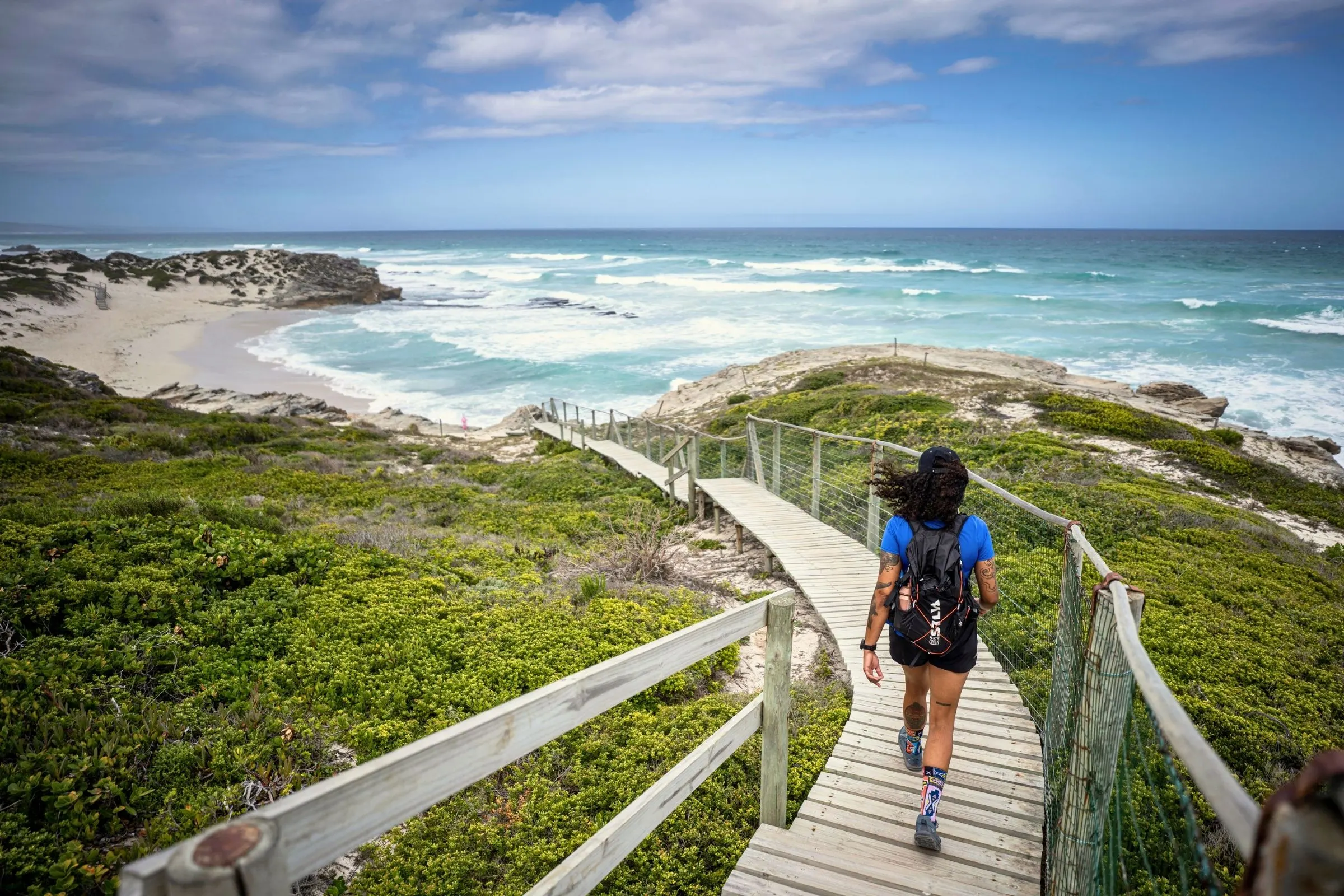
- Sonya Schoeman
AT A GLANCE HOW THIS STAY REDUCES ITS IMPACT
Energy usage Eskom grid currently; full solar off-grid project in active development, targeted for completion by end of year
Water usage Three boreholes drawing from aquifer; usage is about 45 000 litres a day; guests’ water use is not restricted; 25 000-litre rainwater storage across five tanks used for irrigation and pools
Waste management Kitchen-level separation, recycled in Bredasdorp (on-site composting not permitted as it’s a CapeNature reserve
Culture + community Staff comes from surrounding towns and farms; active promotion from within; equity for staff in late-stage discussion; De Hoop Foundation supports local school activities
Biodiversity + ecosystems Operating within CapeNature-managed reserve; noise levels managed; path discipline is enforced and steps are taken to reduce light pollution
Carbon footprint From Fish Hoek to De Hoop return is about 460kms = 0,08 tCO2

The vlei is the jewel in the reserve’s crown, attracting over 90 water-bird species IMAGE Courtesy De Hoop Collection
What makes De Hoop different? The vlei at dawn and dusk dictates the rhythm
De Hoop Nature Reserve is a 36 000-hectare reserve on the Western Cape coast, and the De Hoop Collection is a set of beautifully refurbished farm buildings, including grain silos.
The buildings overlook one of South Africa’s most significant Ramsar-classified wetlands — a vlei that attracts 97 water-bird species, from fish eagles to flamingoes.
Time moves differently here. Come sunset on the first day (one always arrives in the afternoon), the light turns honeyed, then orange, pink, rose, then dark blue, and the birds make dashes across the water back to their nests.
Fish eagles ring out their cry, the nightjars’ cascading songs begin, and owls’ soft hoots catch you by surprise. Come sunrise, it all runs in reverse.
REVIEW This CapeNature reserve in the Kogelberg is in one of the six Floral Kingdoms in the World
I felt sure if I were to spend enough time in the reserve, watching and listening to that ebb and flow of life, my circadian rhythms would follow suit and I’d find easy sleep again.

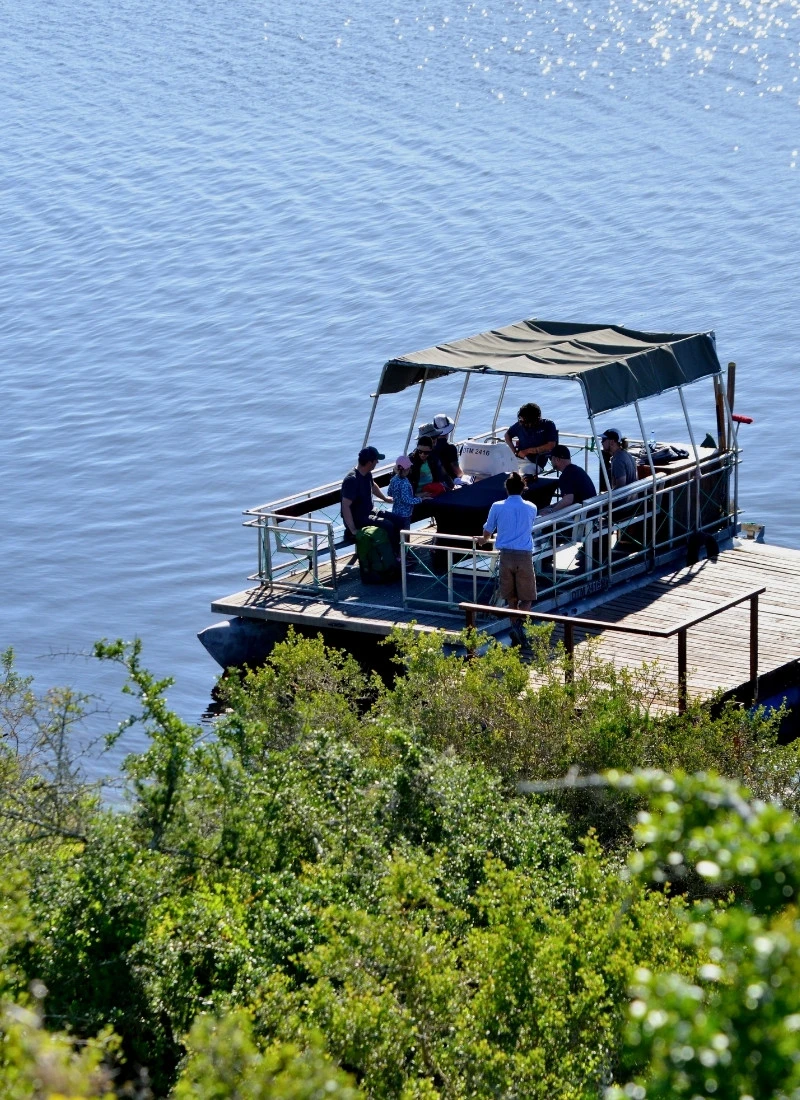
The African Darter is just one of the birds that makes the vlei its home, and it can be spotted (if lucky) from a boat trip IMAGES Derek Keats; courtesy De Hoop Collection
Birding at De Hoop: eco-boats on a Ramsar Wetland, Cape Vulture walks, 260+ species
De Hoop Nature Reserve is one of the finest birding destinations in the Western Cape, and the vlei is the reason. It’s home to 97 waterbird species on its Ramsar-protected water. That is before the fynbos specialists, including the Black Harrier, Agulhas Long-billed Lark and Fynbos Buttonquail, which take the total bird species on the reserve to around 260.
Three primary activities structure the De Hoop experience. The eco-boat takes you on a slow, stable circuit of the De Hoop vlei (dependant on the level of the water); the guided Cape Vulture Excursion, which ends at the Potberg breeding site, the only place in the Western Cape where these enormous endangered birds still nest; and the guided marine walk.
This coastal walk follows the beaches and explores rock pools. It’s especially wonderful during whale season — June to November, peaking August to October, when Southern Right whales come close to the shoreline. Bryde’s whales visit all year round.
REVIEW Watch whales breach from your balcony with morning coffee at this Glencairn guest house

The Origins of Early Southern Sapiens Behaviour Exhibition is visually stimulating and information-rich; don’t skip it IMAGE Courtesy De Hoop Collection
The Origins exhibition is curated by Craig Foster and is a rich visual and information journey
The Origins of Early Southern Sapiens Behaviour Exhibition, curated by Craig Foster (of My Octopus Teacher fame) and archeologist Petro Keene, is another stimulating activity that can be experienced alone or with a guide.
It’s a visually rich journey that, as the title promises, takes one through early human evolution in southern Africa. It’s worth spending time on it. There are replicas of ancient skulls unearthed from digs, video interviews with, among others, archeologists and historians, and display cabinets with ancient artefacts that make one comprehend how impressive creative acts were in a time of no paints, no knives or other tools.
There are also more unexpected entry points to the exhibition, like the documentary extract with South African singer Zolani Mahola about how the sea and kelp forests connected her to her ancestry.

There are sandboxes next to the car park that overlook the vlei. Parents can sit here with a drink while the kids play IMAGE Courtesy De Hoop Collection
Travelling with kids: Why the De Hoop Collection works so well for families
The hotel is an excellent family destination because they’ve designed children’s needs into their hospitality, without making adults feel like collateral damage.
Take the sandboxes one sees on the edge of the car park. Perhaps once used to secure farm animals, each box is now has a layer of sand and a wooden table where parents can oversee their young and enjoy the view.
In the restaurant, we saw one set of diminutive tables and chairs, where a group of children held their own dinner party, with the parents close enough for a little well-timed correction (which wasn’t necessary).
REVIEW This family friendly farm stay in Piketberg is pretty, safe and allows dogs
In another section, children claimed the dining-room couch as sovereign territory, creating a defensive row of cushions. Staff were the perfect hosts and managed everyone’s needs perfectly; the atmosphere was lively and lovely.
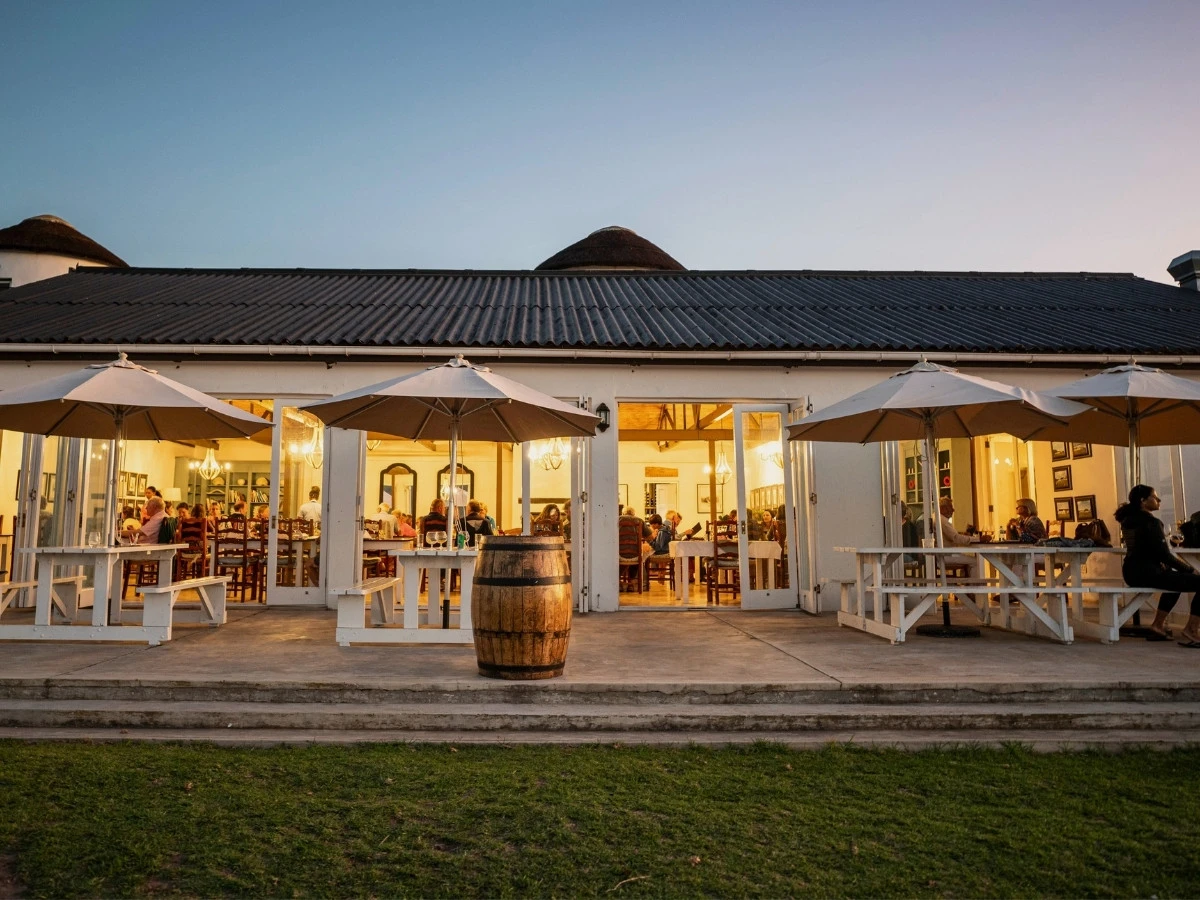
The restaurant provides a warm and relaxed atmosphere, with wholesome and delicious meals IMAGE Courtesy De Hoop Collection
Dinner smarts: a set menu, seven seasonal rotations, and the best wine list in the Overberg
De Hoop’s kitchen operates on a principle that many lodge restaurants would do well to follow: simplicity as a form of sustainability. There are three courses, and three choices—vegetarian, chicken or meat—for the first two, and one common dessert. That’s it.
What’s smart about that is it simplifies the production line. Food arrives quickly and hot, what’s not used that night can be used for lunch salads the following day, reducing wastage. Also, it helps efficiencies in energy use, manpower and produce. There are seven seasonal menus to draw on, offering variety enough.
The wine list was what amazed us, though. We couldn’t believe the options and the reasonable prices (starting at R160 for a bottle of Klein Rivier Chardonnay). The reason for this, said General Manager Hendrick Arendse, is that the owner sources directly from the Overberg farms, supporting the local producers.
Serious wine drinkers will find what they need—an Ernie Els is on the list at around R5 000—and many guests will appreciate the value passed on to them, as we did.

A view of the manor, which used to be a farm (see the grain silos?). This is where the restaurant and some common areas are IMAGE Courtesy De Hoop Collections
The accommodation offers a range, from affordable self-catering to luxe suites and villas
De Hoop’s accommodation ranges from affordable camping, glamping in rondavels (small, round and charming) and self-catering cottages for families and groups, to luxe thatched-roofed suites and top-end villas.
We stayed in the Otter Suites, on a ridge above the great birding show on the vlei. They were very comfortable and charming, but in a place like that, there’s a lot to draw one outside (including the rustic and delightful outdoor shower).
The main manor is where the meals happen, and getting there requires crossing a field, which in the morning teems with birds hunting insects. At night, an owl claimed the roof for an enchanting few minutes.
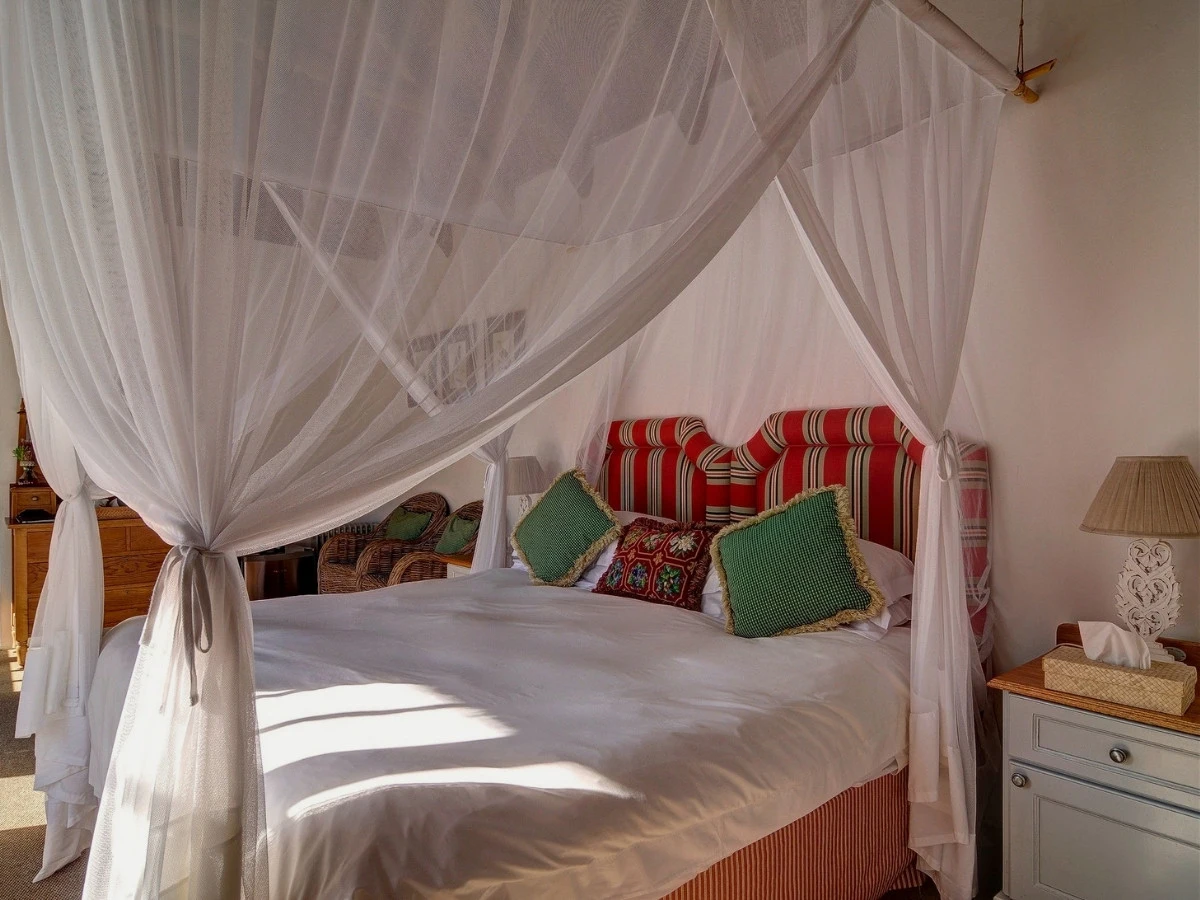
The Otter Suite is a rondavel-style room with a spacious en-suite bathroom and outdoor shower IMAGE Courtesy De Hoop Collection
De Hoop centres people, both guests and staff
At dinner, a staff member on the restaurant floor noticed my partner poring over the wine menu. He offered to show him the wine cellar in a converted silo, and later brought the wine he had selected.
The next day I realised that man was the general manager, Hendrick Arendse. I’d appreciated his attention to detail at dinner. He told me he’d started at De Hoop as a guard at the gate. His assistant general manager started as a guide. Arendse also told of staff who started as a dishwashers and became a restaurant manager, while another moved into reception.
Staff come from all over the area—Napier, Bredasdorp, Elandsbaai, some from nearby farms. And if the owners see potential in someone, said Arendse, they’re offered the opportunity to grow.
DETAILS
Stay There are many accommodation options. The most affordable stay will be in the rondavels, adjacent to the main campsite (which operates a little under the radar). The rondavels have no kitchen, just a braai area. Starting price R1 995 per night for two sharing. The self-catering cottages are also very affordable (and pretty), starting at R3 600 per night for a four sleeper. Suites start at R2 950 pppn sharing, dinner and breakfast included.
Need to know The trip to De Hoop from Cape Town is about 230 kms but plan for three hours because of dirt roads; no need for a 4×4. There is game on the reserve, although no big game. Bring binocs and a birding book!
Activities This is a nature lover’s dream. If you want your kids to learn about nature, this is also the ideal place to do it – so many child-friendly opportunities. See the website for what is on offer both inside and out of the reserve.
Website www.dehoopcollection.com
DE HOOP COLLECTION'S APPROACH TO OPERATIONS
ENERGY De Hoop Collection currently runs on Eskom grid power. A full solar off-grid programme is in active development, the site layout is being finalised. The target is to be fully off-grid by end of year. LED lighting has been installed throughout all accommodation units.
WATER The property draws from three on-site boreholes tapping an underlying aquifer, with consumption at approximately 40 000 litres per day, including an on-site laundry operation. Lawn irrigation draws from rainwater; five tanks totalling 25 000 litres supply the swimming pools. A neighbouring farm with a mountain water source serves as backup. Guests are asked via signage to use water sparingly. There is no grey-water system as there are strict rules for this nature reserve.
WASTE Waste management is De Hoop’s identified greatest challenge, and the reason is structural: CapeNature prohibits composting or any material interference with the reserve environment. Waste is separated at kitchen level, collected by a contracted supplier, and further sorted for recycling in Bredasdorp. Plastic follows the same route. The curio shop stocks bamboo and recyclable alternatives in place of plastic goods.
CULTURE + COMMUNITY Staff are recruited from local towns and nearby farms. Internal promotion is the norm: the General Manager began as a gate guard; another recently qualified as a guide; kitchen and restaurant staff have moved from entry-level roles to managing their departments. Annual increases are paid, as are bonuses; staff attend external training and are sent to other properties (such as Grootbos and Arniston Hotel) to observe and bring back practice. Equity for staff is in late-stage discussion, but not yet formalised. The De Hoop foundation supports some schools in the area, and opens the reserve for nature talks and access to the origins exhibition.
BIODIVERSITY + ECOSYSTEMS De Hoop Collection operates within a CapeNature-managed reserve — the conservation framework is external. Guides monitor the reserve and report anything requiring CapeNature’s attention. Wildlife is not fed; guests are directed to not stray from walking paths; a no-loud-music policy is communicated at check-in and enforced. External lighting is sensor-triggered with a three-minute auto-off, most of the reserve runs dark, and parking zone lights switch off automatically. The De Hoop Foundation is being established to take on alien clearing and conservation projects.