

This off-grid Cederberg retreat is the ultimate digital detox destination
There are only five cabins at this mountain hideaway where it's so clear you can see the Milky Way
- In-house writer
AT A GLANCE HOW THIS STAY REDUCES ITS IMPACT
Energy Fully off-grid; solar power only, donkey boiler heated with cleared alien wood.
Water River-sourced and used sparingly; no pool or irrigation; wastewater treated with bio-enzymes and biodegradable septic additives; filtered back into ecosystem.
Waste management All waste separated; PET recycled; unrecyclable plastic used in eco-bricks; all organics composted for vegetable garden.
Culture + community Local staff trained and employed during build; long-term skills development (licenses, banking, first aid), then moved into better jobs; currently employ SA residents; support local makers.
Biodiversity + ecosystems Active alien vegetation removal and erosion control; low-impact construction on degraded land; no pesticides or artificial fertilisers; restricted night lights; contribute to leopard and black harrier monitoring; ongoing animal welfare and TNR programmes.
Carbon footprint to get there From Cape Town in large, petrol car = 0,05 tCO2
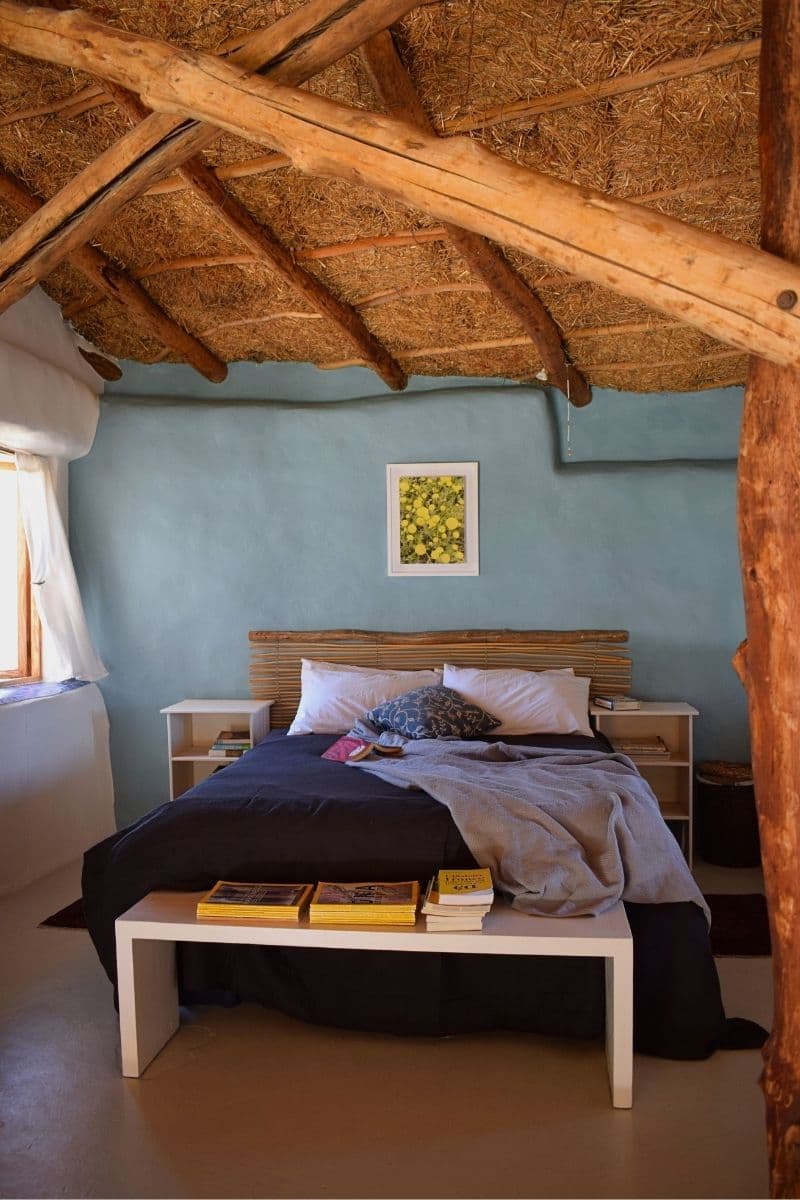
Oudrif’s rooms are lit by solar, but there are no plugs in the room. Also, no fridges, which means absolute silence IMAGES Andrew Weeks
No signal? No problem. Rest, relax, listen
If you watched the last season of White Lotus, you’ll remember the scene where guests, aghast, are asked to drop their digital devices into ‘the phone bag’ (pity the staff). At Oudrif Strawbale Cottages, the location takes that potentially hostile moment out of everyone’s hands.
The drive from Clanwilliam (230km from Cape Town) winds into the remote Cederberg Mountains on a decent gravel road. A dirt road (a car with good ground clearance will manage), several farm gates and a final drop down to the Doring River and we’d arrived; our cellphone coverage didn’t.

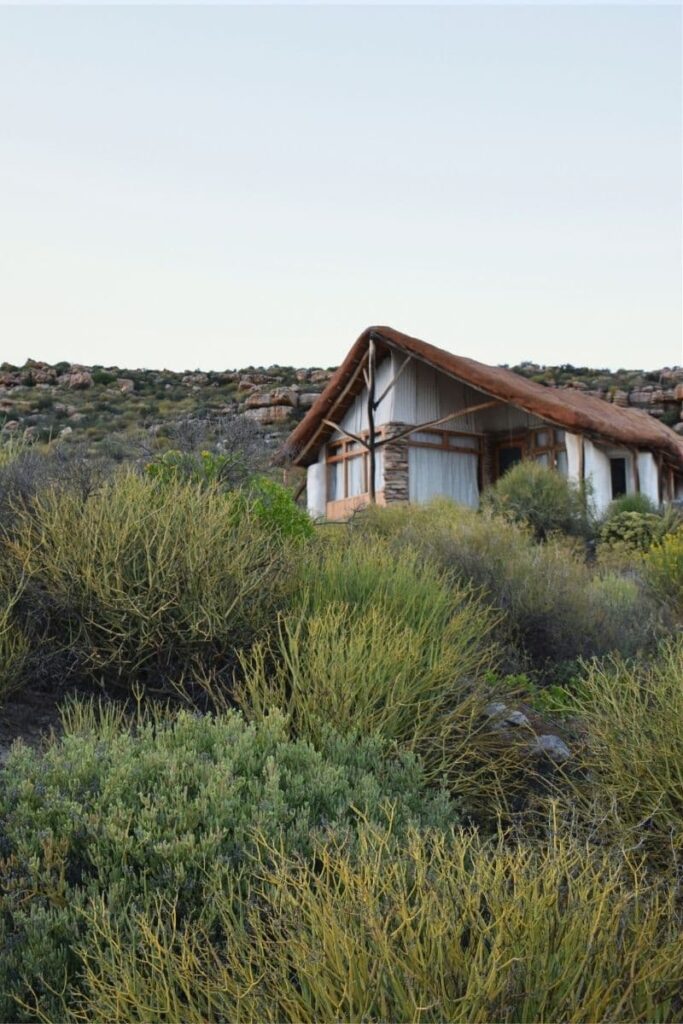
Oudrif’s cottages are set apart for privacy and sleep two IMAGE Andrew Weeks
Escape routine and wellbeing follows
Oudrif is owned by four partners and two of them, Jeanine and Bill Mitchell run the show. Burnout refugees make up a fair share of their guests, Jeanine says. No signal means no temptation, although if we were desperate we could hike up the hill for a single bar or two, she added.
All decisions were out of our hands: breakfast, lunch and dinner arrived at set times. We spent one of the days walking with Bill, part history buff, part naturalist and not shy of a robust political discussion. Guests can join a walk every day. There are caves and rock paintings, but we opted for the river instead.


Spring is one of the best times to visit, when almost every plant blooms IMAGES Sonya Schoeman, Andrew Weeks
Come for river swims, night skies and soundbaths
The Doring River is no narrow trickle of a stream. It runs full, wide, strong and is startlingly refreshing – a gift considering how hot the Cederberg gets in summer.
Below the cottages there’s a grassy patch and shady hammock just begging for a body with a book and glass of wine. Such placid pleasures were not for us, though.
Man versus river won the day, and we paddled up and up against a strong flow just to see what would emerge around the next bend, and the next, and the next. So worth it. Impressive cliffs—one bare and rocky, the other softened with greenery—rise up from either side of the river. Birds sunbathe on branches and it feels like origin times.
With no town for miles, the night sky is gratifyingly inky and the Milky Way streams across it like a winking silver river. Nights are silent but for the steady shushing of the Doring and the night birds calling to each other. We couldn’t ask for a more calming track to lull us to sleep in our charming strawbale cottage.

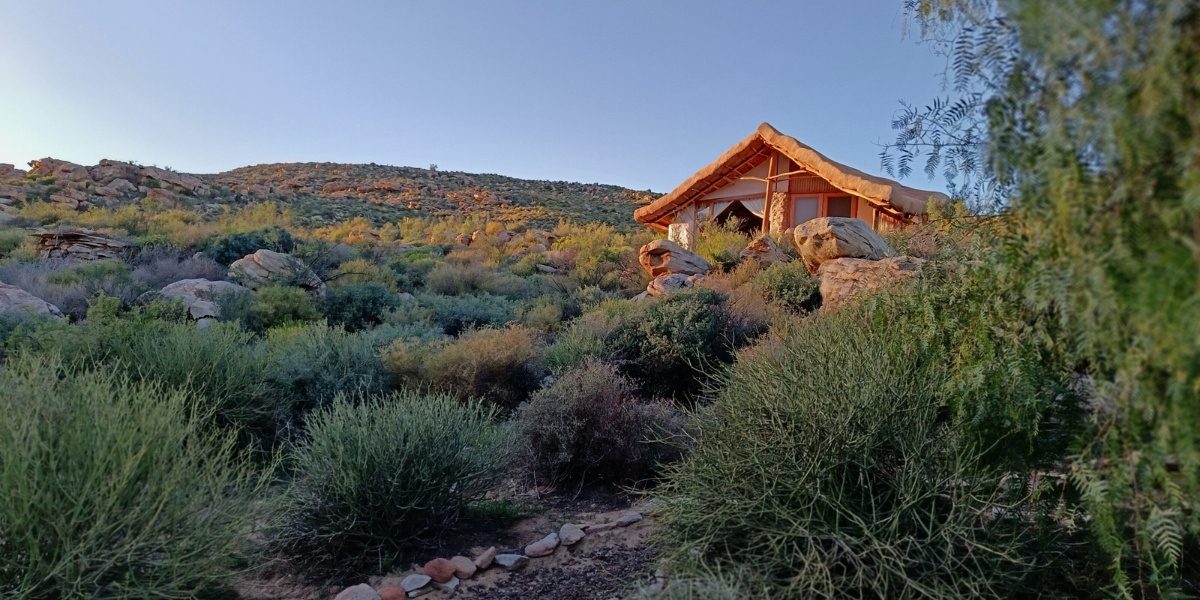
The strawbale cottages at dusk; they were built from completely natural and recycled materials, and overlook the river IMAGE Andrew Weeks
No phones mean people connect at dinner
What do a geologist, lawyer, horse rider, scientist, sociologist, former shepherd, publisher, community activist and retirees have in common? Enough, as it turns out.
Around the long table that seats 12 (the maximum number of guests), conversations were robust, stimulating and informative and navigated disagreeing views because the moment required it.
Oudrif has been around for almost two decades, long enough to build a faithful following, but also to attract serendipity. A Tin Tin-obsessed colleague once visited here and, by pure chance, dined with the publishers of the books he loved and collected. The owners had many examples of this.
Sustainability on a plate: fire-roasted freshness
The food deserves a mention: wholesome and memorable enough to request recipes. Jeanine grills vegetables over the fire — perfectly dressed beans, cauliflower and beetroot. Bill’s fire-roasted sweet potato slices were memorable. And his home-made ice cream with salted caramel was a revelation.
Fresh bread is baked daily, as are dinky muffins, and there’s beautifully crunchy homemade cereal (and there was a bespoke version to accommodate one guest’s aversions), with fresh fruit salad, yoghurt and hot breakfast to round off the meal.
Also notable: these meals were abundant but always just enough. I never saw any waste. In their simplicity lay the essence of sustainability.
DETAILS
Stay Accommodation starts at R3 800 per cottage. Everything is included: breakfast, lunch and supper, plus one activity per day.
Need to know There are no plugs in the cottages, so you have to charge phones in the common area. It also means you can’t bring your boombox; this is strictly a natural-sounds environment (and it’s part of what relaxes the nervous system).
Activities There are a few hiking options, which are guided by the knowledgeable Bill. There’s also the river for swimming and canoeing.
Website Oudrif.co.za
HOW OUDRIF LOWERS ITS IMPACT
ENERGY USAGE Oudrif’s footprint is small: five cottages, a communal area and a staff house. It’s been entirely off-grid from the start, and relies solely on solar power. A donkey boiler heats water for the simple, efficient kitchen, using alien wood cleared from the surroundings.
WATER CONSUMPTION Water is drawn from the river and used sparingly (there’s no pool and we saw no irrigation). Wastewater is treated with bio-enzymes and Fatcracker (99% biodegradable) is used in septic tanks. This flows into French drains and then into natural faults; after about 30 years, about 60% filters back to the river, say the Mitchells.
WASTE MANAGEMENT All waste is separated for recycling. PET plastic is recycled, while unrecyclable plastic is incorporated into eco-bricks; plastic is lighter than glass and doesn’t break, making transport more fuel-efficient, says Bill. Food waste is minimal, thanks to the couple’s precision in catering. All organic waste is composted for the vegetable garden.
CULTURE AND COMMUNITY During construction, only local, unskllled people were employed and trained on site. For 17 years, staff came from the local community under a rule: work at Oudrif should be a stepping stone to better jobs. Staff were supported to get drivers’ licenses, bank accounts for saving, first aid training and other skills they were interested in. Many moved on to better jobs; the first local woman in the area with a driver’s trained here. Oudrif also supports local small businesses, commissioning curtains and other soft furnishings where needed. These days Oudrif employs people from outside the area as former employees from the area found it too isolated. Some previous staff were trained as animal welfare assistants and still work with Jeanine.
BIODIVERSITY AND ECOSYSTEMS Oudrif is set in an agricultural area and works actively to restore biodiversity. The team clears invasive vegetation (such as eucalyptus in nearby streams) and uses the wood for heating and building. Anti-erosion work is ongoing. They also contribute to conservation projects, monitoring leopards with the Cape Leopard Trust, and recording black harrier sightings.
Lighting is restricted to buildings, with no lights left on overnight so wildlife isn’t disturbed. Vegetables are grown without pesticides or artificial fertilisers. Each cottage was built on previously overgrazed land, with minimal bush cleared (only three, according to Bill) and no machinery used. Pioneer plants are relocated to eroded sites to trap soil, seed and moisture over time.
Jeanine also runs an animal welfare project, protecting the African Wild Cat species’ genetic purity through trap-neuter-release (TNR) projects. Jeanine supports sterilisation drives and teaches pet first aid to locals, schoolchildren and farm workers. She assists with dog, cat and occasional wildlife rescues; she’s trained as a wildlife first responder.