

One tiny eco-cabin near Cape Town feels enormous. Here's why
Hidden in a thick forest above the Indian Ocean, The Hideaway is a cute eco-friendly tiny house at Cape Point Mountain Getaway that delivers you surround-sound nature
AT A GLANCE HOW THIS STAY REDUCES ITS IMPACT
Energy Solar-powered; LED lighting; usage low.
Water Source is mountain stream; grey water goes to garden; 42 000-litre reserve on site.
Waste management Three-stream separation; on-site composting; refillable products in progress.
Culture + community Retreats and community events year-round; youth biodiversity education on-site; one long-term staff member, salary plus commission.
Biodiversity + ecosystems Part of Castle Rock Conservancy; 34 hectares invasives cleared; fynbos restored; no pesticides; no outdoor lighting
Carbon footprint To get there from Cape Town in large, petrol car = 0,01 tCO2
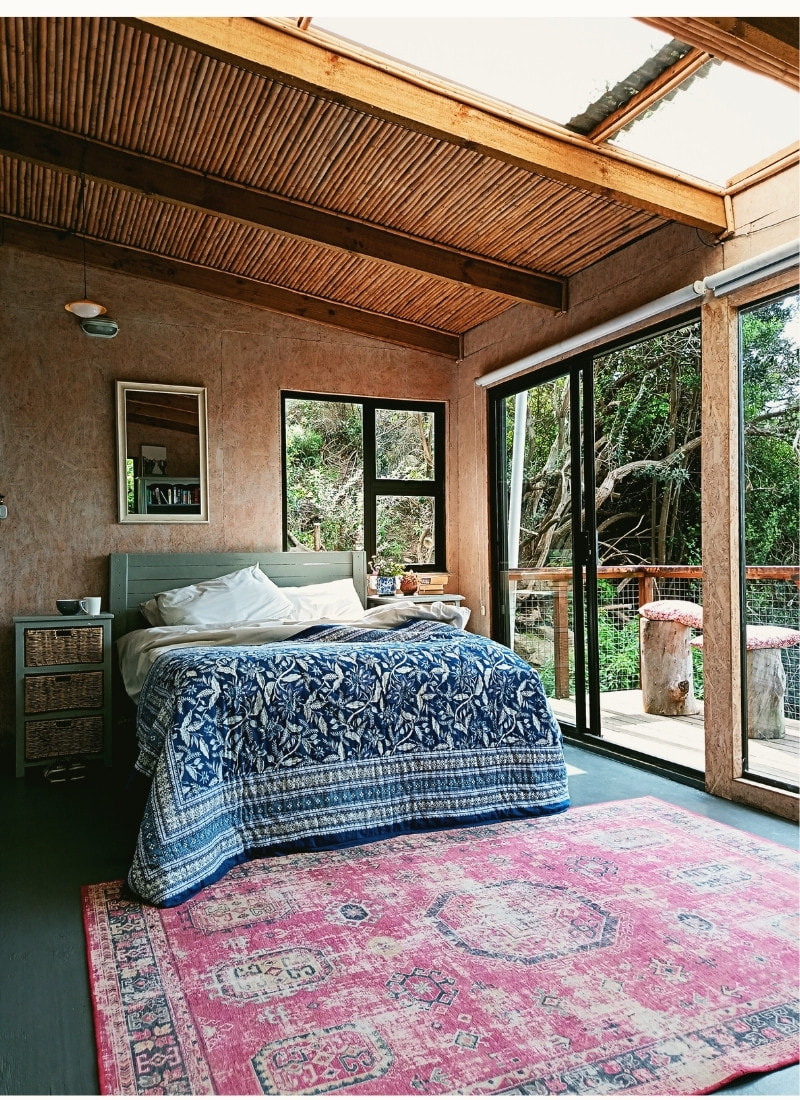
You sleep indoors, but feels like you’re outside IMAGE Travelosophy
Wake to a sound bath of South Africa's birds
This eco-cabin near Cape Town is about 6×4 metres. There’s a bed, two side tables with reading lamps, a utilitarian kitchenette, a table for two, an armchair. There’s nothing here that isn’t necessary, and nothing necessary that isn’t here.
Then there is everything outside it.
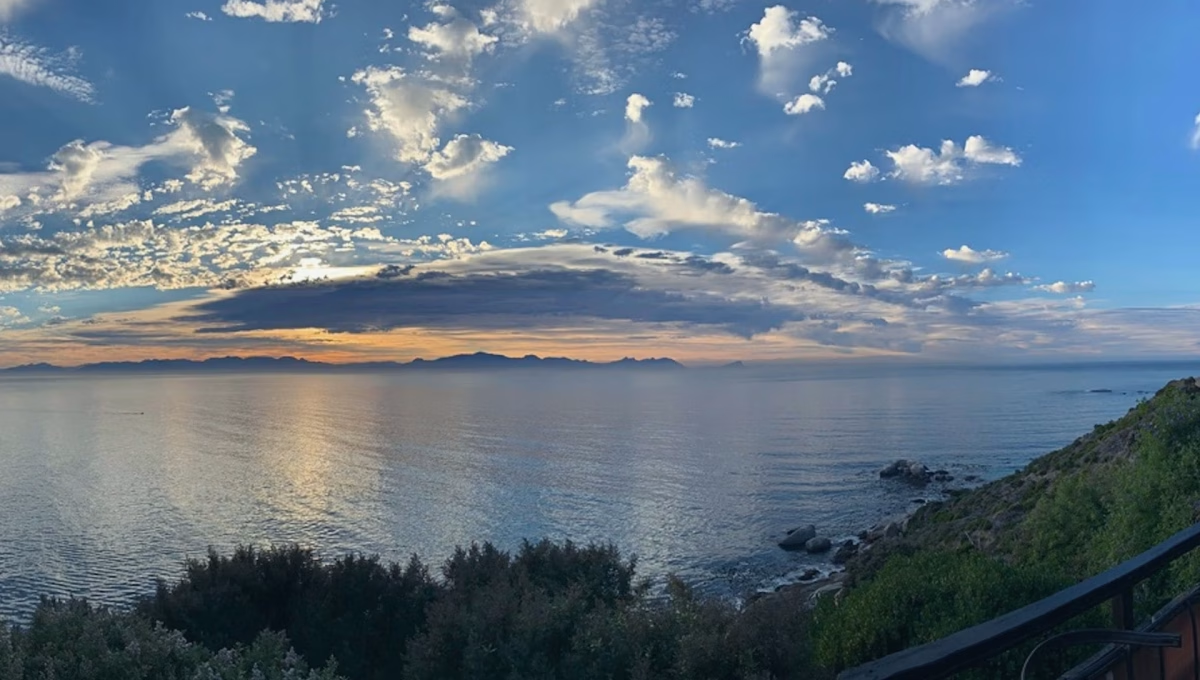
The Afrotemperate forest on the mountainside at Cape Point. The Indian Ocean below, stretching out till it’s stopped short by the Hottentots-Holland Mountains. The delicate rose and deep-pink sunrises that punch out a statuesque palm tree against the sky, a view so absurdly perfect it made us laugh. Then there’s the surround sound of robins, thrushes, sparrows, finches, Southern Boubous.
Yes, the cabin itself is tiny. But the world it’s set in is enormous.
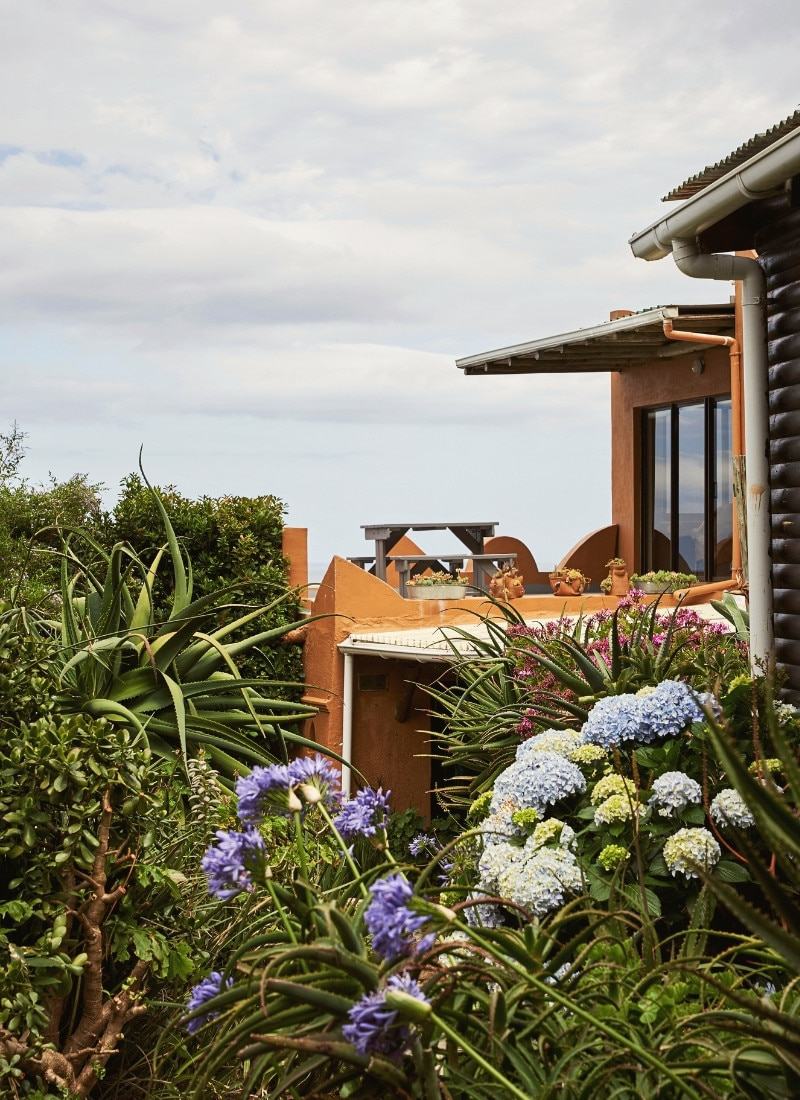
The upstairs deck of the Villa IMAGES Courtesy Cape Mountain Getaway
This sustainable Cape Point stay has history
The land Cape Point Mountain Getaway is on has had remarkable custodians.
The first recorded owner used it to tether his horses in the shade while he hunted and fished (the sea here is part of a marine protected area). That was in the 1800s. A naval chaplain built the first house there. Then came author and journalist Jane Eliza Hasted McColm, who lived here alone, which tells you something about the quality of solitude this property offers.
But the figure whose spirit defines it the most is Rosalind Bean: altruist, environmentalist, equestrian, by all accounts a ‘muck in’ kind of woman, and the person who set its ethical compass.
Cape Mountain Getaway is an ode to her, a regenerative space with community-building at its core, created and run by her former husband Joel Bolnick.
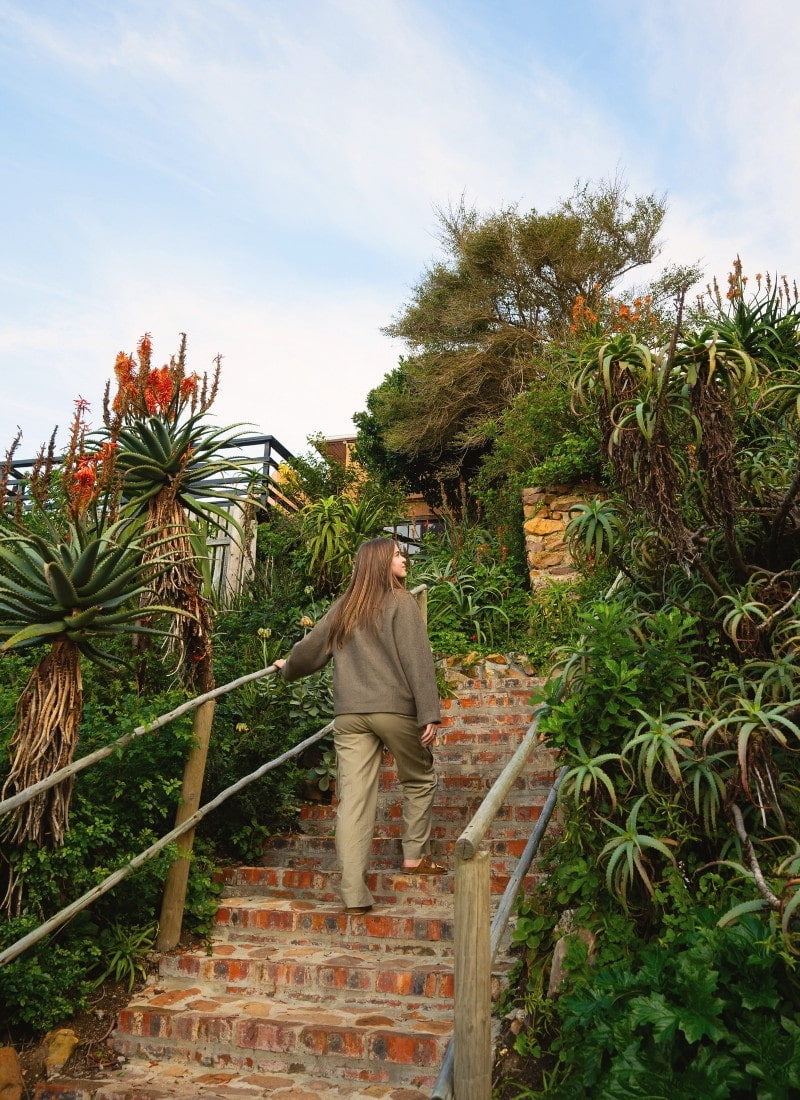
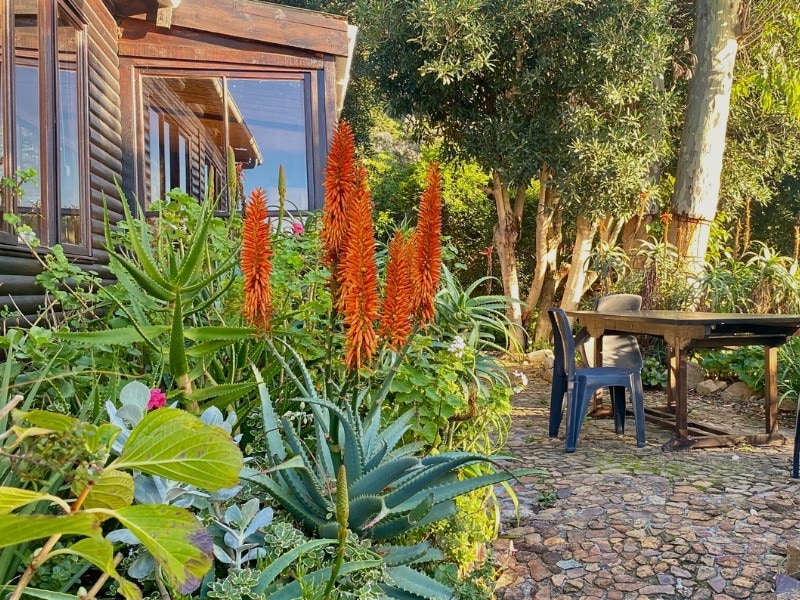
There’s always something blooming on the mountainside IMAGES Courtesy Cape Mountain Getaway
Why this eco-cabin stay goes far deeper than a weekend away
In Joel’s words, the ethos here is to “give without hesitation and champion a just world”, just as Rosalind lived. The sense is of community building, brick by brick.
The events run at the Getaway are where that ethos becomes tangible. I’ve listened to a forensic unpacking of how big food companies engineer detrimental dependencies in low-income communities for profit. I’ve enjoyed sea shanties sung and explained by musicians who’re mystifyingly passionate about them. I’ve joined alien-clearing events on the mountainside alongside Capetonians with unshakeable passion about the transformative power of nature.
You can come here to simply revel in the environment, worth it alone, but participation is where Cape Point Mountain Getaway offers the full depth of what it’s about. There are forage expeditions, guided mountain hikes, workshops, talks, retreats: the programme rotates constantly.
And there’s always the Great African kelp forest right at the Getaway’s feet; it’s where I once swam with cow sharks.


A posy, freshly picked from the mountainside, tucked into the taps of the outdoor shower; coffee on the balcony; Lindela Mjenxane from Beyond Expectation Environmental Project with one of his young volunteers on the mountainside; Joel Bolnick assessing the state of the fynbos IMAGES Travelosophy
Restoration and conservation is central
Thirty-four hectares of invasive alien vegetation have been cleared on this property. The fynbos returning in their place is the result of years of unrelenting work.
The Hideaway, Villa and Cottage are all in the Castle Rock Conservancy. There are no outdoor lights, so it doesn’t disrupt wildlife. There are no pesticides on site, except in direct application on invasive trees. Anti-poaching monitoring runs informally but consistently in collaboration with neighbouring properties.
This is land that is being actively restored, not as a selling point but as a core principle, a belief in a way of living. You feel that distinction the moment you arrive.
The Cottage is a charming space, with an open plan bedroom/bathroom IMAGES Courtesy Cape Mountain Getaway
DETAILS
Stay The Hideaway is one of two cabins up on the hill, but the only one available for stays. It’s set on a wooden platform, with an outdoor dining area, a shower tucked under the trees, and a wood-chip eco-toilet (prettily designed and odourless). Special Travelosophy rate for The Hideaway from R1 100 per night, minimum two-night stay (mail bookings@capepointmountaingetaway.co.za with Travelosophy in the subject field). There’s also The Villa (sleeps five) and The Cottage (sleeps three); find their prices here.
Need to know This is a wild space, with wildlife including the occasional baboons (so windows should be kept closed). The accommodation is self-catering. The Villa has a gas stove, while The Hideaway and Cottage have hobs. Bring everything you might need because it’s about 10 kms from Simon’s Town. Note: there are blinds to block out the morning sun at The Hideaway, but no other curtains. Joel assured us it’s absolutely private, but I felt somewhat exposed. Also, some appliances (such as hairdryers) aren’t permitted as they’ll damage the solar system.
Activities There’s plenty to do here. Hike on the property (there are two short trails) or Cape Point is close by (about 5kms). Snorkel at Miller’s Point, swim at any number of the lovely coves, join a foraging educational or participate in the many other informative events at the Getaway’s Ros Bean Centre (make enquiries before you visit).
CAPE POINT MOUNTAIN GETAWAY'S APPROACH TO LOW-IMPACT OPERATIONS
ENERGY The cabin runs on solar with LED lighting throughout and draws nothing from any municipal grid. Gas is used for cooking and water heating on the occasional overcast day when solar falls short.
WATER It comes from a mountain stream on the property. Grey water drains back into the garden. Forty-two thousand litres are stored in on-site tanks as a dry-season reserve (which has never been used). Guests are asked to use water frugally in summer.
WASTE On arrival, guests are asked to separate waste into three streams: organic, recyclable and non-recyclable. Food waste is composted on-site and returned to the soil. The property is progressively replacing single-use plastic cleaning product containers with refillable alternatives.
CULTURE + COMMUNITY The business employs one South African resident, who lives on site, and earns a salary plus commission on sales. They run a biodiversity centre on the property that takes youth from low-income communities into the outdoors.
BIODIVERSITY + ECOSYSTEMS The property is in a conservation area. Thirty-four hectares of invasive alien vegetation have been cleared and its regrowth managed, with indigenous fynbos restored in their place. No pesticides are used on the property except in direct application on invasive alien trees. There are no outdoor lights at all, which protects nocturnal fauna. Poaching is monitored informally with neighbouring landowners.