

Xenophobia in South Africa: What it means to your next trip to another African country
There are two sides to this story: What's happening to Africans here. Then what happens to us when we travel our continent. I got my first taste at Maputo Airport at 5am
- Sonya Schoeman
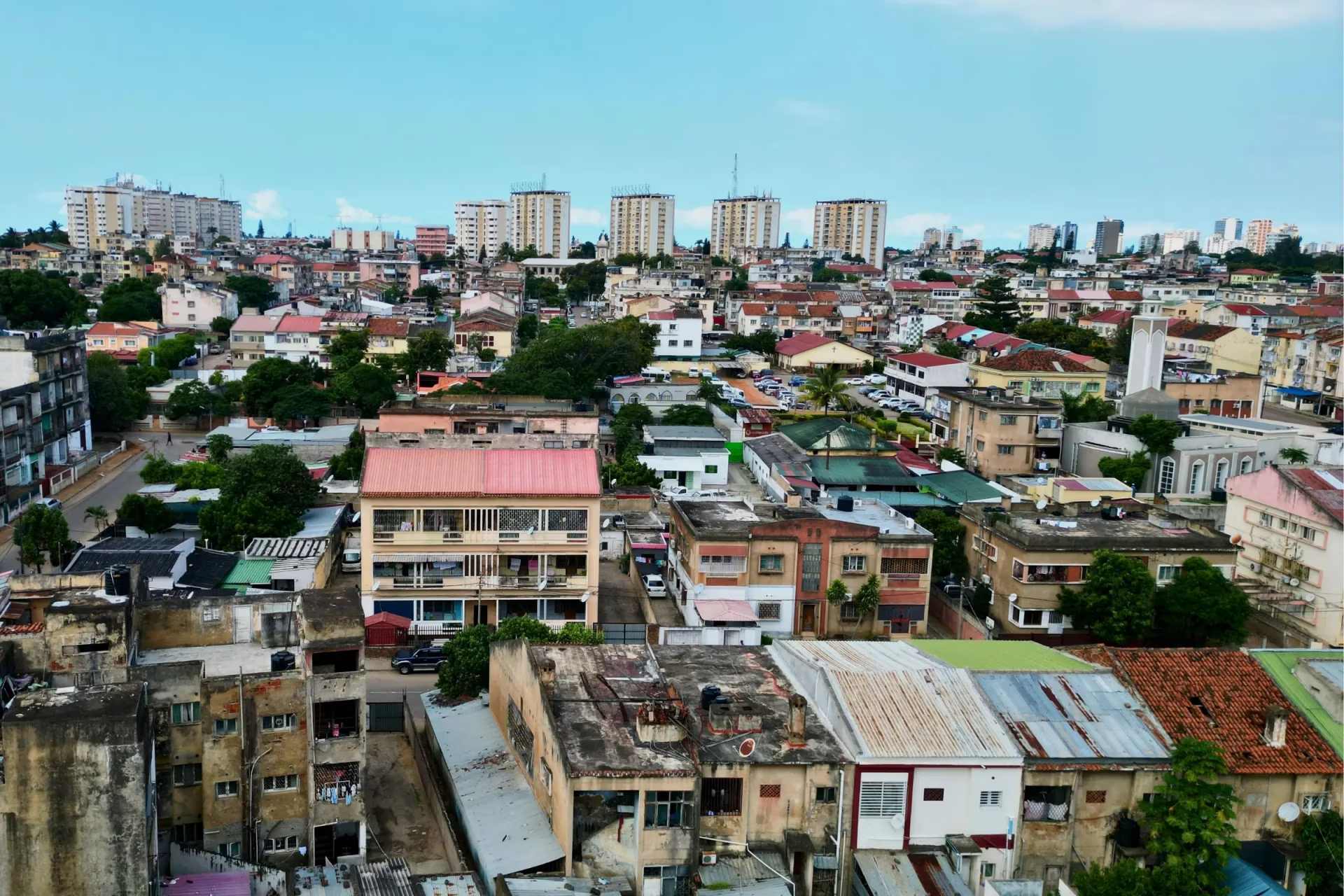
It's 5am in a warm Maputo...
Warm for me, cold for my cab driver. He’s wearing a thick jacket. He eyes my thin jersey. “It’s winter,” he pronounces. He fears for my survival, I see, but he lets me out into the hyperthermic 22°C dawn air anyway and wishes me luck.
Maputo Airport Terminal is alive with a musical chatter. Starlings. There are hundreds of them nesting on a long protected ledge high above our heads. The Mozambican airports authorities have taken a live-and-let-live approach, and the terminal is unforgettable because of it.
At the gates, a solid, smiling woman puts my bags in the plastic carrier to be scanned, checks the downloaded ticket on my phone, opens up my passport. She skips a beat.
“Oh,” her voice rings through the airport, “you are South African! You are killing my friends!”
Which African countries are warning against travel to South Africa
It’s true that South Africans are killing migrants. So far, five Mozambicans, says the state news agency, two, says the South African Police Service; two Nigerians, a Malawian.
Hundreds of people are sheltering in safe locations. Besides Mozambique, Malawi, Zimbabwe, Nigeria and Ghana have been repatriating their citizens and advising against travel here. Ghanaian media reported that Ghana’s president told President Ramaphosa not to bother with a planned state visit, but South Africa denies there was ever a meeting planned.
This is not the first time. There was 2008—a shocking 150 immigrants killed—and it has simmered ever since.
Today we are that country again. And we must prepare for some blowback.
Is South Africa still safe for African tourists?
African tourists are the mainstay of South Africa’s tourism industry.
SA Tourism’s international arrivals map shows 4 768 108 travellers had visited the country by the end of May 2026. Of those, 3 572 914—three in every four—came from the our continent. Most are from Zimbabwe and Mozambique.
These are legal entries, you might point out, but legal entry might not protect a tourist from a xenophobic attack.
A recent Daily Maverick article describes how one Zimbabwean woman, who’d planned a holiday to South Africa, cancelled after she saw a video of a Zimbabwean being victimised in the same area where they had booked.
She was not the only one who was cancelling, although it’s too soon to know the impact.
But it’s clear tourists from the rest of Africa don’t feel safe here, no matter how many officials say they are welcome. Empty words when they’re seeing assaults.
What happened to South African tourists in Mozambique?
Travellers are marked by association with their country’s conduct.
There’s plenty of evidence of this in 2026. Since the Gaza genocide began, Israeli travellers have been refused disembarkation in Greece, faced protests on Sri Lanka’s beaches and been banned outright from the Maldives.
Since the invasion of Ukraine, Russians have been shut out of six European countries and made unwelcome in many of the rest.
There are signs a stigma could be coming for South Africans.
Last week, a video went viral after a group of South Africans were chased out of a restaurant in Mozambique. While the context is not fully explained, one of the furious exchanges is “we are here with our passports”, referencing legal entry, illegal entries being at the heart of anti-immigration unrest. Another voice shouts, “South Africa must go. Black people, South Africa must go.”
The dining atmosphere was not convivial.
The Kenyan news site also wrote that South Africans in Mozambique have been advised to stay alert and steer clear of large gatherings.
Is the South African passport still welcome in the rest of Africa?
Reciprocal entry across borders is an aspiration for many African countries. South Africa, on the whole, has an easy time of it on our continent. We can get into most countries either without a visa or receive one on arrival, or with an eVisa. But this can change.
It’s too soon to tell whether South Africa’s most recent surge of xenophobia has altered the appetite for accepting our green passport.
In my case, moment that airport official saw my South African passport, everything changed. Her voice sounded friendly enough, but I was under no illusion about her feelings: she was not going to let this South African get away without a rebuke.
So for a while, the green mamba may be handled at other African borders the way people would handle most snakes: At arm’s length.
MAIN PHOTO Maputo IMAGE Sinal Multimedia