

Southern Yurts: Off-grid cabins, hot tubs in the Diepklowe Nature Reserve near Botrivier
You're immersed in nature at the River Cabin, but it's also like staying with a stylish friend
- Helen Walne
AT A GLANCE HOW THIS STAY REDUCES ITS IMPACT
Energy usage Off-grid solar across all units; gas for cooking and backup hot water; LED throughout; and track all energy and firewood consumption
Water usage Spring and gravity-fed borehole with self-imposed extraction limits; grey water from showers and hot tubs irrigates the gardens
Culture + community All staff from Botrivier village or living on-site; above-market wages with 10% annual increases; paid maternity and extended leave
Biodiversity + ecosystems Located in Diepklowe Private Nature Reserve; guest levy funds restoration of critically endangered Renosterveld via the Diepklowe Conservation Trust
Carbon footprint From Glencairn in the south peninsula to Southern Yurts, Botrivier, in a large petrol car return is 64kms = 0,04 tCO2

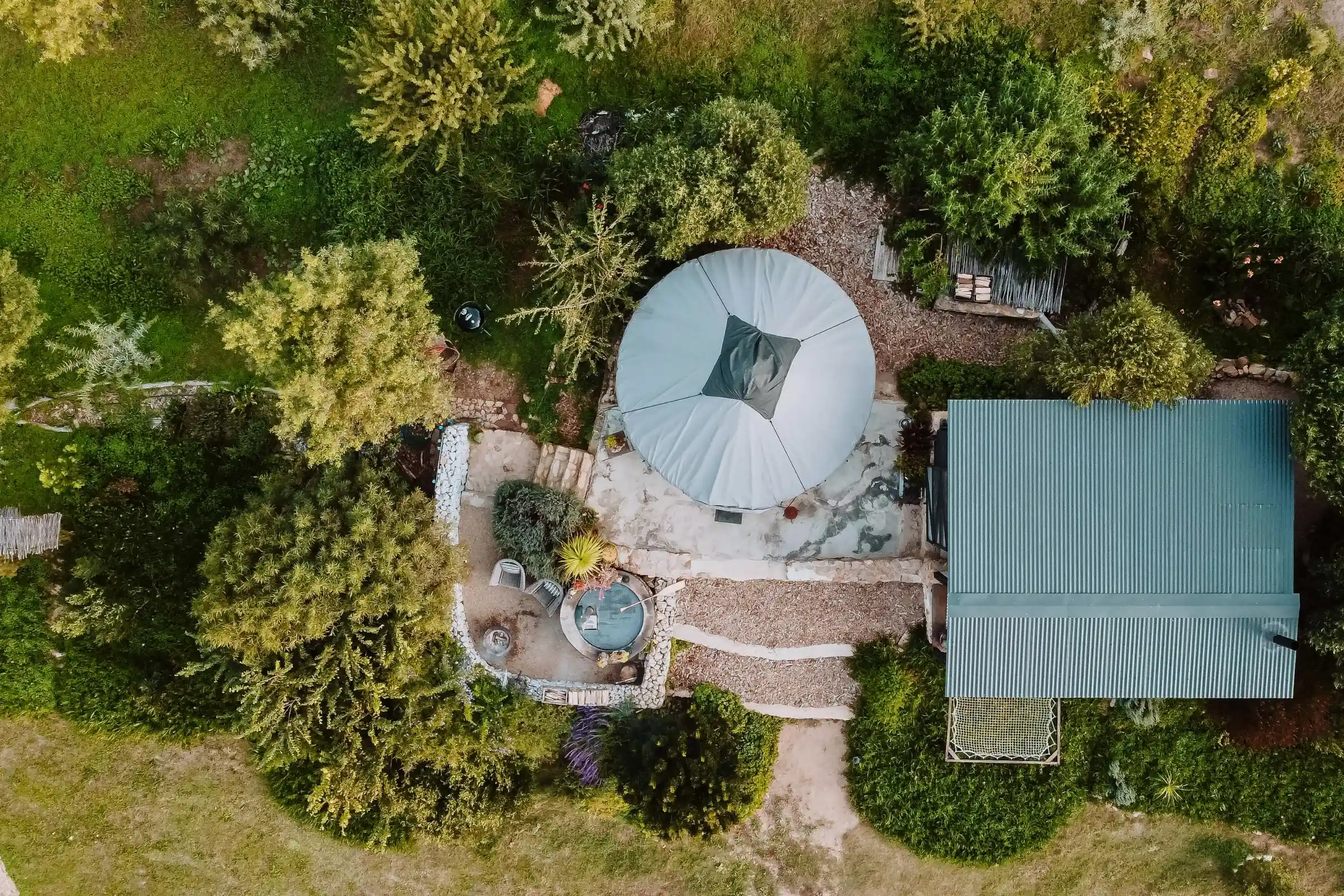
TOP Southern Yurts has six accommodation sites ABOVE At River Cabin, this garden is one of two and is tangle of green full of bird and other life IMAGES Courtesy Southern Yurts
Southern Yurts in the Diepklowe Nature Reserve is dedicated to the nature around it
Southern Yurts is an off-grid retreat in the Diepklowe Private Nature Reserve, an hour-and-a-half from Cape Town, near Botrivier.
It’s owned and managed by Kate Brink and Tobin Davenport, who live and breathe creating a balanced, holistic environment.
In 2022 they set up an NPO, the Diepklowe Conservation Trust, to manage the eponymous reserve. A portion of guests’ fees goes toward the trust, which funds restoring the renosterveld biome.
The sun powers all accommodation and guests are gently reminded to use it sparingly (switch on electric blankets to warm the bed and then switch off when you go to sleep).
We stayed in the River Cabin, which is fed by water from an upstream spring that tastes sweet and pure.
EXPLORE 5 more delightful, comfortable off-grid escapes in the Western Cape
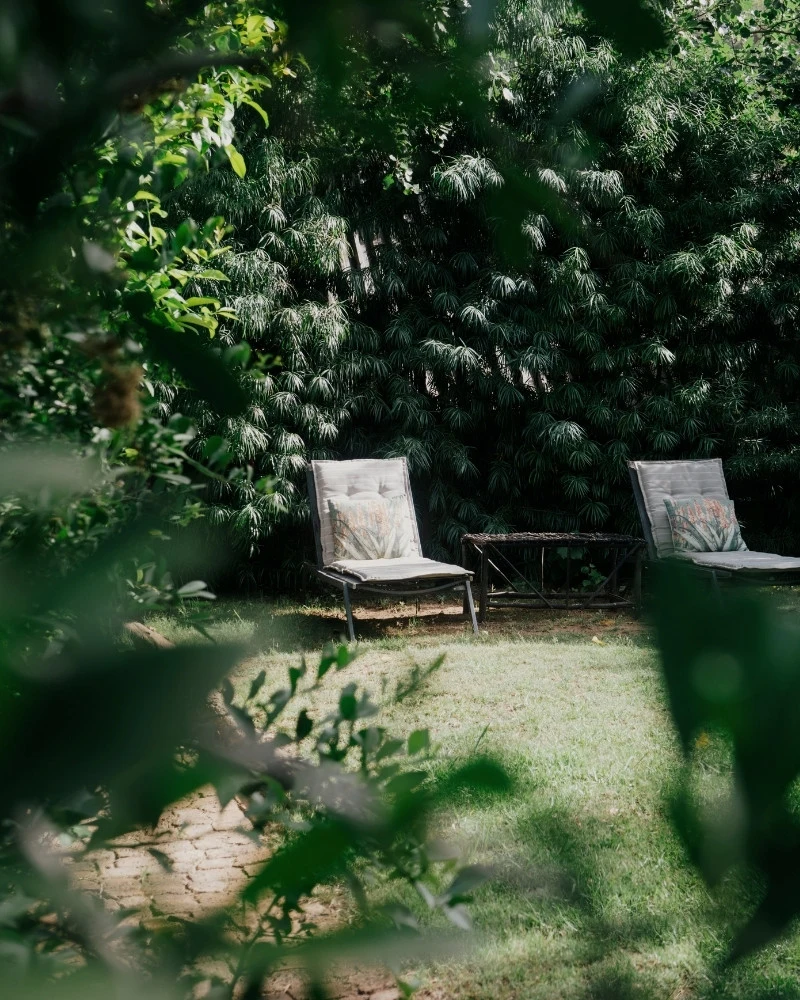
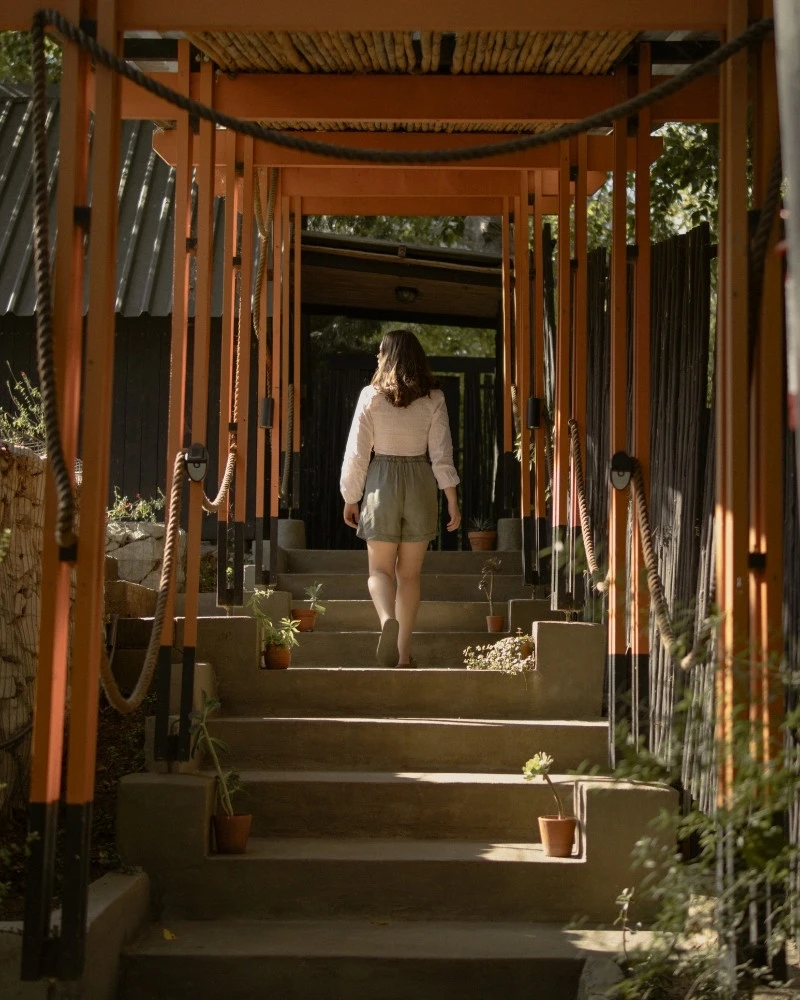
FROM LEFT There are many spaces to chill, read a book and enjoy the sun; a covered walkway joins the living space to the lounge
Inside the River Cabin, a delightful escape for two
River Cabin—more house than cabin—is spread across two A-frame buildings, joined by a covered walkway. There’s something novel about finishing dinner in one building and strolling to your sleeping area, the walkway softly illuminated and a rope handrail that sets its boundaries.
REVIEW The cutest cabin paid for by Tintin paid close to a seaside town
The bedroom, with a queen-sized bed and en-suite bathroom (all soaps and shampoos are biodegradable), is in one of the buildings, the kitchen and lounge in the other.
The rope theme is carried through to the lounge, where oversized LED lightbulbs dangle from a thick, suspended length of rope.
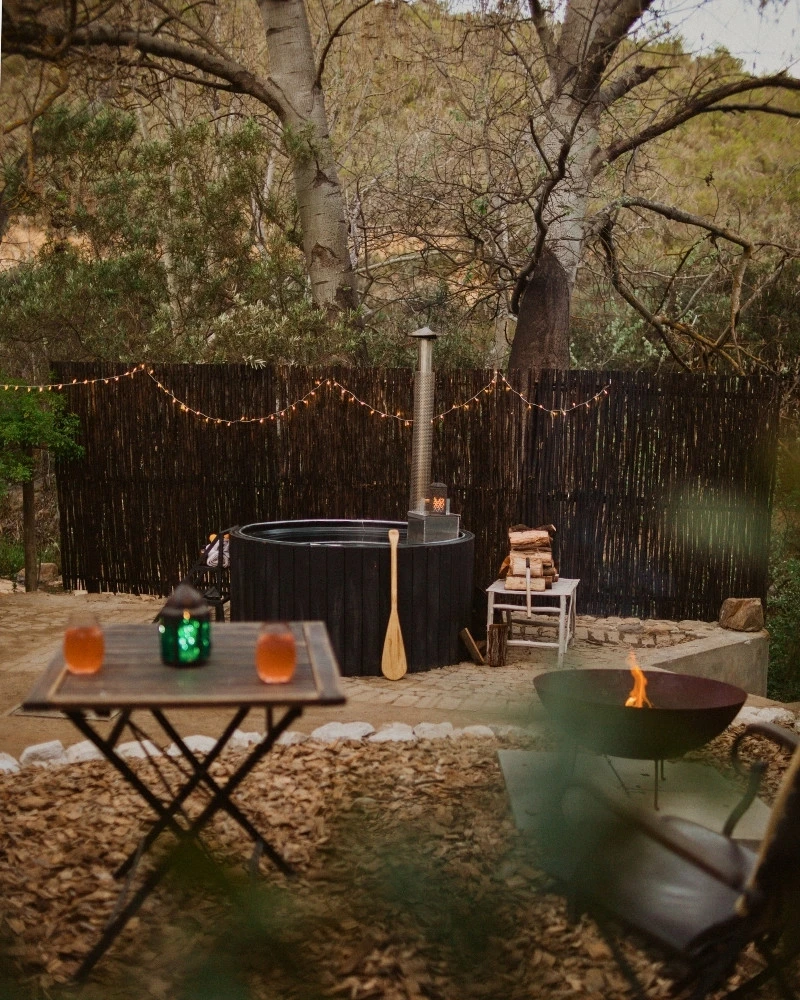
The hot tube is a glorious way to spend an evening, surrounded by soft lights IMAGE Courtesy Southern Yurts
River Cabin does two things: makes you feel at home and tells you you’re somewhere special
Southern Yurts River Cabin’s décor shows attention to detail: block-printed throws, prints on the wall, and potted plants. It’s like visiting the home of a tasteful friend, comfortable enough to sprawl out but with finishing touches that remind you you’re somewhere special.
There’s also a fire-heated hot tub, perfect for evenings warm or cool — the tub is cleaned out after every guest to allay any fears of lurking lurgies (that water feeds the garden).
A small kitchenette with a large gas stove is adequate for cooking, and there’s a pizza oven and built-in braai in one of the two garden areas, where there’s also a nap-worthy wicker-pod day bed. A bonus: a basin next to the braai for washing hands – why don’t more people think of that?
EXPERIENCE This little private curry table in Knysna is its best-kept secret
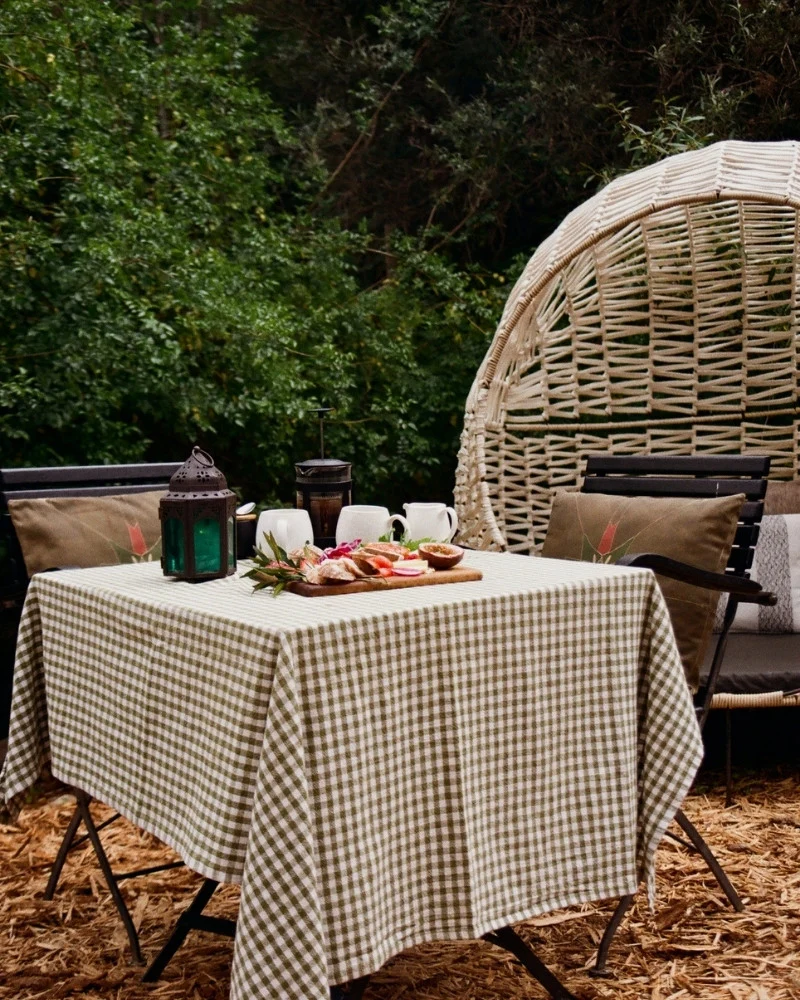
The ideal place for a relaxed, easy breakfast or lunch IMAGE Courtesy Southern Yurts
River Cabin is one of six sites, but is perfectly private
While there is a neighbouring cabin, River Cabin is screened and private, so you can soak up the undiluted sound of the nearby stream and birdsong in the forest.
There are six sites on the property. River Cabin is one of two private cabins, and there are three glamping sites and a larger site for groups. All strike a lovely indoor-outdoor balance — there are plenty of outdoor activities, and indoors it’s cosy and comfortable, with just enough style to earn its glamping honours.
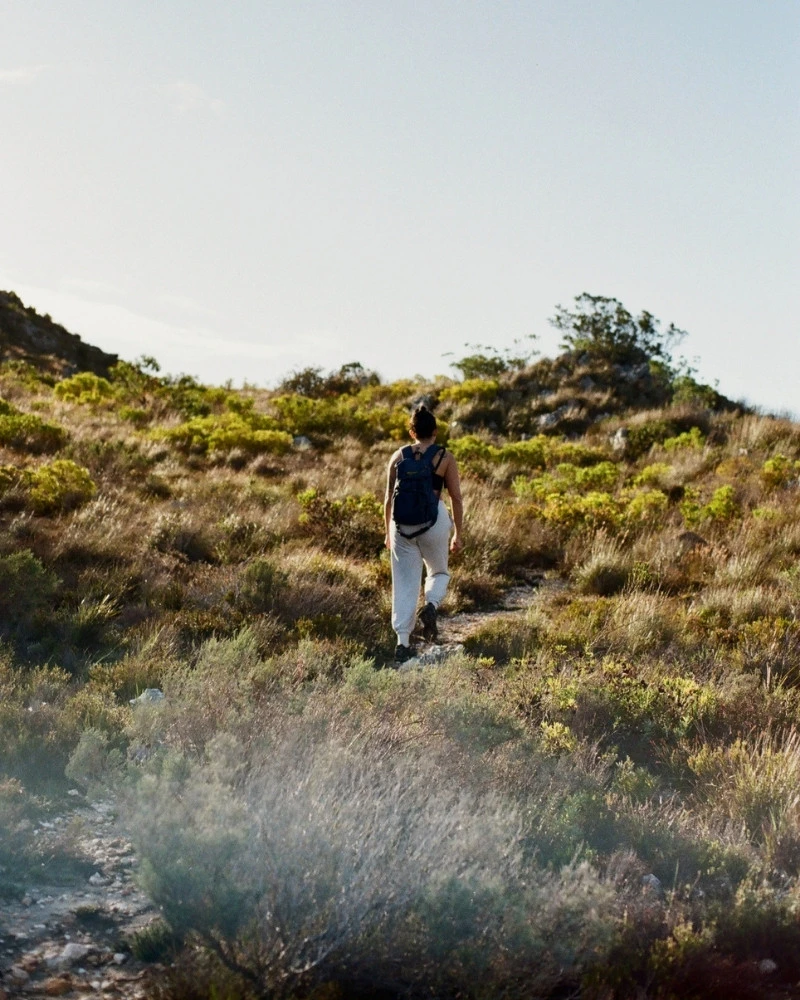
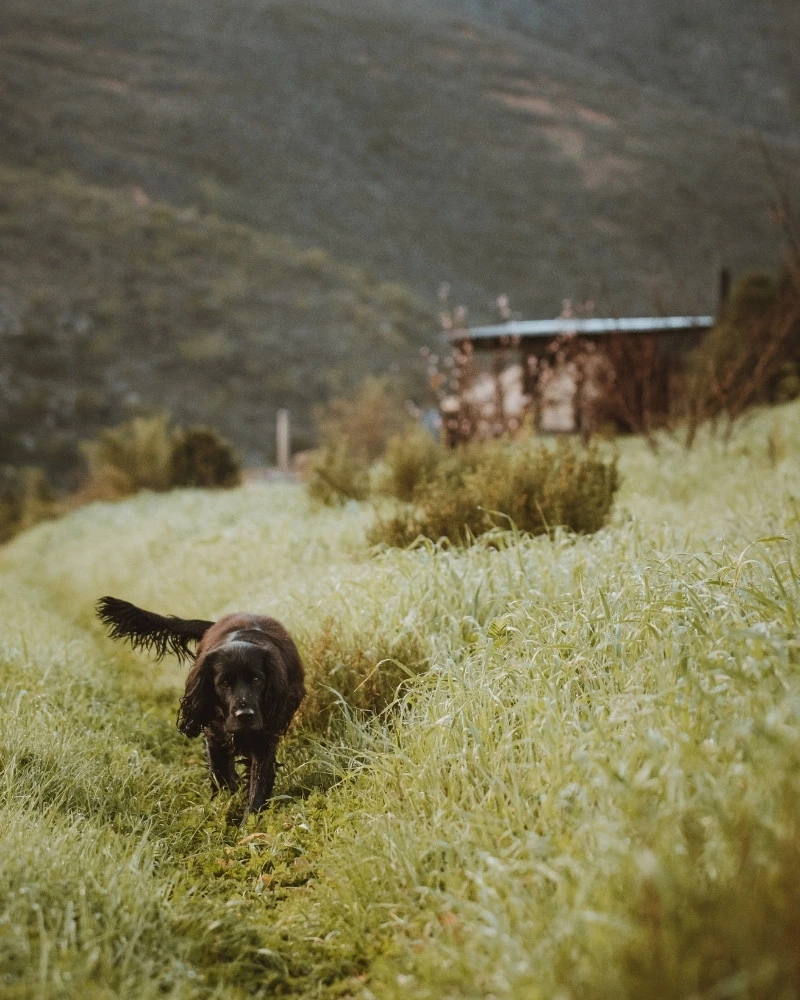
FROM LEFT There a numerous gentle hikes in the broader property and reserve; dogs are allowed, but on a leash so they don’t chase wildlife IMAGES Courtesy Southern Yurts
Diepklowe Nature Reserve: Explore the hikes (dogs allowed)
The Diepklowe Nature Reserve is also home to Porcupine Hills Guest Farm. River Cabin guests also have full access to the farm and reserve, with several short hiking trails that take you up to the spring, the Botrivier or various lookout points. Some of the trails are slightly overgrown, so keep an eye out for the red markers.
Well-behaved furry friends are welcome at a small extra charge (R100), but must be walked on the lead to protect wildlife. If you plan to venture out to do wine-tasting or other activities, you might want to leave Fido at home, as vineyards such as the nearby Beaumont don’t accommodate dogs.
DETAILS
Stay Price starts at R1 900 per night for two, and there are regular winter specials. You’ll need a sturdy car to tackle the dirt roads and steep inclines.
Need to know The cabin has Wi-Fi (though the peace and quiet should distract you from all that scrolling). Spring and summer come with ticks, so be vigilant if you’re bringing your dog.
ActivitiesIf you get cabin fever (guaranteed you won’t), Beaumont offers wine tasting and a deli. Canopy Tours, which is a short drive down the main road, has some of the best zip-lining in the country. Nearby Hermanus has a farmer’s market every Saturday from 9am-2pm.
Website www.southernyurts.co.za
SOUTHERN YURTS' APPROACH TO OPERATIONS
ENERGY All units run off-grid on solar, with gas used for cooking and backup hot water. There’s LED lighting throughout. Solar consumption and firewood usage are tracked, and the property has calculated an average CO₂ figure per guest as an awareness measure for itself. Firewood is sourced from alien tree clearing on the reserve, so the heating loop ties back into the conservation work.
WATER This is drawn from a spring and gravity-fed borehole, both monitored by flow rates and showing fairly consistent seasonal use. Southern Yurts has set a self-imposed extraction limit (half the spring’s supply), which functions as a hard ceiling on guest consumption. Grey water from showers and hot tubs is reused to irrigate the gardens, which are planted with indigenous, water-wise species. Guests are reminded of provincial water scarcity during summer months.
WASTE Waste management—extending composting to every unit and improving in-room separation guidance—is their stated goal for this year. Recycling crates and a general waste bin are provided in each unit. Waste is driven off-property to the refuse centre in Botrivier. Organic waste is composted at most units, and any unused food is left behind for staff and the surrounding community. Amenities are biodegradable and supplied in glass bottles; washing-up uses re-usable cloths and scrubbers; no single-use plastics are offered on-site. Recycling services are inconsistent, they say, and not always effectively processed downstream.
CULTURE + COMMUNITY All staff either live on the property or come from the nearby village of Botrivier. Wages are set above the local market rate, with a 10% annual increase, six weeks of paid leave, four months of paid maternity leave, and partial coverage of medical expenses. Training is informal and owner-led (no certificates issued), but covers farming, building, woodwork, hospitality, and conservation. The team is mixed in language and cultural background, and the property runs an explicit LGBTQ+ friendly, “all are welcome” policy. Guests are invited to participate in an ongoing clothes drive that redistributes donations to staff and the surrounding community.
BIODIVERSITY + ECOSYSTEMS The Diepklowe Private Nature Reserve is in the Overberg, where the dominant vegetation is renosterveld. A percentage of guest fees are paid as a levy to the Diepklowe Conservation Trust, an NPO the owners established in 2022 specifically to manage the reserve. Trust income is used to remove invasive alien species and restore the indigenous renosterveld. No pesticides, herbicides, or garden chemicals are used; cleaning products are biodegradable. Non-essential lights are switched off at night to preserve dark skies and protect nocturnal life, noise is limited, indigenous planting is prioritised, and a no-feeding policy applies to wildlife. Domestic pets are managed so as not to impact on wildlife.