

5 things an e-bike tour in Cape Columbine Nature Reserve, Paternoster, taught us
A tour with WoweBikes taught us about resilience, wildlife, accessibility — and hubris
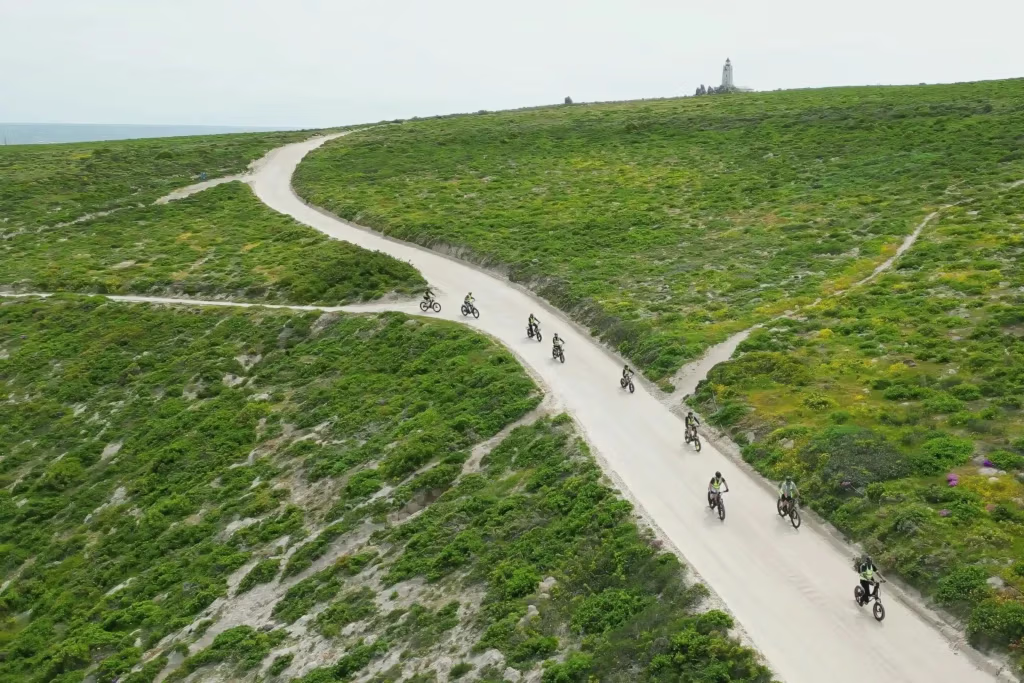
- Sonya Schoeman
WHY WE LOVE THIS TRAVEL EXPERIENCE
Cape Columbine is gorgeous, and cycling its wild coastline feels like freedom; in flower season it is something else entirely. But the ride satisfies on its own merits. There’s the pleasure of figuring out the machine—how to get the most from it—and the better you get, the better it gets. Pedalling with the assist means you never plough through anything. I resisted the booster for as long as pride allowed. When I gave in, flying uphill—not just downhill—was a revelation.
SUSTAINABILITY PROFILE
The bikes are emission-free, the tours are nature-oriented and the guides stick to paths and roads so the natural environment is not affected. The rides do not go below a certain point when on the beach, and the guides are conscious of nesting birdlife. WOWeBikes is also a local business, employing 10 people, and boosts other businesses in the area: It collaborates with them to create special tours; it recommends restaurants, hotels and other experiences when travellers ask. The bikes parts are produced overseas and shipped in, then assembled in Paternoster.

Vimbai Zaranyika, better known as Vee, was the lead guide for our tour, and set us up for the best possible experience IMAGE Travelosophy
1. Show up. An e-bike adventure sorts itself out
The introduction to our first e-bike experience leaned towards a slight negative.
We were in Paternoster, where we’d signed up for a WOWeBIKES guided tour. It was drizzling, the clouds had set in. I was bracing for the crafty, cold rivulets that always find their way under ‘waterproof’ gear.
There’s a particular skill to pretending to be delighted about cold and wet activities, but as Vee Zaranyika snapped on my headgear, smiling up at me, the pretence felt unnecessary. The lead guide is all natural high energy and enthusiasm, which dissolved my reserve.
We rolled out of Paternoster toward Cape Columbine Nature Reserve, assistant guide Kingsley Kaleso bringing up the rear.
We were glad we’d showed up. This was feeling like adventure.

WOWeBikes takes tours big or small, and they accommodate kids, too. It’s an excellent group or family experience IMAGE Courtesy WOWeBikes
2. Near-silence is the best strategy for seeing wildlife in Cape Columbine
Cape Columbine Nature Reserve is about 260 hectares of rare sandveld fynbos just outside Paternoster town, and it’s full of life—life you’re more likely to see because the e-bike is almost silent (there’s an electric hum as one pedals but it’s unobtrusive enough to raise curiosity, but not startle wildlife).
There a couple of routes along the coast. We chose one that started close to the iconic Cape Columbine lighthouse, which was built in the 1930s and is still manned by a lighthouse keeper, who lives on-site, as Vee pointed out.
The route then wound close to the raw wild West Coast shoreline, with its powerful swell heaving against the rocks so famous for smashing ships to smithereens. The swell is no problem for the seal colonies, though, and the birdlife is rich—we saw African oystercatchers, Cape cormorants, seagulls aplenty, jackal buzzards, and the pretty bokmakierie. A steenbuck stopped and watched as we cycled past, alert and curious, but it didn’t run.
The smaller trails joined up to the main road towards Tietiesbaai, where we put the bikes through their paces, getting more and more comfortable. Too comfortable.
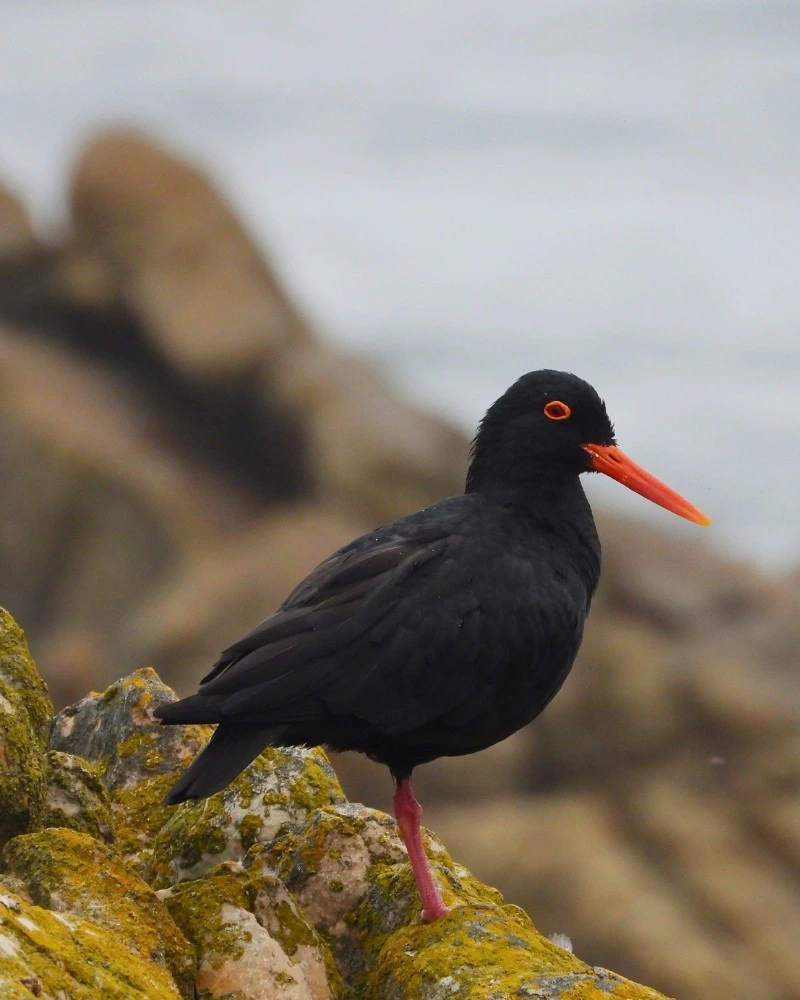

The delicate and striking oystercatcher is just one of the beautiful coastal birds found here; Cape Columbine Lighthouse is an imposing building still manned by a lighthouse keeper IMAGES Kiekie & Kie; Travelosophy
3. E-bikes are easier to ride than you think (the happy secret: you don't need to be fit)
E-bikes make cycling easy; almost too easy if you like a decent work-out.
There are five assistance levels, visible on a small interface on the handlebars, one can toggle up or down with arrows. Conventional gears still apply and the cyclist’s pedalling generates additional charge.
There’s also a booster, which propels one forward without any pedalling effort at all. This removes the main objections to cycling: too unfit, too old, too inexperienced, not a fan of uphills…
WOWeBikes stipulates that riders must not be complete novices—i.e. you at least have to have ridden a bicycle before—but beyond that, the e-bike makes riding accessible to people who might not usually choose to cycle.
In fact, a study in the United States showed that after using e-bikes, older and even disabled cyclists viewed them as mobility aids and found using them easier than walking, and recognised that they helped make them fitter and more independent.
What the e-bike makes possible—accessibility—was one of the core appeals to the co-founder of the business.

WOWeBikes tour guides Kingsley and Vee are great at putting people at ease while giving them free reign to explore and stop for photographs IMAGE Travelosophy
4. Import the idea, but build the business here in South Africa
WOWeBIKES began as an idea when co-founder Annelize Ziehl-Owens visited Austria with friends who’d told her about the e-bike trend growing there. She took a trip into the mountains, and what struck her, beyond the staggering beauty, was the access the bikes enabled: alpine terrain normally reserved for the fit was suddenly open to her (she was less fit than her party, she admits). She came home wondering why the West Coast shouldn’t work the same way.
When they first tried e-bikes in South African trial it was clear the bikes wouldn’t work on this terrain. So the concept was rebuilt from the wheels up. Frames were redesigned; parts are made overseas and shipped home, then assembled and customised here.
The fatbikes we rode through Cape Columbine are the result: machines designed for sand, gravel and wild coastline.
The business launched in Paternoster in 2020—just as Covid hit. Residents riding at local rates saw it through that first hard stretch, which is why the local rate remains. This local tourism-related business now employs 10 people.
5. Pride comes before a fall
Three proverbs cover the range of riders who’ll find themselves at Paternoster Waterfront, helmets on, drizzle or no:
1. Fortune favours the bold;
2. Nothing ventured, nothing gained; and
3. Fake it till you make it.
For those already confident on a bike: fortune favours the bold. The long gravel and sand roads through the reserve invite speed, and the fatbike handles them with an ease that can make one slightly reckless.
For those who have not ridden much but can stay upright: fake it until you make it. This is the bike to get back on and gain confidence quickly. It’s as low-stakes as a two-wheeled machine gets.
For those, like me, who can ride but know there’s a 50 percent likelihood that they will do something embarrassing: nothing ventured, nothing gained.
Venture I did. Narrow gates, curvy paths, I gained increasing confidence that I had real expertise. I was efficient. I was swift. I began to feel pride.
Then I hit a sandy patch. I braked hard. The front brake. I went head over handlebar, landed on my knees, gained a nasty scrape. In my brief moment of glory, I’d forgotten something important.
Pride always comes before a fall.
DETAILS
WHAT YOU GET A tour is 90 minutes long. You’ll get a helmet, a bottle of water and a safety vest (so you’re visible on the road), and instructions on how to use the bike before setting off. The guides are geared for fun and are accommodating for those who want to take photos. They also talk about the area, the town and lighthouse, and the reserve’s many natural treasures. One tour can accommodate up to 20 people, but the business is very accommodating. If looking for something out of the ordinary, give them a call.
COST South Africans and Namibians: R580 per person now, from October R599. Internationals: R990 per person, from October R999.
BOOK www.wowebikes.co.za
WOWeBikes is a member of Cape Country Routes